
BMW X3. In the Grip of the Diesel

In Europe, diesels are much more popular — diesel fuel is more economical there, and gasoline is about twice as expensive. Our situation is different: diesel fuel is comparable in price to A-92, so attitudes towards cars running on heavy fuel are lukewarm. There is a stereotype that diesel engines are noisy, smoky, sluggish, and generally cause nothing but trouble. For the test, we chose the second option — a three-liter diesel "six" — to understand what the German concern can surprise our drivers with and how it fights the traditional "ailments" of diesel.
A Suit That Fits
At first glance, the car is perceived as a reduced copy of the BMW X5. But the X3 is unique in its own way. Thanks to the new headlight design, it has a completely different front end — less aggressive, but more expressive. This is its main difference from the older X5. It is 10 cm shorter than the "X", making it noticeably more maneuverable in Moscow traffic jams.
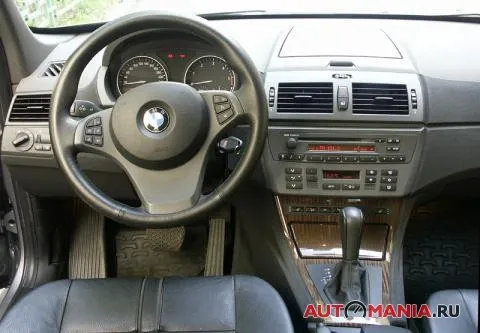
So, I get behind the wheel. The car's interior is spacious, solid, and practical, although the plastic trim looks somewhat cheap. The seats are leather, with good lateral support. The driver's seat has memory settings — convenient if several people use the car. The onboard computer is informative and not as confusing to operate as, say, the "iDrive" in BMW "fives" or "sevens".
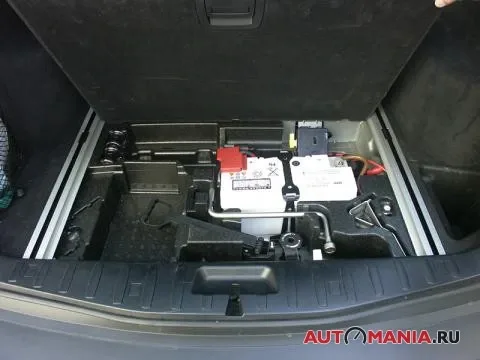
It displays the most necessary indicators — average fuel consumption, fuel remaining, and range. I'll note right away: the music in the car sounds frankly weak. Replacing it is problematic, as the standard radio has non-standard dimensions, and installing a different stereo system is difficult. The instruments are somewhat small, especially the numbers on the speedometer — I constantly had to squint while driving to avoid exceeding the speed limit. There is enough space in the back; three people can sit quite comfortably. The trunk is huge — it seemed to me that a washing machine could easily fit there.
Quiet Diesel
I start the engine — only a quiet rustle is heard in the cabin, as if there were a gasoline unit under the hood. This alarms me. A thought even crosses my mind: did they give us the wrong car? Okay, everything will become clear while driving. After all, a diesel is a diesel — the characteristic noise and vibrations will surely appear. There can be no talk of quick acceleration. I slowly drive onto a straight road. I press the pedal to the floor — and a moment later, I'm forcefully pressed into the seat, as in a rare sports car. As the revs rise, the sound of a powerful V-shaped gasoline engine comes from under the hood. Hey! They definitely gave us the wrong car!
I stop. To be absolutely sure, I look under the hood — a soothing diesel rumble comes from there.
As I understood, thanks to good sound insulation and a turbocharger, you get a car that is quite comparable in engine sound to the gasoline version. For comparison: acceleration for the diesel takes 7.9 seconds, for the gasoline — 7.8. The difference is just a tenth of a second. But this German diesel consumes half as much fuel.
The City Is Its Element
Traffic is dense; I start actively changing lanes to assess handling and suspension stiffness. First, I tried the manual mode of the gearbox, but quickly got confused and switched to sport mode. In it, the gearbox holds lower gears and is always ready to surge forward. Despite being an "automatic", it responds almost instantly and adapts to the driver's style. While moving, the car responds sensitively to the steering wheel; I didn't notice any excessive body roll. The steering wheel is slightly thick in grip, but you can get used to it. The brakes work excellently — a slight press, and the car stops dead in its tracks. I couldn't test the stability control system — trying to provoke a skid in Moscow is dangerous.
The main conclusion: in terms of handling, the BMW X3 behaves almost like a sports car. This is achieved through a short suspension travel. This, however, did not have the best effect on off-road capability — in a rut, the car sat on its belly. In this situation, even the electronic traction control system, which redistributes torque between the wheels, did not help. The guys I specially took with me for such purposes came to the rescue.
The BMW X3 is still a "crossover", and it's not worth strictly judging it for insufficient off-road capability. Of course, you'll get to the dacha along a dirt road. But be careful: the ground clearance of this "Beemer" is small — only 200 mm. It's most logical to use the X3 in the city: to climb a curb if it's not too high, to quickly pull away on ice. And simply to enjoy feeling comfortable and safe even in an extreme situation.
Ilya Karpov
Technical Specifications:
| Dimensions (mm) | 4565x1853x1674 |
| Wheelbase (mm) | 2795 |
| Engine displacement (cm³) | 2990 |
| Maximum power (hp) | 204 |
| Maximum torque (Nm) | 410 at 4500 |
| Maximum speed (km/h) | 210 |
| Trunk volume (l) | 480/1560 |
| Acceleration 0-100 km/h (s) | 7.9 |
| Average fuel consumption (l/100 km) | 7-8 |
| Tires | 235/55 R17 |
| Price (euros) | from 56900 |
Expert ratings from the website www.Automania.ru (on a 10-point scale)
| Driver's seat | 8 |
| Visibility | 7 |
| Passenger seats | 7 |
| Trunk | 7 |
| Build quality | 6 |
| Powertrain: acceleration | 9 |
| Powertrain: elasticity | 8 |
| Powertrain: transmission | 8 |
| Brakes: effectiveness | 9 |
| Brakes: informativeness | 9 |
| Steering: precision | 9 |
| Steering: informativeness | 9 |
| Steering: directional stability | 9 |
| Noise and vibration | 9 |
Diesel BMWs assembled in Austria began to be supplied to Russia from the beginning of 2005. The new engine fully complies with "Euro-3" emission standards and is distinguished by excellent fuel efficiency. The biggest advantage of Bavarian diesels can be considered their adaptability to low temperatures, which is relevant for Russian winters. The electronic diesel engine management system works with low-voltage (6-volt) glow plugs, in which only the tip heats up to maximum, and thus at temperatures below 20 degrees, the engine is ready to start in less than 2 seconds after turning on the ignition.
We thank the BMW company representative office for providing the car for the test.
Source – AUTOMANIA.RU