
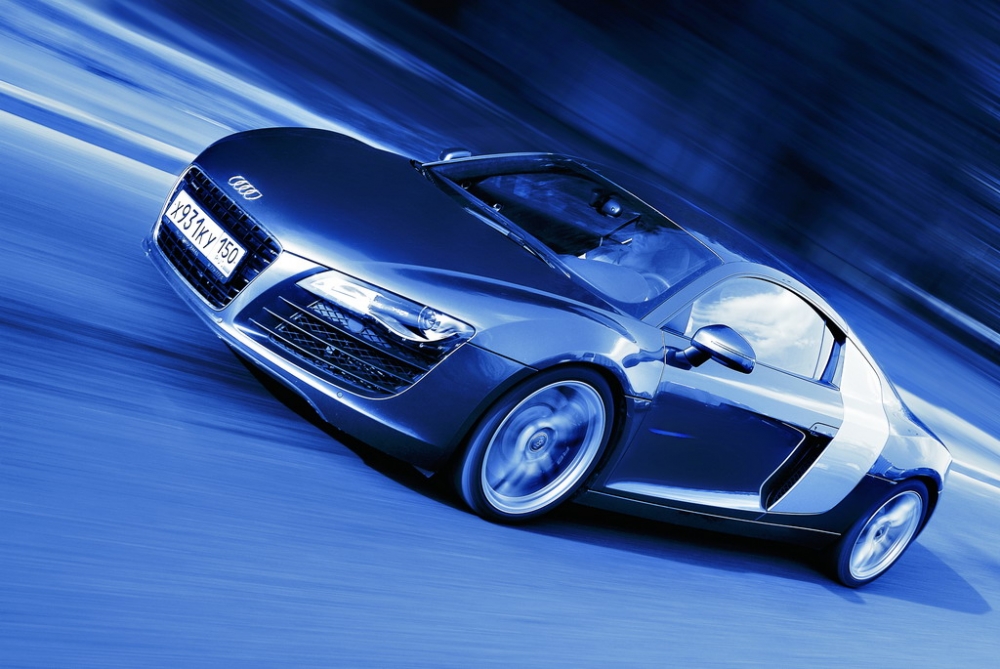
 It is worth noting that not all members of the elite club of sports car manufacturers are direct and obvious rivals to Audi. Some are, one might say, relatives. We are talking about Lamborghini, which is under the wing of the company from Ingolstadt. So Audi does have sports car experience, albeit borrowed. However, from its relative – the Gallardo – the R8 model received only some components, but the project itself is the brainchild of the engineers of the "four rings." It is worth noting that not all members of the elite club of sports car manufacturers are direct and obvious rivals to Audi. Some are, one might say, relatives. We are talking about Lamborghini, which is under the wing of the company from Ingolstadt. So Audi does have sports car experience, albeit borrowed. However, from its relative – the Gallardo – the R8 model received only some components, but the project itself is the brainchild of the engineers of the "four rings." |
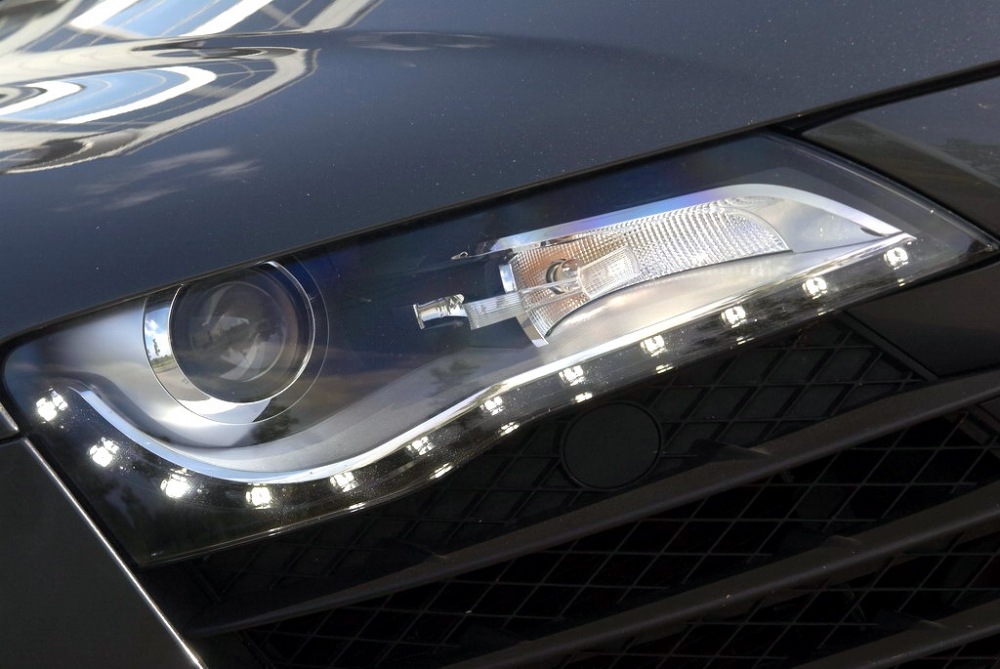
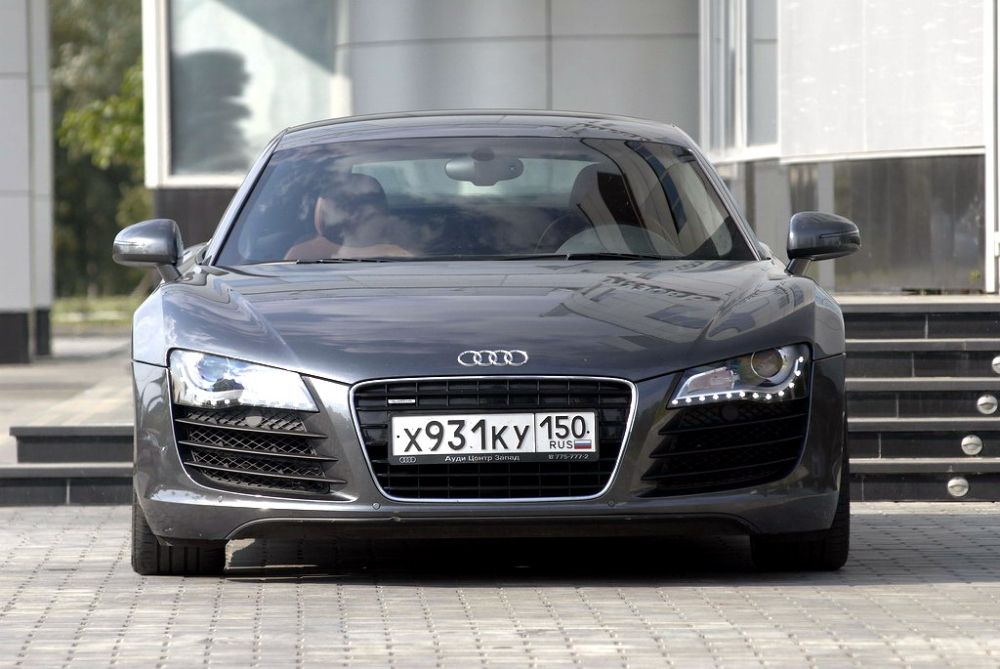
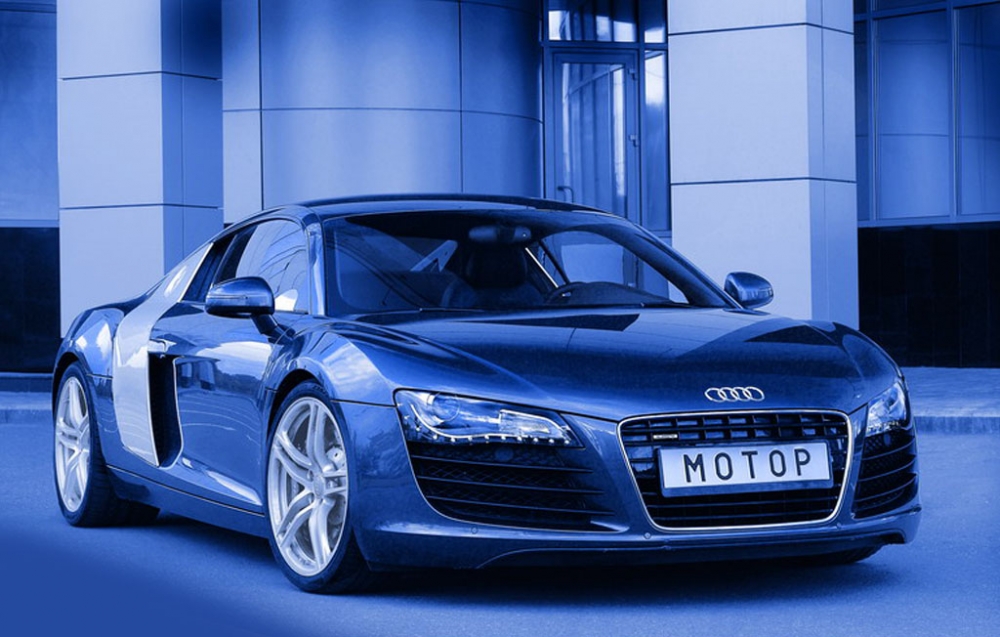 The R8's appearance is impeccable – techno-style, a play of edges and surfaces. Audi managed to combine an ultra-modern look with classic proportions, and some design solutions are truly unique. The extra-wide hood, squinted elongated headlights, plastic air intake trim – a stunning picture. It is even more striking when the LED strips light up along the lower edge of the headlights. It must be said that this styling trick will only be used with xenon headlights. Soon Audi will offer optional headlights fully made with LEDs – their "eyeliner" will be a continuous glowing line. By the way, if you look closely, you will find the inscription R8 in the reflectors of the front turn signals. The R8's appearance is impeccable – techno-style, a play of edges and surfaces. Audi managed to combine an ultra-modern look with classic proportions, and some design solutions are truly unique. The extra-wide hood, squinted elongated headlights, plastic air intake trim – a stunning picture. It is even more striking when the LED strips light up along the lower edge of the headlights. It must be said that this styling trick will only be used with xenon headlights. Soon Audi will offer optional headlights fully made with LEDs – their "eyeliner" will be a continuous glowing line. By the way, if you look closely, you will find the inscription R8 in the reflectors of the front turn signals. |
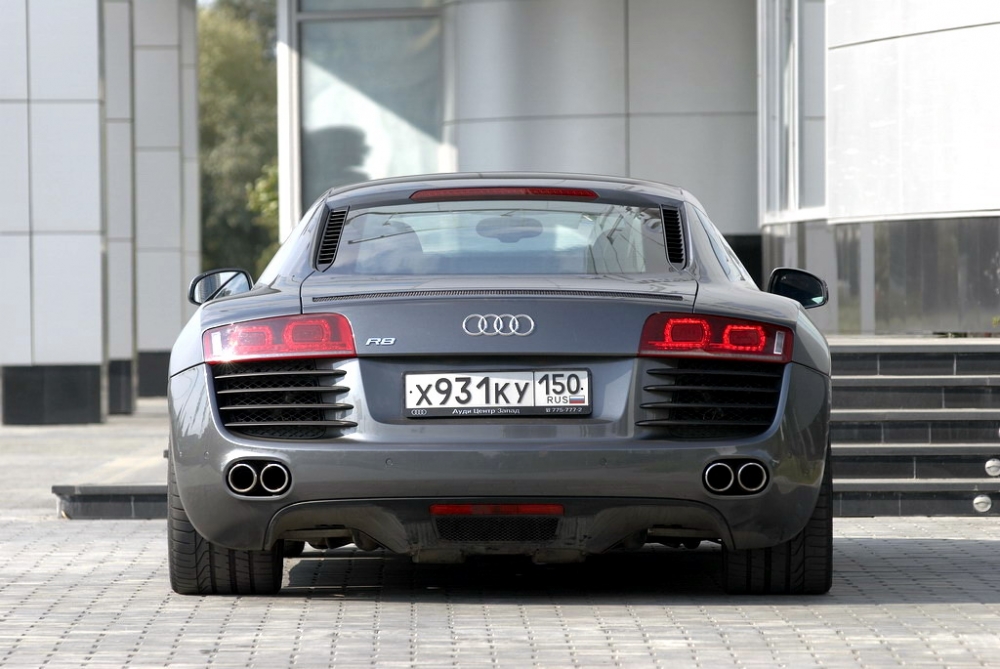
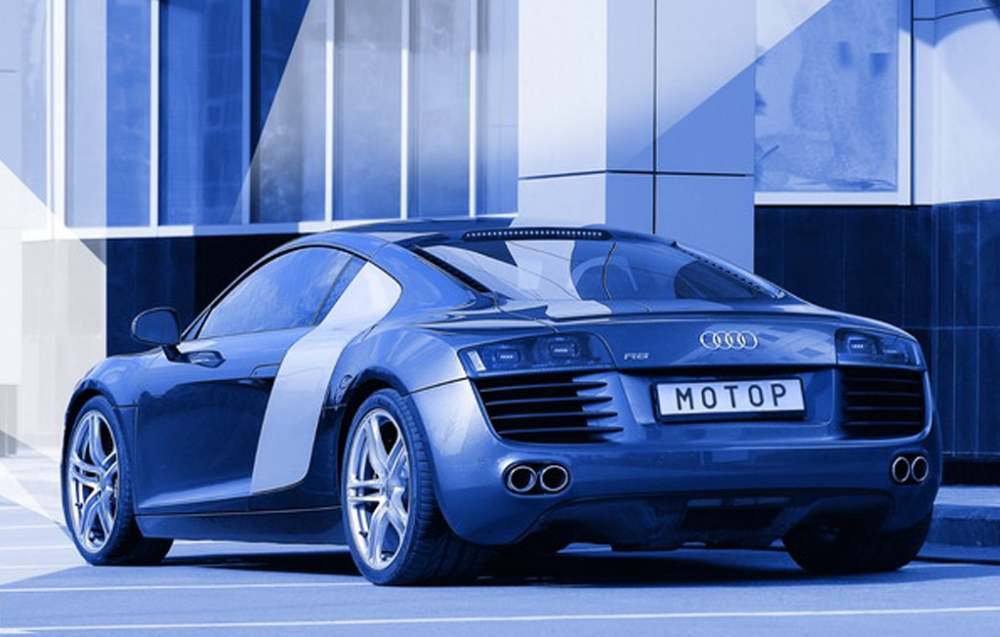 The window outline is classic, and the exciting junction of door and fender lines can be called quite Italian. The front track is 39 mm wider than the rear, but due to the large fender "shelves" and the lighting positioned high on the body edges, it seems that the car flares toward the rear. The rear window meets a spoiler, which in its inactive position serves to dissipate heat from the engine compartment – the spoiler surface is perforated. The wing automatically extends at 100 km/h. In the cabin, there is a button to deploy the spoiler manually – as on the Audi TT. The window outline is classic, and the exciting junction of door and fender lines can be called quite Italian. The front track is 39 mm wider than the rear, but due to the large fender "shelves" and the lighting positioned high on the body edges, it seems that the car flares toward the rear. The rear window meets a spoiler, which in its inactive position serves to dissipate heat from the engine compartment – the spoiler surface is perforated. The wing automatically extends at 100 km/h. In the cabin, there is a button to deploy the spoiler manually – as on the Audi TT. |
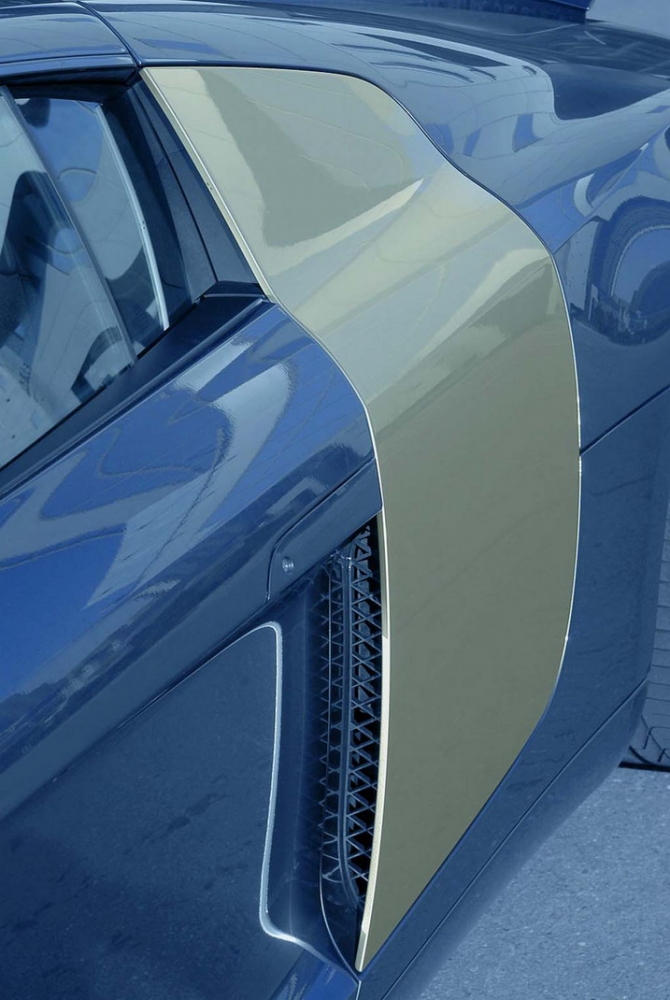
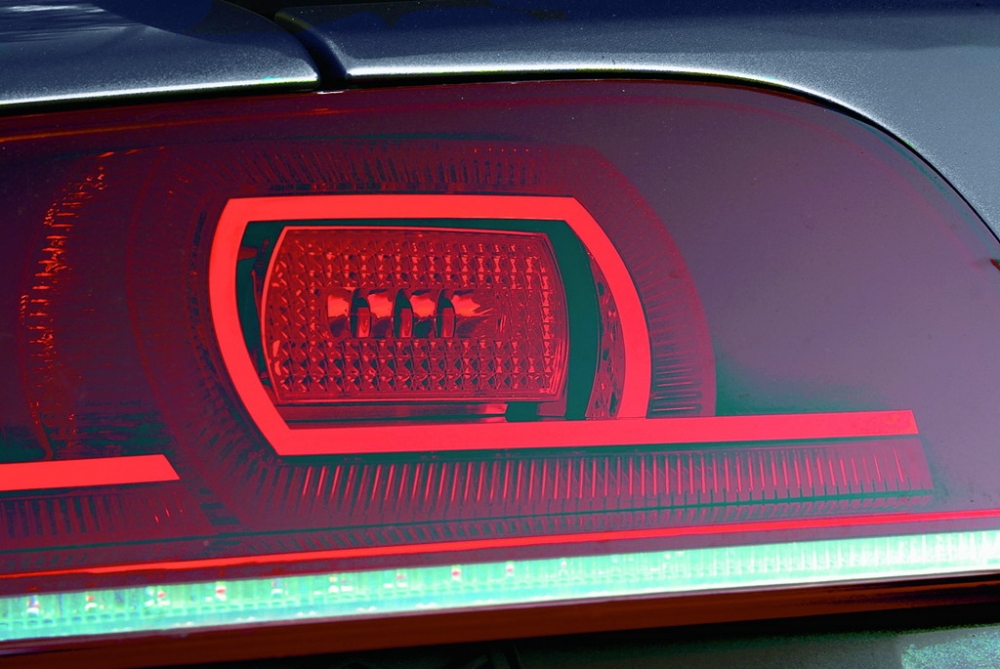 The rear lights are no less beautiful than the front ones. They also have an LED feature – a three-dimensional glow effect. A sight to behold. The corporate style – two rectangles in each block, as on the TT and Q7. The sides of the car are good not only for their intricate relief – the center is occupied by a panel that connects the roofline and sill, which, as Audi says, hints at the mid-engine layout of the sports car and also hides the engine air intakes. Much more eloquent about the mid-engine layout is the engine compartment glass, through which the engine is visible in all its glory. In this regard, the company offers an optional carbon fiber engine trim – to take your breath away entirely. There is plenty to look at – the car is equipped with a V8 FSI, which we already liked so much in the RS4. The 4.2-liter unit, easily surpassing the 100 hp/l mark, gives the car radical acceleration. The rear lights are no less beautiful than the front ones. They also have an LED feature – a three-dimensional glow effect. A sight to behold. The corporate style – two rectangles in each block, as on the TT and Q7. The sides of the car are good not only for their intricate relief – the center is occupied by a panel that connects the roofline and sill, which, as Audi says, hints at the mid-engine layout of the sports car and also hides the engine air intakes. Much more eloquent about the mid-engine layout is the engine compartment glass, through which the engine is visible in all its glory. In this regard, the company offers an optional carbon fiber engine trim – to take your breath away entirely. There is plenty to look at – the car is equipped with a V8 FSI, which we already liked so much in the RS4. The 4.2-liter unit, easily surpassing the 100 hp/l mark, gives the car radical acceleration. |
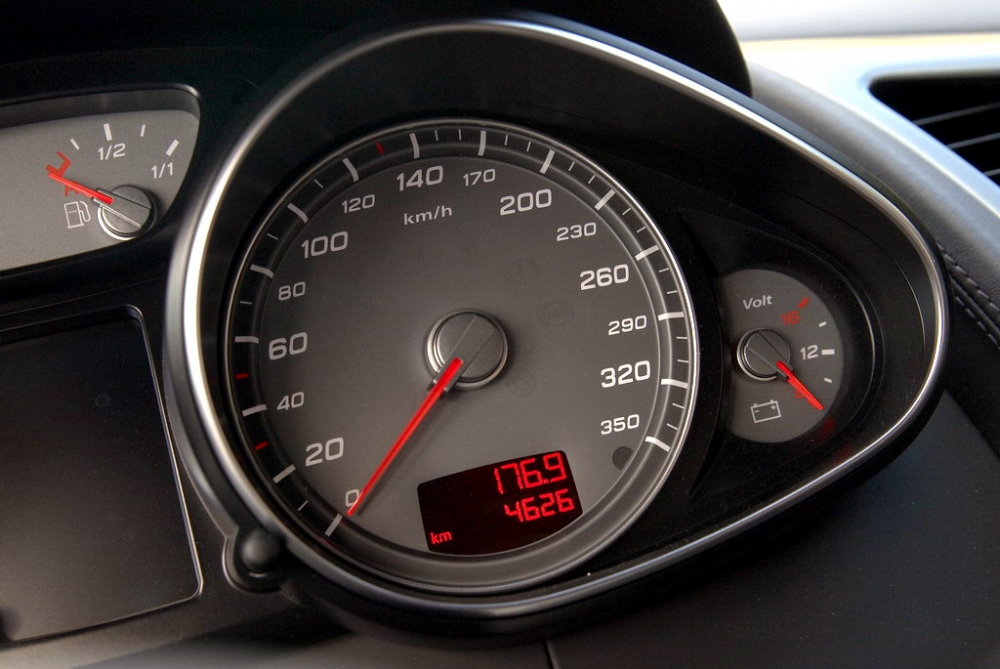
 The creation of German engine builders can confidently be placed on par with the engines of famous Italian companies. At the same time, it must be admitted that in terms of elasticity, economy, and, in a sense, technological sophistication, it surpasses them. Although what economy, damn it – a full tank of fuel burned through in less than 200 km of driving! The engine differs from the RS4 version by a dry sump lubrication system. Given the lateral accelerations that the R8 generates with ease, such a solution seems the only correct one. The creation of German engine builders can confidently be placed on par with the engines of famous Italian companies. At the same time, it must be admitted that in terms of elasticity, economy, and, in a sense, technological sophistication, it surpasses them. Although what economy, damn it – a full tank of fuel burned through in less than 200 km of driving! The engine differs from the RS4 version by a dry sump lubrication system. Given the lateral accelerations that the R8 generates with ease, such a solution seems the only correct one. |
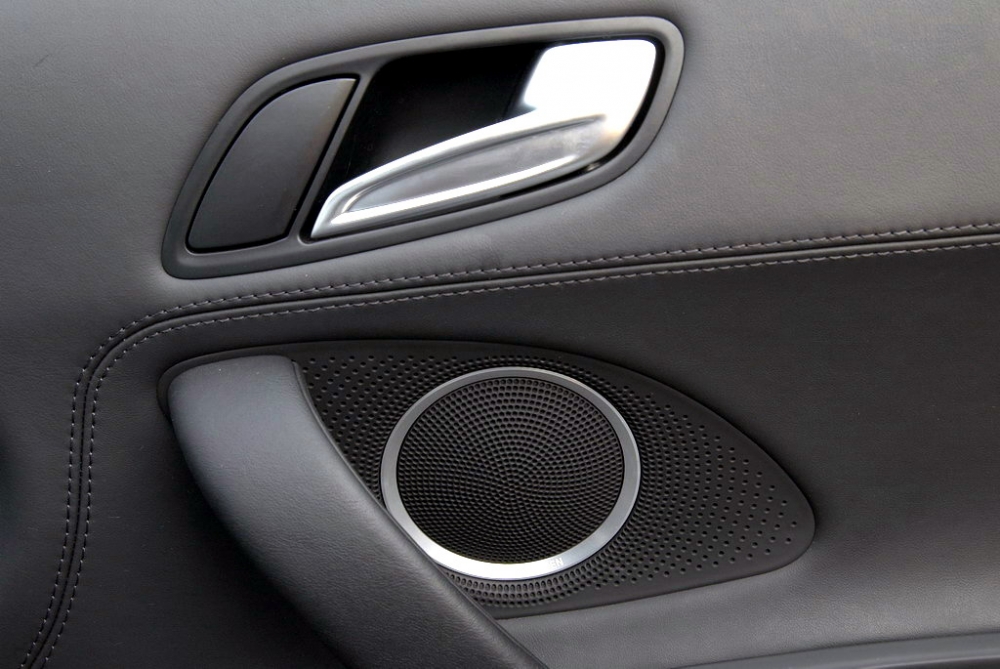
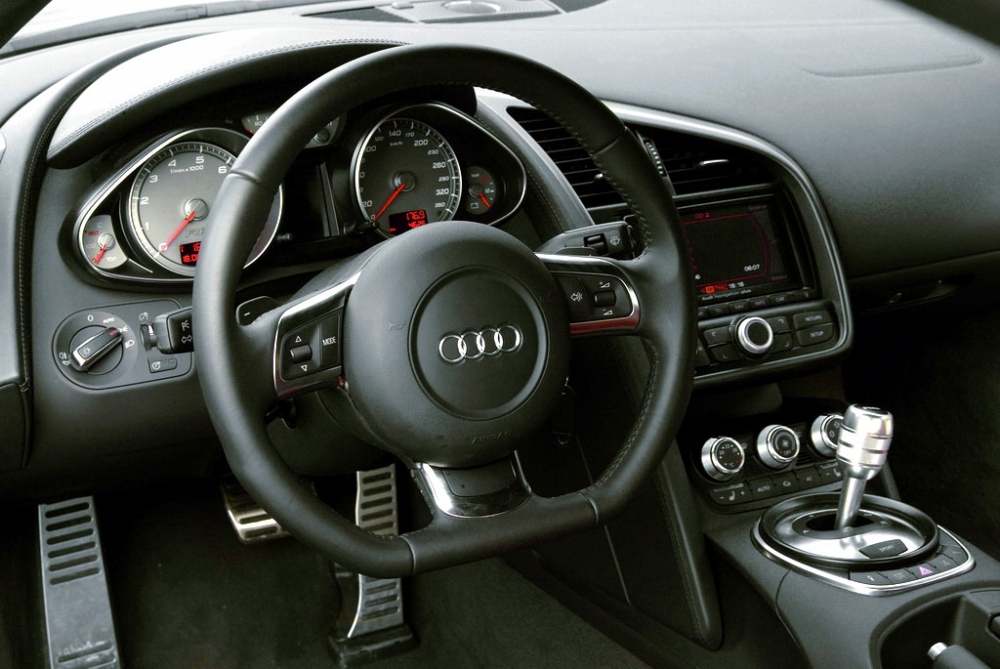 The interior is high-quality and expensive, but the design didn't grab me. Even despite the emphasized driver zone, outlined by a line that starts at the bottom of the driver's door, runs up, wraps around the instrument cluster, and falls to the base of the center console. The trick is good, but otherwise... The calm, sloping front panel in the passenger area doesn't match the sports car's exuberant character, and the door trim doesn't align with it at all. The center console seemed overloaded with details. However, the R8 compensated for this with excellent ergonomics and ample space. The interior is high-quality and expensive, but the design didn't grab me. Even despite the emphasized driver zone, outlined by a line that starts at the bottom of the driver's door, runs up, wraps around the instrument cluster, and falls to the base of the center console. The trick is good, but otherwise... The calm, sloping front panel in the passenger area doesn't match the sports car's exuberant character, and the door trim doesn't align with it at all. The center console seemed overloaded with details. However, the R8 compensated for this with excellent ergonomics and ample space. |
 Getting into the car is easy thanks to the wide door. The seating position is naturally low, but that's the only thing you need to get used to. The seat with electric adjustments allowed me to immediately find a comfortable position with an almost vertical back, while still having room to slide back and headroom to spare. With my height of 190 cm, I expected worse. Two adults also don't suffer from cramped space. You can set off on a long journey! Oh, when will we have proper highways and autobahns in our country?.. Getting into the car is easy thanks to the wide door. The seating position is naturally low, but that's the only thing you need to get used to. The seat with electric adjustments allowed me to immediately find a comfortable position with an almost vertical back, while still having room to slide back and headroom to spare. With my height of 190 cm, I expected worse. Two adults also don't suffer from cramped space. You can set off on a long journey! Oh, when will we have proper highways and autobahns in our country?.. |
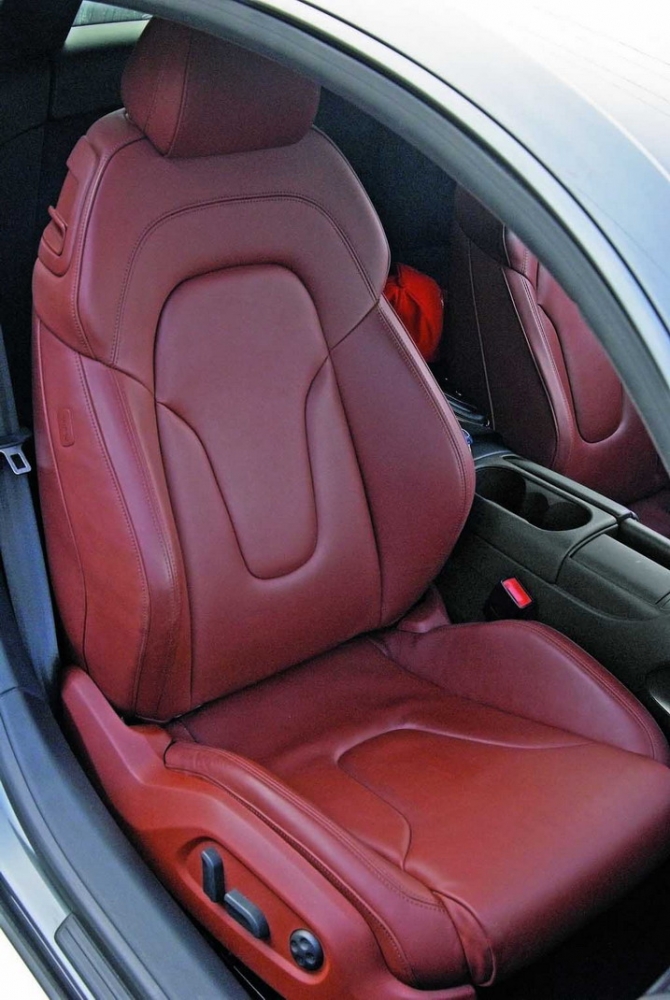 The seats are wonderfully good. They look quite "civilian," with support not overly emphasized, but when you sit down, you get the impression that the seat was made to order for you. The cushion bolsters hold your legs, and the side sections of the backrest hold you very confidently in corners. The steering wheel, following Audi's recent tradition, is "flattened" at the bottom. Allegedly for ease of entry and exit. In my opinion, they should have kept a classic wheel, because the R8's wheel makes barely 2.5 turns from lock to lock. When quickly rotating from one extreme position to another, the angularity of the wheel, admittedly, was confusing. But the feedback is spot on! The power steering's precision work helps the driver truly feel the front wheels, not just receive feedback through the wheel. Of course, the mid-engine layout also deserves credit here – the front end is light, so the steering is "transparent." The seats are wonderfully good. They look quite "civilian," with support not overly emphasized, but when you sit down, you get the impression that the seat was made to order for you. The cushion bolsters hold your legs, and the side sections of the backrest hold you very confidently in corners. The steering wheel, following Audi's recent tradition, is "flattened" at the bottom. Allegedly for ease of entry and exit. In my opinion, they should have kept a classic wheel, because the R8's wheel makes barely 2.5 turns from lock to lock. When quickly rotating from one extreme position to another, the angularity of the wheel, admittedly, was confusing. But the feedback is spot on! The power steering's precision work helps the driver truly feel the front wheels, not just receive feedback through the wheel. Of course, the mid-engine layout also deserves credit here – the front end is light, so the steering is "transparent." |
 Turning a regular ignition key, the V8 awakens behind the glass-metal partition. At idle – no sound hysteria. The experience of building executive sedans still shows – the sound, vibration, and thermal insulation of the R8's cabin is executed at the highest level. At the same time, the engineers made sure that only the most delicious sounds reach the driver's ears. The only slight annoyance is the rustling of the extra-wide tires fitted on the optional 19-inch wheels. Visibility is also fine. Forward visibility is excellent thanks to the thin pillars; rearward is worse, of course, but not critical. Turning a regular ignition key, the V8 awakens behind the glass-metal partition. At idle – no sound hysteria. The experience of building executive sedans still shows – the sound, vibration, and thermal insulation of the R8's cabin is executed at the highest level. At the same time, the engineers made sure that only the most delicious sounds reach the driver's ears. The only slight annoyance is the rustling of the extra-wide tires fitted on the optional 19-inch wheels. Visibility is also fine. Forward visibility is excellent thanks to the thin pillars; rearward is worse, of course, but not critical. |
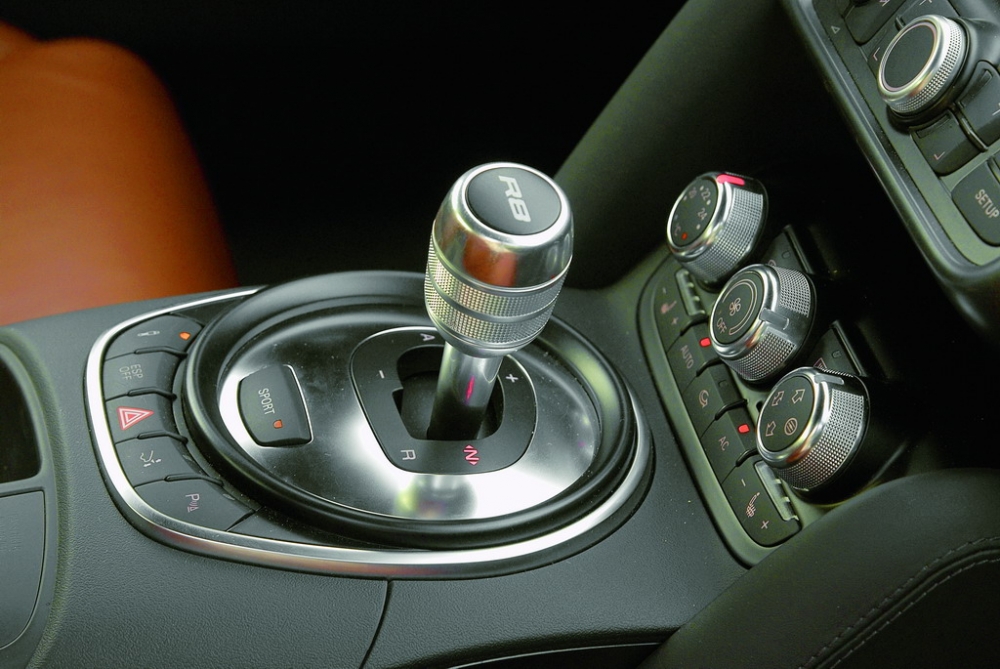
 The R8 was created using Audi Space Frame technology. The basis of the structure is an aluminum frame, to which all panels are bolted, except for the roof. The body is rigid and light. The suspension is a classic of the genre: double wishbones at the front and rear. The vast majority of chassis parts are also made of aluminum. The test car additionally had active suspension with Magnetic Ride dampers, which can change stiffness and operate either in a comfort-oriented automatic mode or in an uncompromising sport mode. The aluminum wheels are also optional, with tires 235/35 at the front and 295/30 at the rear. By the way, does the wheel design remind you of anything? Right, Ferrari. The engine drives all four wheels. Moreover, the main traction goes to the rear, and the front receives from 10 to 35%. Exactly the same scheme is implemented on the Lamborghini Gallardo. The gearbox is also borrowed from the "Italian" – a robotic sequential "R-Tronic." The driver only gives commands to the actuator via paddles on the steering wheel or a selector on the tunnel. The gearbox has a sport mode that differs dramatically from automatic. When the former is engaged, the engine stays on a gear longer, and shifts at higher revs are lightning-fast with a noticeable jolt in the transmission. Oh, how hot! The R8 was created using Audi Space Frame technology. The basis of the structure is an aluminum frame, to which all panels are bolted, except for the roof. The body is rigid and light. The suspension is a classic of the genre: double wishbones at the front and rear. The vast majority of chassis parts are also made of aluminum. The test car additionally had active suspension with Magnetic Ride dampers, which can change stiffness and operate either in a comfort-oriented automatic mode or in an uncompromising sport mode. The aluminum wheels are also optional, with tires 235/35 at the front and 295/30 at the rear. By the way, does the wheel design remind you of anything? Right, Ferrari. The engine drives all four wheels. Moreover, the main traction goes to the rear, and the front receives from 10 to 35%. Exactly the same scheme is implemented on the Lamborghini Gallardo. The gearbox is also borrowed from the "Italian" – a robotic sequential "R-Tronic." The driver only gives commands to the actuator via paddles on the steering wheel or a selector on the tunnel. The gearbox has a sport mode that differs dramatically from automatic. When the former is engaged, the engine stays on a gear longer, and shifts at higher revs are lightning-fast with a noticeable jolt in the transmission. Oh, how hot! |
 And there's also a launch control mode, similar to the one we got acquainted with on the BMW M5 and M6. For the fastest possible start, you need to engage sport mode, turn off ESP, and press the gas and brake simultaneously. The electronics hold elevated revs, and when the driver releases the brake, the R8 tears forward to the hysterical roar of the enraged "eight." The acceleration presses you into the seatback (especially good for the passenger), carrying you away from reality. The second hundred is reached in 4.6 seconds, the third – exactly ten seconds later. But the furious acceleration continues, and a few seconds later the car reaches the 250 km/h mark. An audible signal additionally informs you of this in the cabin. But 250 km/h is not enough for us, because the passport claims 301! We need to use our chance. Early in the morning, on a completely empty highway, the photographer and I celebrate victory – the speedometer shows exactly three hundred! And there's also a launch control mode, similar to the one we got acquainted with on the BMW M5 and M6. For the fastest possible start, you need to engage sport mode, turn off ESP, and press the gas and brake simultaneously. The electronics hold elevated revs, and when the driver releases the brake, the R8 tears forward to the hysterical roar of the enraged "eight." The acceleration presses you into the seatback (especially good for the passenger), carrying you away from reality. The second hundred is reached in 4.6 seconds, the third – exactly ten seconds later. But the furious acceleration continues, and a few seconds later the car reaches the 250 km/h mark. An audible signal additionally informs you of this in the cabin. But 250 km/h is not enough for us, because the passport claims 301! We need to use our chance. Early in the morning, on a completely empty highway, the photographer and I celebrate victory – the speedometer shows exactly three hundred! |
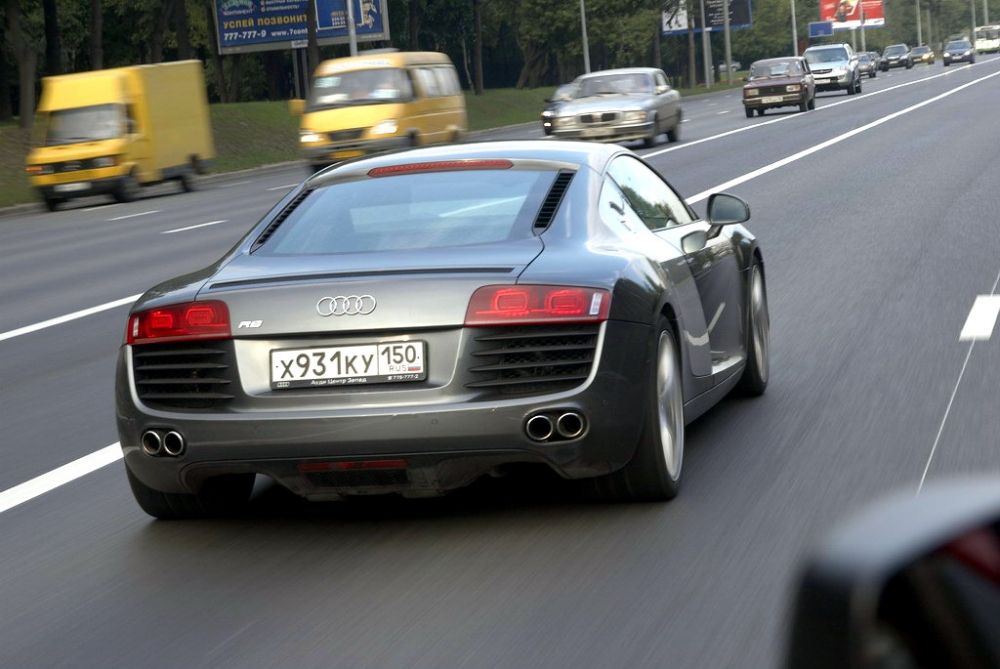 How does the R8 behave at speeds over 200 km/h? Superbly, with Audi's characteristic composure. The coupe covers ultra-fast kilometers, confidently holding a straight line, allowing sharp lane changes and braking without fear. The key to such stability is excellent aerodynamics with ground effect. The higher the speed, the greater the vacuum under the car's floor. And the small deployable spoiler does auxiliary work. How does the R8 behave at speeds over 200 km/h? Superbly, with Audi's characteristic composure. The coupe covers ultra-fast kilometers, confidently holding a straight line, allowing sharp lane changes and braking without fear. The key to such stability is excellent aerodynamics with ground effect. The higher the speed, the greater the vacuum under the car's floor. And the small deployable spoiler does auxiliary work. |
 Over several days of testing, I never learned to drive this car calmly. The R8 provokes high-speed driving. To fly into every corner, to use every straight for hurricane acceleration accompanied by a rich sound. On an arc, the car is extraordinarily stable and shows near-neutral handling. You take all calibrated turns an order of magnitude faster, while noting that the tires didn't even squeak. Amazing chassis balance! As already mentioned, the R8 can transfer from 10 to 35% of traction to the front wheels, hence the rear-wheel-drive character of behavior. In a limit turn, when adding throttle, the car begins to screw inward of the arc, and if you continue the attack, a slide quickly develops. However, with timely correction, the car can be pulled out. If you didn't react in time, rely on ESP. As practice shows, together with the driver, it pulls the car out of slides promptly. By the way, the stability system is only "half" deactivated by a brief press of the responsible button – the traction control component is put to sleep. To turn off ESP completely, you need to hold the button for several seconds. Over several days of testing, I never learned to drive this car calmly. The R8 provokes high-speed driving. To fly into every corner, to use every straight for hurricane acceleration accompanied by a rich sound. On an arc, the car is extraordinarily stable and shows near-neutral handling. You take all calibrated turns an order of magnitude faster, while noting that the tires didn't even squeak. Amazing chassis balance! As already mentioned, the R8 can transfer from 10 to 35% of traction to the front wheels, hence the rear-wheel-drive character of behavior. In a limit turn, when adding throttle, the car begins to screw inward of the arc, and if you continue the attack, a slide quickly develops. However, with timely correction, the car can be pulled out. If you didn't react in time, rely on ESP. As practice shows, together with the driver, it pulls the car out of slides promptly. By the way, the stability system is only "half" deactivated by a brief press of the responsible button – the traction control component is put to sleep. To turn off ESP completely, you need to hold the button for several seconds. |
 Even with regular steel brakes, the car decelerates in line with its acceleration. Moreover, it often doesn't come to ABS intervention. Information content is impeccable, and I never managed to overheat the brakes during several high-speed runs over 200 km/h. Perhaps soon optional "ceramics" will be offered in Russia; installing such brake discs will save 2 kg of unsprung mass per wheel. Let's take a break from the drive. Is there any practicality in this car? The cabin is spacious, and sitting is comfortable. Driving in the city – no problem, on the highway – even easier. The suspension is elastic, energy-intensive, and doesn't shake your soul out, and in Auto mode it can even be called comfortable. The Bang & Olufsen audio system plays befitting its name. There's a 90-liter trunk, and on the shelf behind the seats, as Audi assures, you can fit two golf club bags. So it turns out that a "civilian" car manufacturer has made the most suitable sports car for "civilian" use, which in that case doesn't cease to be a sports car. This car with adrenaline in the fuel tank can go fast, or it can go incredibly fast with unwavering stability. Audi's debut must be deemed successful. The newcomer R8 is a very strong player in the segment of relatively affordable sports cars. Even with regular steel brakes, the car decelerates in line with its acceleration. Moreover, it often doesn't come to ABS intervention. Information content is impeccable, and I never managed to overheat the brakes during several high-speed runs over 200 km/h. Perhaps soon optional "ceramics" will be offered in Russia; installing such brake discs will save 2 kg of unsprung mass per wheel. Let's take a break from the drive. Is there any practicality in this car? The cabin is spacious, and sitting is comfortable. Driving in the city – no problem, on the highway – even easier. The suspension is elastic, energy-intensive, and doesn't shake your soul out, and in Auto mode it can even be called comfortable. The Bang & Olufsen audio system plays befitting its name. There's a 90-liter trunk, and on the shelf behind the seats, as Audi assures, you can fit two golf club bags. So it turns out that a "civilian" car manufacturer has made the most suitable sports car for "civilian" use, which in that case doesn't cease to be a sports car. This car with adrenaline in the fuel tank can go fast, or it can go incredibly fast with unwavering stability. Audi's debut must be deemed successful. The newcomer R8 is a very strong player in the segment of relatively affordable sports cars.PRICES AND TRIM LEVELS The Audi R8 is offered either with a six-speed manual gearbox (?133,643) or with a six-speed R-tronic "robot" (?142,812). The base trim includes a braking system with perforated discs, 8-piston calipers at the front and 4-piston at the rear, an audio system with CD player, 6.5-inch display, 5-channel amplifier and 7 speakers, onboard computer, immobilizer, alarm, climate control, multifunctional leather steering wheel, aluminum gear shift knob, sport seats with manual height adjustment, central locking, light sensor, bi-xenon headlights, R18 wheels (235/40, 285/35), and tire pressure monitoring. You can also order an additional lighting package, navigation system, Bang & Olufsen audio, parking sensors, rain sensor, cruise control, CD changer, etc. In Russia, there is a queue for the R8. For instance, the entire quota for this year has already been sold out. Audi's representative office does not disclose planned delivery volumes. |
Civil offensive
A sports car has appeared in the Audi model range. In this market segment, not only high technologies, with which Audi is all right, are highly valued, but also traditions, which it does not have here despite all the merits of the brand to the automotive industry. Companies that instantly became Audi's competitors have been producing top-class sports cars for decades. Will the new model get lost next to proven fighters of the sports front – Ferrari F430, Porsche 911, Lamborghini Gallardo, Aston Martin DB9?
Test drive photos
Comments
No comments yet. Say the first word.