
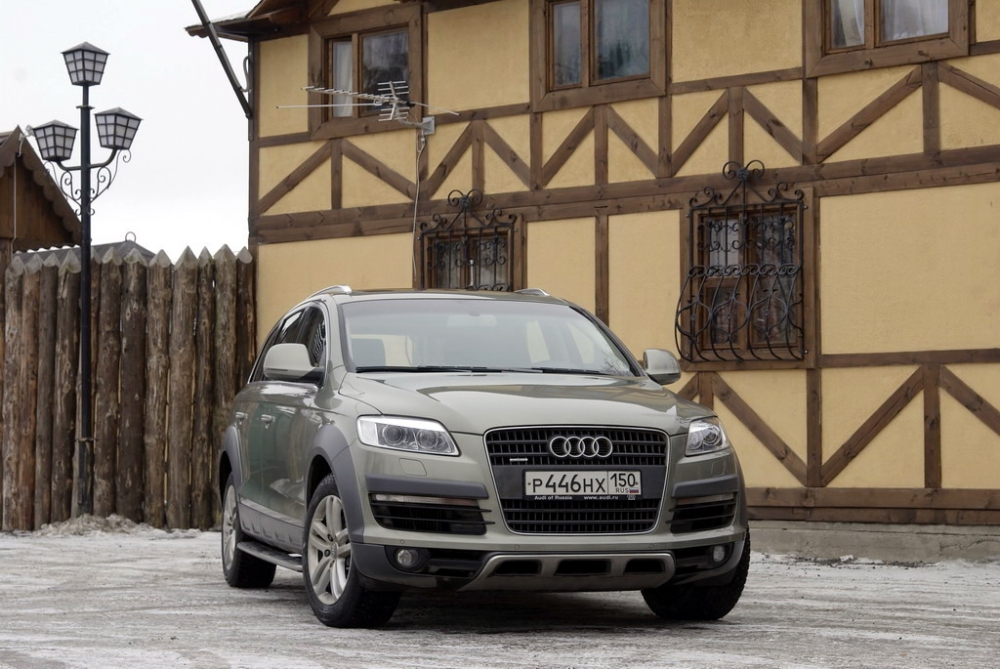
 Frankly speaking, I used to be cool towards diesels too. That was until engineering thought in this field rushed rapidly forward, while gasoline engines seem to have hit the ceiling of their capabilities. The most obvious confirmation of this is the triumph of racing prototypes with four rings on the hood and TDI badges in the famous "24 Hours of Le Mans" marathon and in the ALMS series. And when I first tried two- and three-liter turbodiesels, my "gasoline" soul was filled with confidence in the future of such engines. And now — a V8. A whole 4.2 liters of displacement! Today this is the most powerful diesel among all production cars: 326 horsepower and simply crushing torque reserve — 760 Nm! Frankly speaking, I used to be cool towards diesels too. That was until engineering thought in this field rushed rapidly forward, while gasoline engines seem to have hit the ceiling of their capabilities. The most obvious confirmation of this is the triumph of racing prototypes with four rings on the hood and TDI badges in the famous "24 Hours of Le Mans" marathon and in the ALMS series. And when I first tried two- and three-liter turbodiesels, my "gasoline" soul was filled with confidence in the future of such engines. And now — a V8. A whole 4.2 liters of displacement! Today this is the most powerful diesel among all production cars: 326 horsepower and simply crushing torque reserve — 760 Nm! |
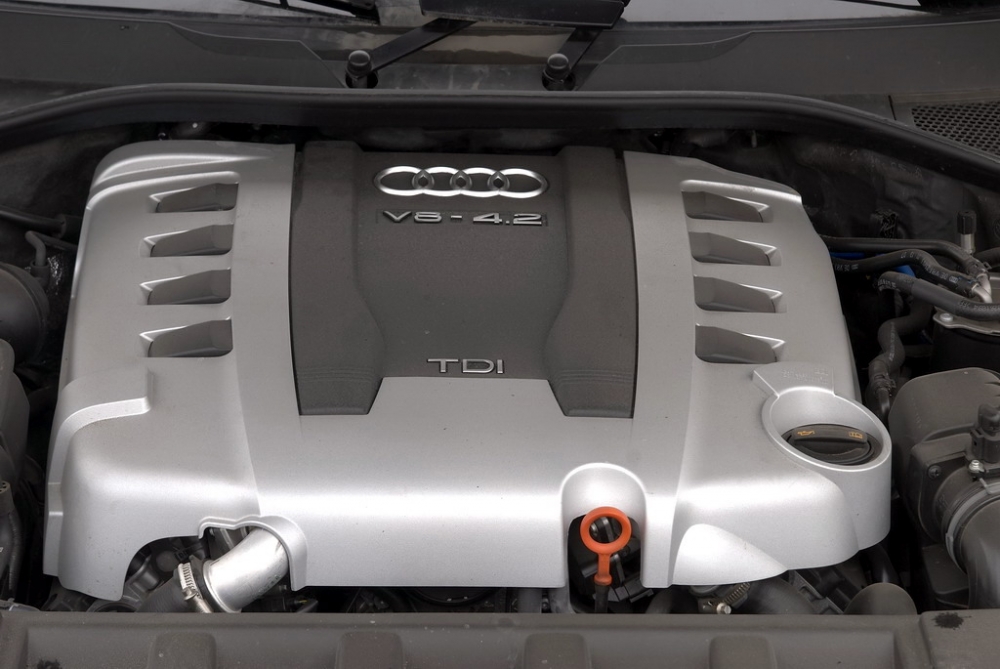
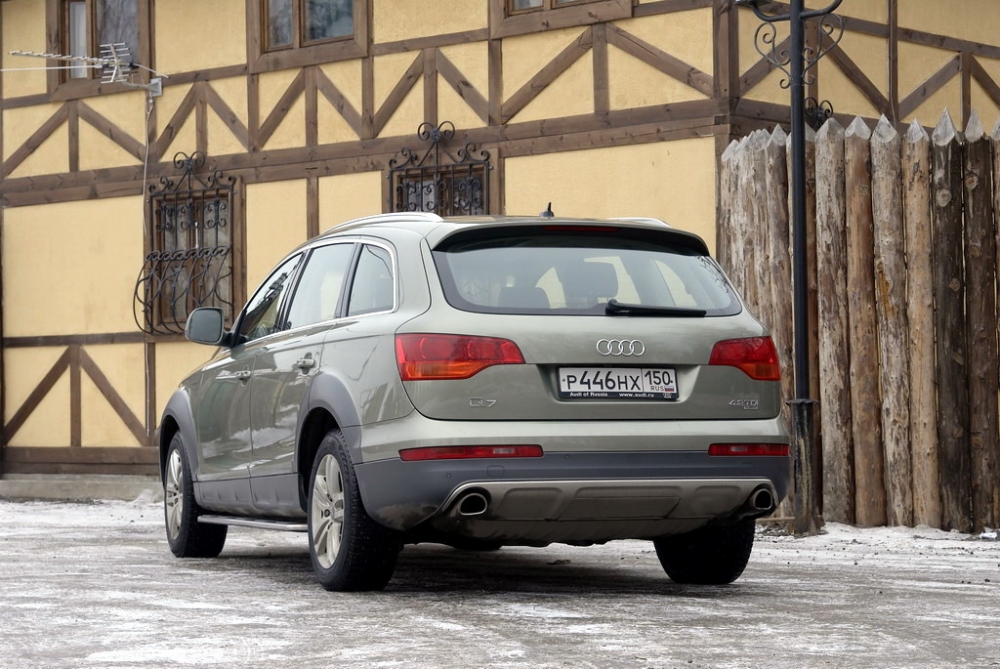 Achieving such characteristics with just a large displacement is impossible. The Audi engine uses a host of advanced solutions. Turbines with variable geometry — one for each cylinder bank — can create boost pressure up to 2.5 bar. Electronics constantly synchronize their speeds (up to 226,000 rpm), ensuring equal output. Each turbine has its own intercooler. The cylinder block is made of cast iron with graphite inclusions, which provided strength with a modest weight of 62 kg. The engine itself weighs only 255 kg — 15 kg less than the previous four-liter! Vibrations were seriously dampened due to the special geometry of the chrome-molybdenum crankshaft, and new valves with hydraulic lifters and a chain-driven backlash-free camshaft drive made operation quieter and smoother. The inner walls of the cylinders are treated with an ultraviolet laser, which significantly reduced oil consumption. The fuel mixture is prepared by the latest generation Common Rail system with piezo injectors. Achieving such characteristics with just a large displacement is impossible. The Audi engine uses a host of advanced solutions. Turbines with variable geometry — one for each cylinder bank — can create boost pressure up to 2.5 bar. Electronics constantly synchronize their speeds (up to 226,000 rpm), ensuring equal output. Each turbine has its own intercooler. The cylinder block is made of cast iron with graphite inclusions, which provided strength with a modest weight of 62 kg. The engine itself weighs only 255 kg — 15 kg less than the previous four-liter! Vibrations were seriously dampened due to the special geometry of the chrome-molybdenum crankshaft, and new valves with hydraulic lifters and a chain-driven backlash-free camshaft drive made operation quieter and smoother. The inner walls of the cylinders are treated with an ultraviolet laser, which significantly reduced oil consumption. The fuel mixture is prepared by the latest generation Common Rail system with piezo injectors. |
 What do all these technical tricks give in practice? The fact that the 4.2 TDI is perhaps the most advanced turbodiesel on the market. With such impressive power data, it surprises with efficiency: during the test, the average consumption was about 16 liters per hundred. And note, we are not talking about high-octane gasoline. In addition, the engine is a real quiet one. Outside, its operation is almost inaudible. In timbre, the sound resembles a gasoline engine — say, the same FSI — no characteristic "rattling". What do all these technical tricks give in practice? The fact that the 4.2 TDI is perhaps the most advanced turbodiesel on the market. With such impressive power data, it surprises with efficiency: during the test, the average consumption was about 16 liters per hundred. And note, we are not talking about high-octane gasoline. In addition, the engine is a real quiet one. Outside, its operation is almost inaudible. In timbre, the sound resembles a gasoline engine — say, the same FSI — no characteristic "rattling". |
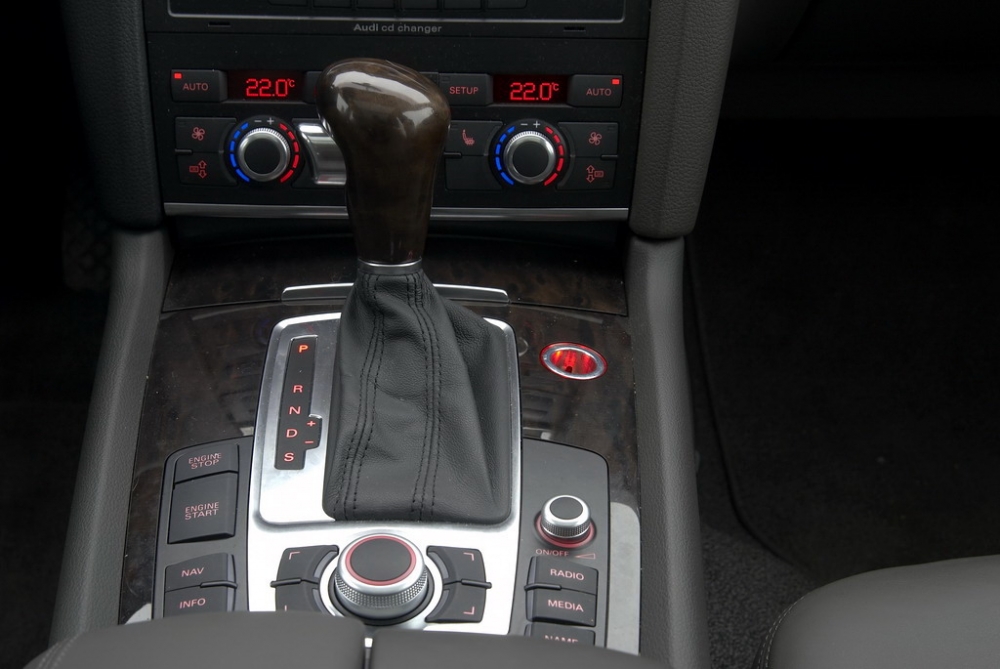
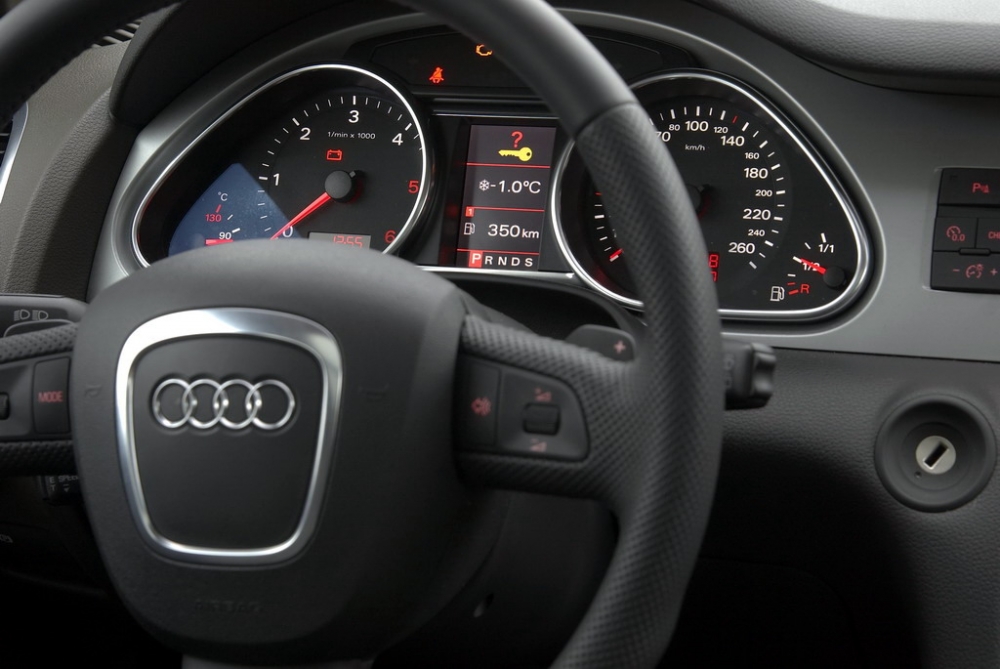 In the cabin, behind thick layers of sound insulation, expensive leather and wood, it is not heard at all. There is no talk of vibrations on the steering wheel or pedals. Only during sharp acceleration does a muffled rumble of the "eight" reach the cabin. And acceleration is simply lightning-fast. Just think: 6.4 seconds to a hundred! This is almost a second faster than the gasoline version with the same displacement. Tiptronic works flawlessly: it shifts gears on time and almost imperceptibly. During calm driving, it does this rarely — huge torque is available already at idle. Elasticity is amazing! But you are drawn to press the accelerator to the floor more often to enjoy this soft but powerful jerk. It feels like a three-ton SUV is instantly transported several hundred meters forward! And after a hundred, this onslaught does not weaken at all. In the cabin, behind thick layers of sound insulation, expensive leather and wood, it is not heard at all. There is no talk of vibrations on the steering wheel or pedals. Only during sharp acceleration does a muffled rumble of the "eight" reach the cabin. And acceleration is simply lightning-fast. Just think: 6.4 seconds to a hundred! This is almost a second faster than the gasoline version with the same displacement. Tiptronic works flawlessly: it shifts gears on time and almost imperceptibly. During calm driving, it does this rarely — huge torque is available already at idle. Elasticity is amazing! But you are drawn to press the accelerator to the floor more often to enjoy this soft but powerful jerk. It feels like a three-ton SUV is instantly transported several hundred meters forward! And after a hundred, this onslaught does not weaken at all. |
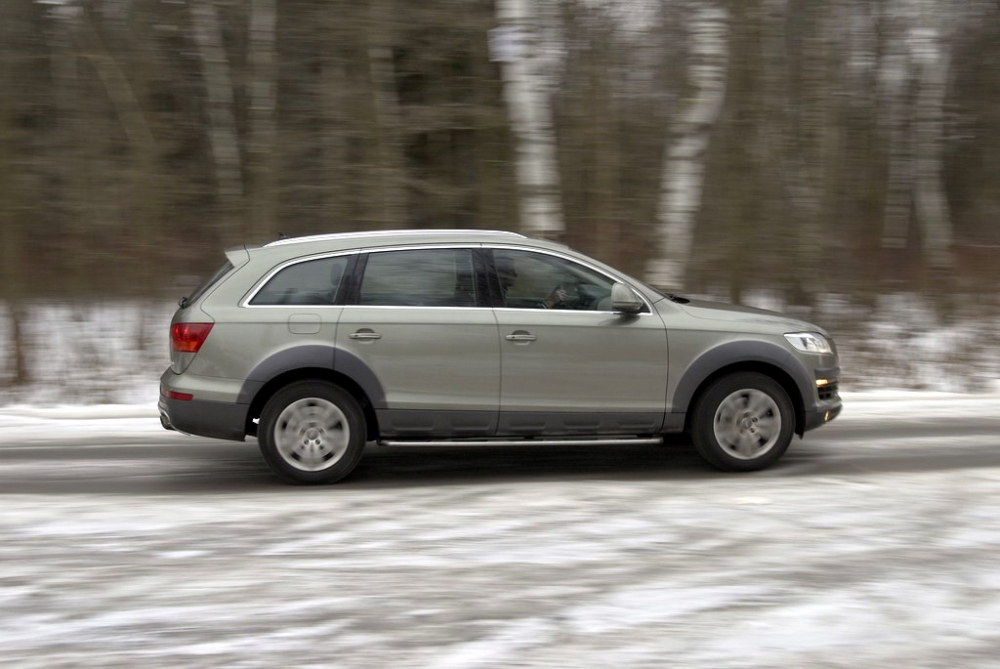
 This monstrous power continues to accelerate the Q7 without tiring. Only after 160–170 km/h does the onslaught slightly subside, but the car reaches two hundred in one breath. At such speeds, the Audi feels like a fish in water. The air suspension becomes stiffer, pressing the body to the ground, the car easily changes lanes, leaving behind many rivals that would seem more suited to such exercises. In the cabin — silence and calm. Top-class piloting! A true space devourer! This monstrous power continues to accelerate the Q7 without tiring. Only after 160–170 km/h does the onslaught slightly subside, but the car reaches two hundred in one breath. At such speeds, the Audi feels like a fish in water. The air suspension becomes stiffer, pressing the body to the ground, the car easily changes lanes, leaving behind many rivals that would seem more suited to such exercises. In the cabin — silence and calm. Top-class piloting! A true space devourer! |
 Communicating with the Audi Q7 4.2 TDI seriously made me think about what future awaits gasoline engines. If there is no technological breakthrough in this area, very soon turbodiesels will go far ahead in all parameters — power, elasticity, efficiency and environmental friendliness. Europeans, accustomed to counting money and caring about the environment, are easy to understand: their diesel is noticeably cheaper than gasoline, and the exhaust is cleaner. In our country, diesel fuel costs almost as much as 95-octane, and its quality is not always pleasing. But everything changes, and fortunately, for the better — except for the price, of course. Of course, our potential Q7 owner will choose diesel not at all out of economy. We again go our own way, unlike anyone else. It seems that driving a diesel is simply becoming fashionable. But, be that as it may, it is worth it. More than worth it. Communicating with the Audi Q7 4.2 TDI seriously made me think about what future awaits gasoline engines. If there is no technological breakthrough in this area, very soon turbodiesels will go far ahead in all parameters — power, elasticity, efficiency and environmental friendliness. Europeans, accustomed to counting money and caring about the environment, are easy to understand: their diesel is noticeably cheaper than gasoline, and the exhaust is cleaner. In our country, diesel fuel costs almost as much as 95-octane, and its quality is not always pleasing. But everything changes, and fortunately, for the better — except for the price, of course. Of course, our potential Q7 owner will choose diesel not at all out of economy. We again go our own way, unlike anyone else. It seems that driving a diesel is simply becoming fashionable. But, be that as it may, it is worth it. More than worth it. |
Diesel vanguard
Тарахтелка... Трактор… Керосинка… Больше дыму, чем ходу… Какие только "лестные" эпитеты не напридумывали противники моторов, работающих на "солярке". Если бы они хоть разок прокатились на Audi Q7 с новым 4,2 литровым би-турбодизелем, весь их архаичный скепсис исчез бы сам собой.

Test drive photos
Comments
No comments yet. Say the first word.