
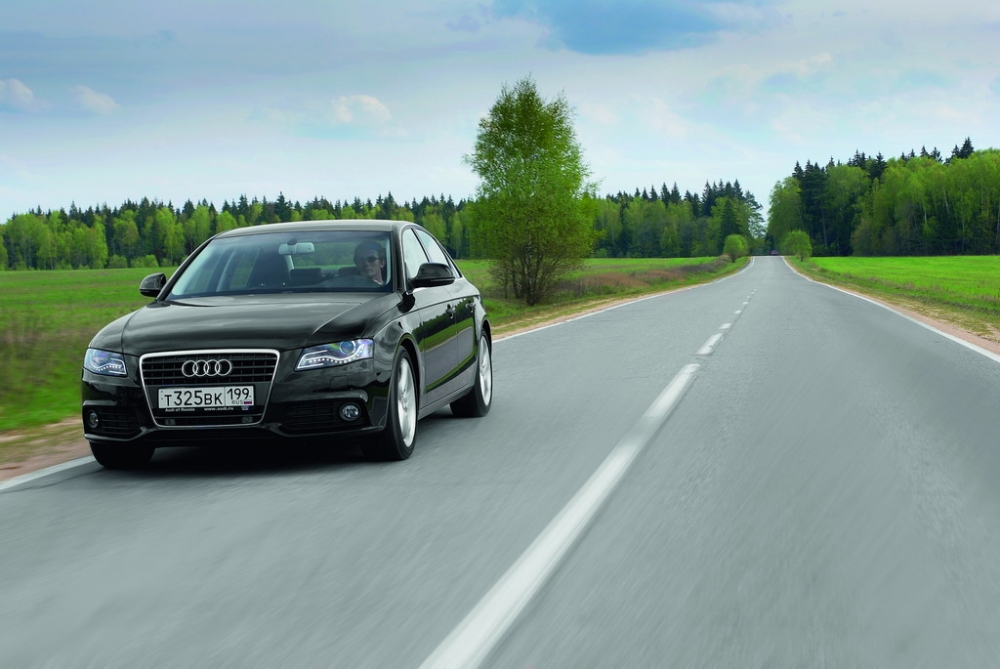
 The name Walter de Silva is well known to anyone who has even a slight interest in the automotive industry. Without exaggeration, we are talking about one of the most talented designers of our time. At each new place of work, de Silva managed to bring something fresh, bright, and memorable to the appearance of the next brand. At the same time, with each transition, the task before him became more and more difficult. And all because career growth invariably led him to companies where the appearance of cars was treated more and more strictly. Remember at least his early works: Alfa Romeo, SEAT, and Lamborghini. Alfa's management never hindered bold experiments, and the models 147 and 156 created by Walter came in handy, gaining enormous popularity. In SEAT, which was going through far from the best of times then, the maestro also received complete freedom of action, the result of which was the unmistakably recognizable Altea and Leon. The name Walter de Silva is well known to anyone who has even a slight interest in the automotive industry. Without exaggeration, we are talking about one of the most talented designers of our time. At each new place of work, de Silva managed to bring something fresh, bright, and memorable to the appearance of the next brand. At the same time, with each transition, the task before him became more and more difficult. And all because career growth invariably led him to companies where the appearance of cars was treated more and more strictly. Remember at least his early works: Alfa Romeo, SEAT, and Lamborghini. Alfa's management never hindered bold experiments, and the models 147 and 156 created by Walter came in handy, gaining enormous popularity. In SEAT, which was going through far from the best of times then, the maestro also received complete freedom of action, the result of which was the unmistakably recognizable Altea and Leon. |
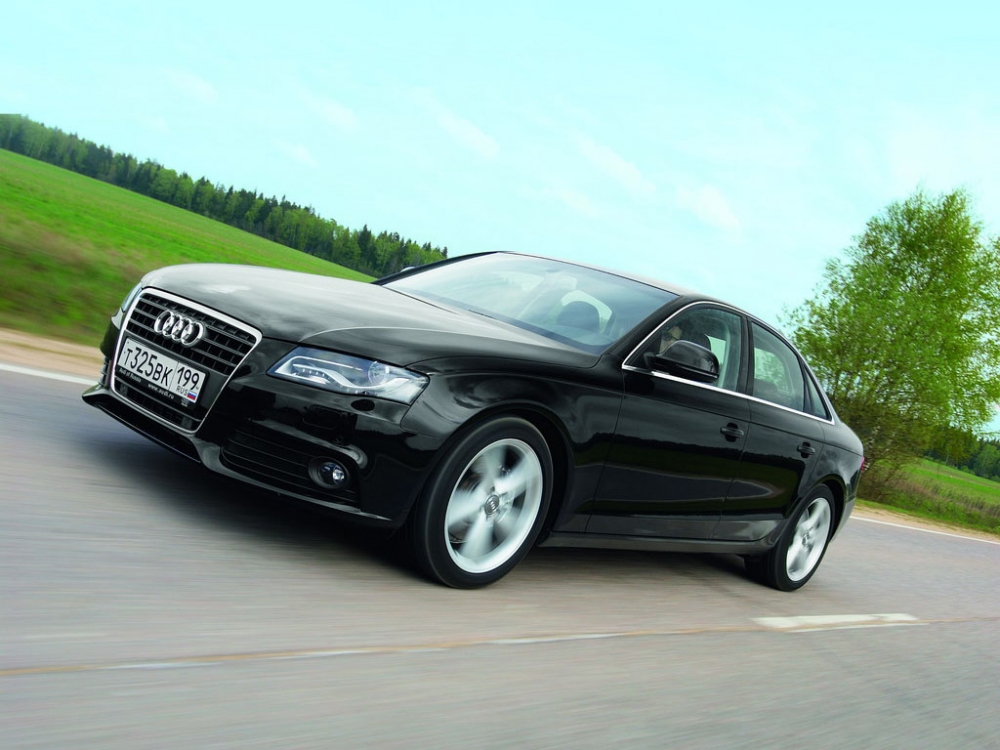 At Lamborghini, de Silva took a bold step — his Miura concept became a magnificent modern interpretation of the legendary supercar of the sixties. Then it got even more complicated: Walter headed the Audi design studio, where rather conservative views reigned. And since this year, he has moved to Volkswagen, which has fallen considerably behind the times. It is interesting what he will come up with now (a new Golf, created under his leadership, is expected soon). But now we are more interested in the period of work at Audi — the great designer managed to breathe individuality and even a certain sophistication into the calm German appearance. What is the famous shield-shaped radiator grille worth, which is now used on all models of the brand! At Lamborghini, de Silva took a bold step — his Miura concept became a magnificent modern interpretation of the legendary supercar of the sixties. Then it got even more complicated: Walter headed the Audi design studio, where rather conservative views reigned. And since this year, he has moved to Volkswagen, which has fallen considerably behind the times. It is interesting what he will come up with now (a new Golf, created under his leadership, is expected soon). But now we are more interested in the period of work at Audi — the great designer managed to breathe individuality and even a certain sophistication into the calm German appearance. What is the famous shield-shaped radiator grille worth, which is now used on all models of the brand! |
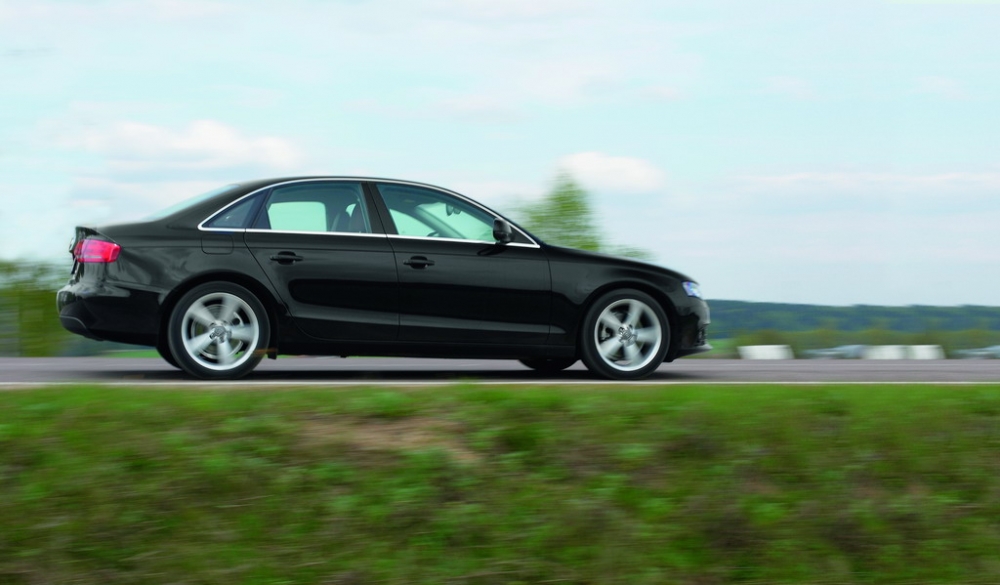
 The new generation A4 is the creation of de Silva. In this model, he seems to have tried to give his all, putting into the design of a "premium" D-class car (or, as they say in Europe, the upper medium segment) everything he is capable of. The word "upper" is not superfluous here at all. The A4, as has already become tradition, has grown in size and now in dimensions is almost not inferior to the first generation of the older A6. But we are not talking about dimensions now, but about the appearance that attracts the eye. If you glance over all of de Silva's works, then between these cars of completely different brands and concepts, one common feature is traced — very expressive front and rear parts, which are connected by rather calm, "clean" side panels. In the Audi A4, this is also clearly visible. The master's handwriting is unmistakably recognizable. The new generation A4 is the creation of de Silva. In this model, he seems to have tried to give his all, putting into the design of a "premium" D-class car (or, as they say in Europe, the upper medium segment) everything he is capable of. The word "upper" is not superfluous here at all. The A4, as has already become tradition, has grown in size and now in dimensions is almost not inferior to the first generation of the older A6. But we are not talking about dimensions now, but about the appearance that attracts the eye. If you glance over all of de Silva's works, then between these cars of completely different brands and concepts, one common feature is traced — very expressive front and rear parts, which are connected by rather calm, "clean" side panels. In the Audi A4, this is also clearly visible. The master's handwriting is unmistakably recognizable. |
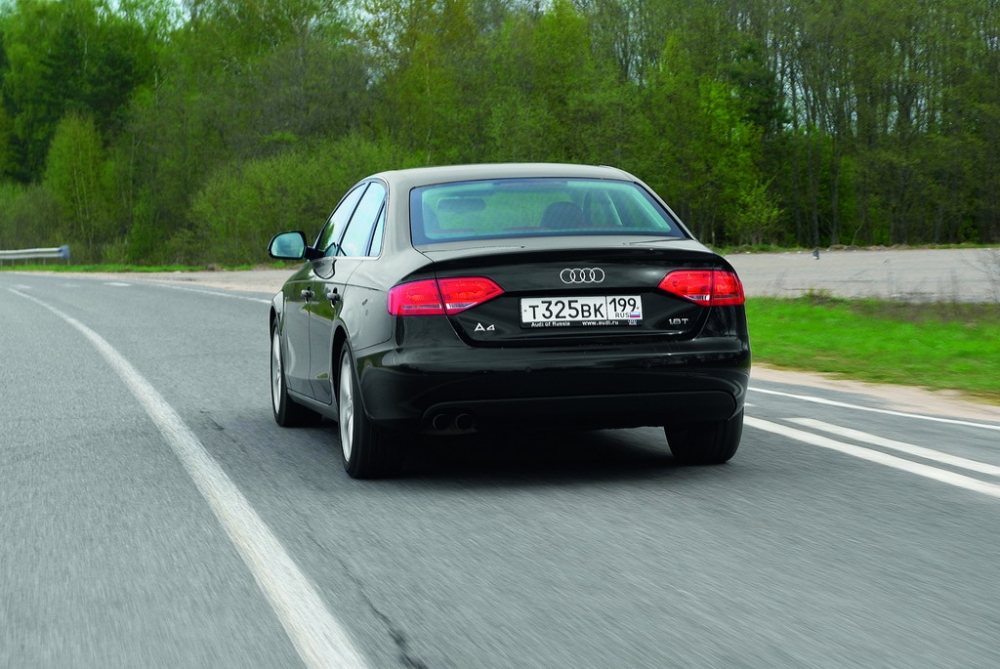
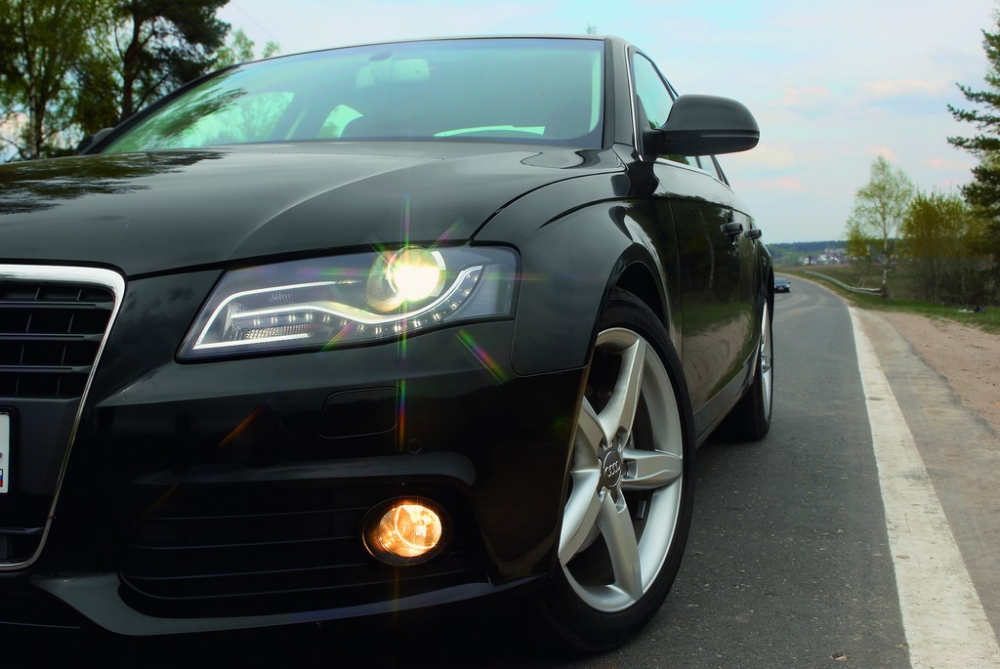
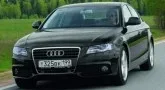
 The front part of the A4 is simply magnificent! The central place, as before, is occupied by a huge radiator grille, from which impressive air intakes diverge to the sides, united by a fancy cutout in the lower part of the bumper. And on top are those very headlights with "lined eyes." Two crescent-shaped garlands of LEDs are simply a wonderful find. Noticeable at any time of day, they make Audi cars unmistakably recognizable when viewed from the front. All together, these details give the "face" of the A4 a truly menacing and aggressive expression. I have more than once noticed how drivers of cars ahead, seeing the approaching A4 in their mirrors, hurried to give way, as if they wanted to get a better look at the LED taillights, a pair of exhaust pipes, and be surprised by the modest 1.8T badge. The front part of the A4 is simply magnificent! The central place, as before, is occupied by a huge radiator grille, from which impressive air intakes diverge to the sides, united by a fancy cutout in the lower part of the bumper. And on top are those very headlights with "lined eyes." Two crescent-shaped garlands of LEDs are simply a wonderful find. Noticeable at any time of day, they make Audi cars unmistakably recognizable when viewed from the front. All together, these details give the "face" of the A4 a truly menacing and aggressive expression. I have more than once noticed how drivers of cars ahead, seeing the approaching A4 in their mirrors, hurried to give way, as if they wanted to get a better look at the LED taillights, a pair of exhaust pipes, and be surprised by the modest 1.8T badge. |
 This desire came in very handy on the way to Yaroslavl and back — we chose exactly this route as a test ground. The road made it possible to fully appreciate the consumer qualities of the new "four," primarily comfort and spaciousness. We set off with four people, three of us over 180 cm tall. During the eight hours spent in the Audi cabin, no one complained about any inconvenience. As a driver, it was important to me that the Audi interior, as always, is impeccable from the point of view of ergonomics. A real German "Ordnung" is felt in everything. The seats (by the way, with built-in ventilation) are moderately firm, perfectly distribute the load, and on a long journey I never even changed the adjustments. The instruments are read perfectly, and all secondary controls are located in intuitively understandable places. Add to this the MMI system interface — the most sensible of all such systems. This desire came in very handy on the way to Yaroslavl and back — we chose exactly this route as a test ground. The road made it possible to fully appreciate the consumer qualities of the new "four," primarily comfort and spaciousness. We set off with four people, three of us over 180 cm tall. During the eight hours spent in the Audi cabin, no one complained about any inconvenience. As a driver, it was important to me that the Audi interior, as always, is impeccable from the point of view of ergonomics. A real German "Ordnung" is felt in everything. The seats (by the way, with built-in ventilation) are moderately firm, perfectly distribute the load, and on a long journey I never even changed the adjustments. The instruments are read perfectly, and all secondary controls are located in intuitively understandable places. Add to this the MMI system interface — the most sensible of all such systems. |
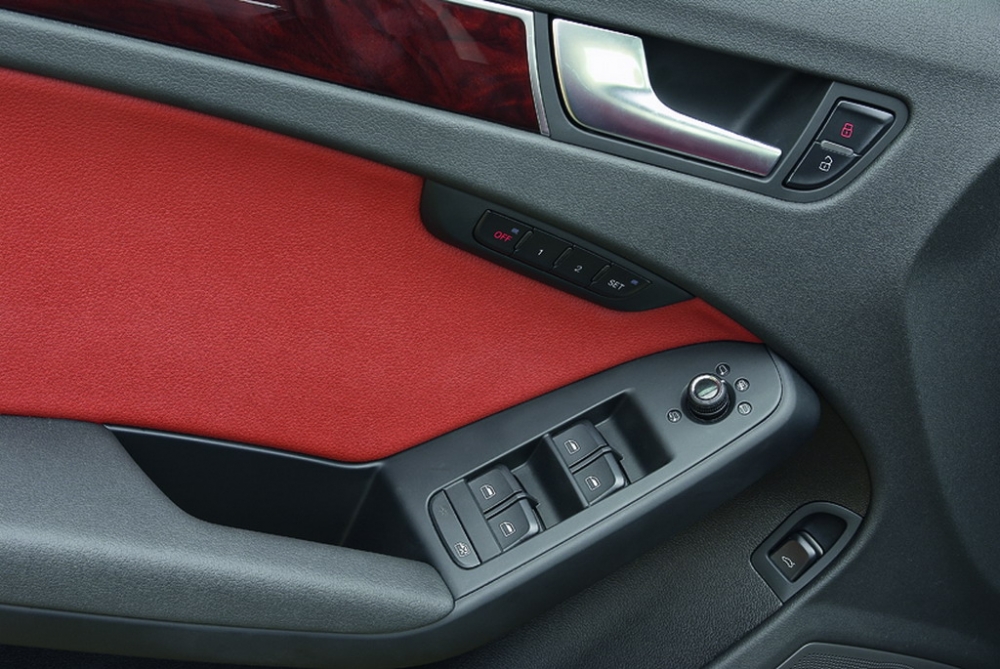
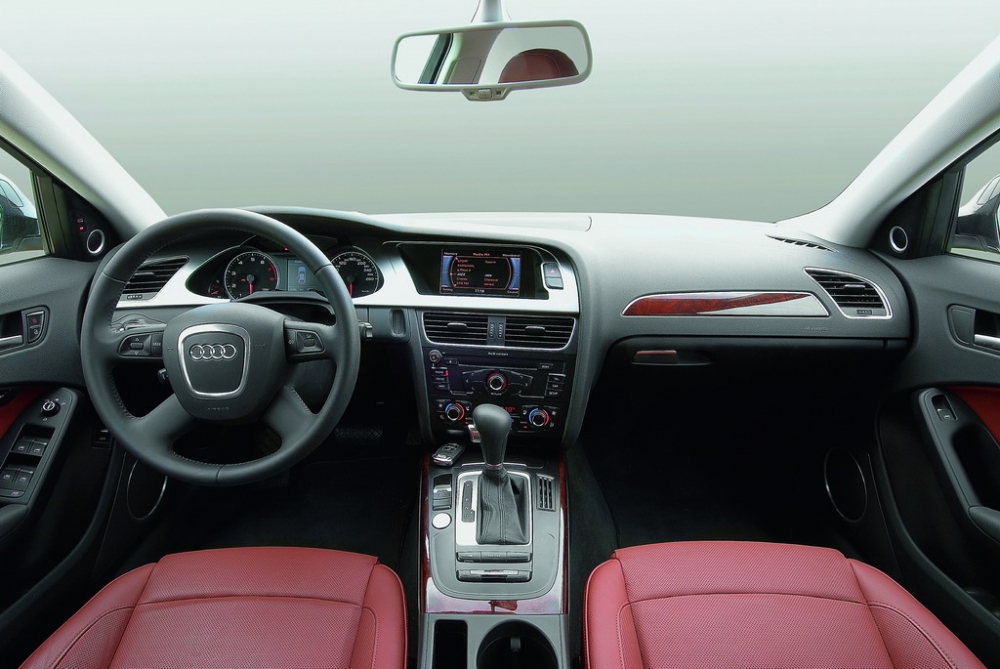 The passengers, in turn, liked the fact that they did not feel cramped anywhere — neither in the front nor in the back. And all of us, of course, appreciated the impeccable quality of the interior assembly — there is simply nothing to find fault with. What my fellow travelers complained about, especially those sitting in the back, was the insufficient smoothness of the ride. Let me remind you that the test car was equipped with the Audi Drive Select system, which controls the Audi Ride Control subsystem, which allows you to change the stiffness of the shock absorbers. The passengers said that they do not feel the difference between the three modes (Comfort — Auto — Dynamic), which are switched using special buttons on the center tunnel — it still shakes. Perhaps the optional 18-inch five-spoke wheels are to blame. Someone rightly noted that "wheels are half the design of a car." Maybe not half, but a third for sure, especially in this case — they have a very interesting, but at the same time laconic design. The passengers, in turn, liked the fact that they did not feel cramped anywhere — neither in the front nor in the back. And all of us, of course, appreciated the impeccable quality of the interior assembly — there is simply nothing to find fault with. What my fellow travelers complained about, especially those sitting in the back, was the insufficient smoothness of the ride. Let me remind you that the test car was equipped with the Audi Drive Select system, which controls the Audi Ride Control subsystem, which allows you to change the stiffness of the shock absorbers. The passengers said that they do not feel the difference between the three modes (Comfort — Auto — Dynamic), which are switched using special buttons on the center tunnel — it still shakes. Perhaps the optional 18-inch five-spoke wheels are to blame. Someone rightly noted that "wheels are half the design of a car." Maybe not half, but a third for sure, especially in this case — they have a very interesting, but at the same time laconic design. |
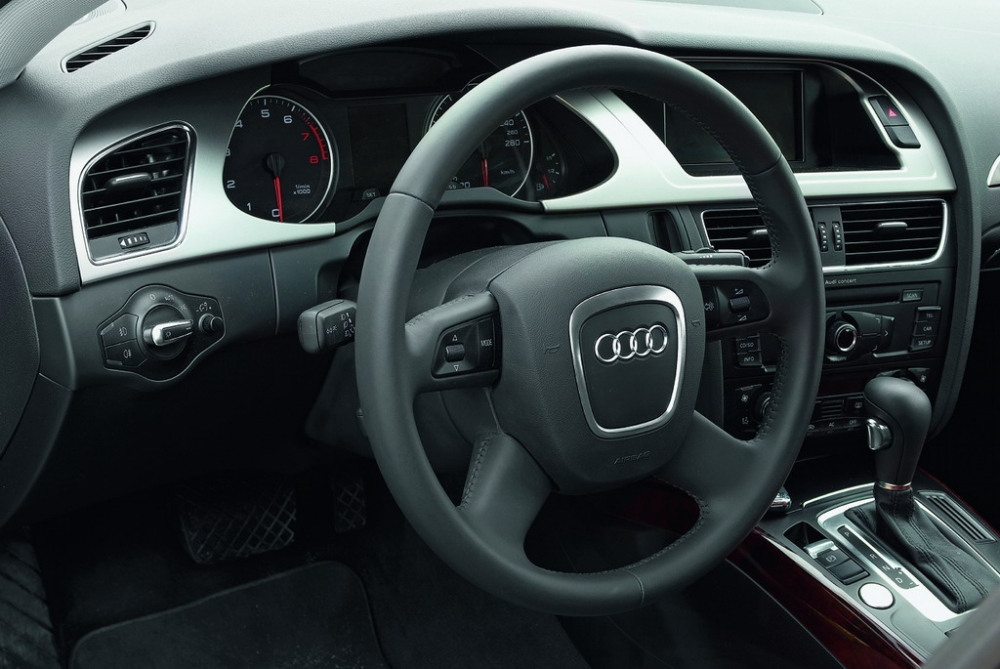 But I clearly felt the difference when switching Audi Drive Select, especially when switching to Dynamic mode. This system affects not only the shock absorbers, but also changes the steering gear ratio, the algorithm of the continuously variable transmission, and the response time to the gas pedal. In Dynamic mode, the steering wheel becomes noticeably sharper, and the reactive force on it is more noticeable. The car responds more readily to the gas pedal, and the already excellent variator becomes even more like a regular, but very fast and smooth "automatic," creating the illusion of "steppedness" and "kick-down." And the suspension in this mode becomes more collected, and not just shaky, as in Comfort. Here it becomes clear why these huge 18-inch "rollers" are needed, it is clear for the sake of what the smoothness of the ride and comfort were partially sacrificed. But I clearly felt the difference when switching Audi Drive Select, especially when switching to Dynamic mode. This system affects not only the shock absorbers, but also changes the steering gear ratio, the algorithm of the continuously variable transmission, and the response time to the gas pedal. In Dynamic mode, the steering wheel becomes noticeably sharper, and the reactive force on it is more noticeable. The car responds more readily to the gas pedal, and the already excellent variator becomes even more like a regular, but very fast and smooth "automatic," creating the illusion of "steppedness" and "kick-down." And the suspension in this mode becomes more collected, and not just shaky, as in Comfort. Here it becomes clear why these huge 18-inch "rollers" are needed, it is clear for the sake of what the smoothness of the ride and comfort were partially sacrificed. |
 The nature of the Audi A4's handling has changed after the change in layout (the engine is now located longitudinally and shifted within the wheelbase), but only for the better. These changes made it possible to bring the weight distribution closer to the ideal 50:50 proportion, reduce the moment of inertia when moving along an arc, and, as a result, reduce the "signature" understeer of front-wheel-drive Audis. The A4 holds the asphalt excellently. According to subjective feelings, the breakaway occurs much later than on the previous model. The Audi is also not averse to "throwing the rear" when lifting off the gas. They added spice in Ingolstadt, no doubt! But I, of course, did not perform these experiments on the Yaroslavl — Moscow highway, but on specially designated sites. And here, on the highway, this Audi is a completely ordinary car, although capable of putting on different masks from time to time — with a more family or more sporty "facial expression." There is some synthetic quality in this (after all, the change of all system parameters occurs at a purely electronic level) and a desire for universalization, the combination in one specific mechanism of two seemingly mutually exclusive essences. But there is nothing surprising in this. Firstly, the Audi A4 itself is a universal car for every day. Secondly, the manufacturer's desire to endow the car, if possible, with different qualities is quite understandable — this a priori increases the target audience, which is already not small: the A4 is the most popular model in the Audi production range. And thirdly, it is felt that the new "four" handles excellently not only because of these fashionable electronic systems. I am sure that those who prefer this car even without the Audi Drive Select system will not be disappointed. After all, they will in any case get a wonderful new 160-horsepower 1.8 TFSI engine, which is distinguished by enviable efficiency and a wide shelf of torque, and therefore excellent traction, one of the best continuously variable transmissions to date, a spacious beautiful interior and a large trunk — an excellent "suit" from Walter de Silva. Undoubtedly, even the initial version of the A4 has excellent potential. And, no doubt, it will not be wasted. It is already possible to find out how the famous proprietary all-wheel drive Audi Quattro is implemented within the new platform, for which a little later we will definitely try one of the all-wheel-drive modifications. Later, S-versions will appear. Well, at the very end, the most powerful "four" — the RS4. And it seems that it is then that we will understand how good the new Audi A4 chassis is… The nature of the Audi A4's handling has changed after the change in layout (the engine is now located longitudinally and shifted within the wheelbase), but only for the better. These changes made it possible to bring the weight distribution closer to the ideal 50:50 proportion, reduce the moment of inertia when moving along an arc, and, as a result, reduce the "signature" understeer of front-wheel-drive Audis. The A4 holds the asphalt excellently. According to subjective feelings, the breakaway occurs much later than on the previous model. The Audi is also not averse to "throwing the rear" when lifting off the gas. They added spice in Ingolstadt, no doubt! But I, of course, did not perform these experiments on the Yaroslavl — Moscow highway, but on specially designated sites. And here, on the highway, this Audi is a completely ordinary car, although capable of putting on different masks from time to time — with a more family or more sporty "facial expression." There is some synthetic quality in this (after all, the change of all system parameters occurs at a purely electronic level) and a desire for universalization, the combination in one specific mechanism of two seemingly mutually exclusive essences. But there is nothing surprising in this. Firstly, the Audi A4 itself is a universal car for every day. Secondly, the manufacturer's desire to endow the car, if possible, with different qualities is quite understandable — this a priori increases the target audience, which is already not small: the A4 is the most popular model in the Audi production range. And thirdly, it is felt that the new "four" handles excellently not only because of these fashionable electronic systems. I am sure that those who prefer this car even without the Audi Drive Select system will not be disappointed. After all, they will in any case get a wonderful new 160-horsepower 1.8 TFSI engine, which is distinguished by enviable efficiency and a wide shelf of torque, and therefore excellent traction, one of the best continuously variable transmissions to date, a spacious beautiful interior and a large trunk — an excellent "suit" from Walter de Silva. Undoubtedly, even the initial version of the A4 has excellent potential. And, no doubt, it will not be wasted. It is already possible to find out how the famous proprietary all-wheel drive Audi Quattro is implemented within the new platform, for which a little later we will definitely try one of the all-wheel-drive modifications. Later, S-versions will appear. Well, at the very end, the most powerful "four" — the RS4. And it seems that it is then that we will understand how good the new Audi A4 chassis is… |
Synthetic for roads
The new Audi A4 can be forgiven almost anything just for its magnificent “lined eyes.” But, as we found out during this test drive, there's not much to forgive – it's a nearly flawless car.
Test drive photos
Comments
No comments yet. Say the first word.