Chery Tiggo: prices and specifications
10 generations Country of origin: China

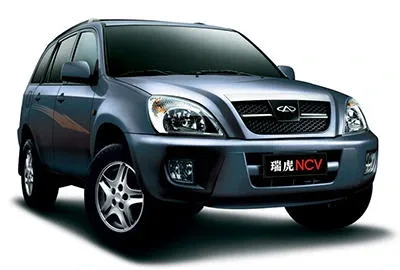
Chery Tiggo is the first compact crossover from the Chinese brand, named after the tiger, an animal revered in China.
Like many Chinese manufacturers, Chery based the new model on an existing car — the Japanese crossover Toyota RAV4. However, Chinese engineers developed their own body design to move away from the appearance of the "original." The technical part was handled by specialists from Lotus and Mitsubishi, who worked on tuning the chassis, engines, and transmissions. The official premiere of the Chery Tiggo took place in 2005 at the Shanghai Auto Show. Main production is established in China, with assembly also carried out in Uruguay, Egypt, Iran, Indonesia, and Russia.
2010 Facelift
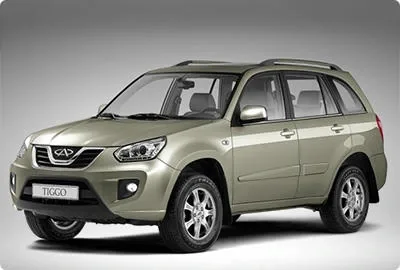
In 2010, the model underwent a major update, and in this form it appeared in Ukraine in spring 2012. Externally, the radiator grille, hood, lights, and bumpers changed; inside, the steering wheel, center console, and instrument panel were updated. These changes allowed it to move even further away from the Toyota RAV4 styling. The technical part was also improved: the body length increased by 105 mm, providing more space for rear passengers. However, the rear seat lost the mechanism for folding not only the backrest but also the cushion — this option was removed, affecting the ability to adjust the trunk volume.
Engines and Transmissions
The base engine for the Chery Tiggo is a 1.6-liter gasoline unit. Two more gasoline engines are also available — 1.8 and 2.0 liters. They are paired with a five-speed manual transmission or a continuously variable transmission. The car is built on a front-wheel-drive platform, with all-wheel drive available as an option and engaged manually.