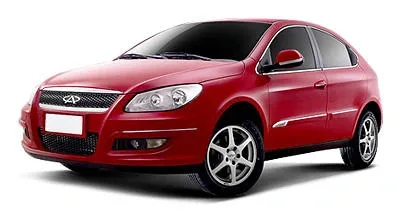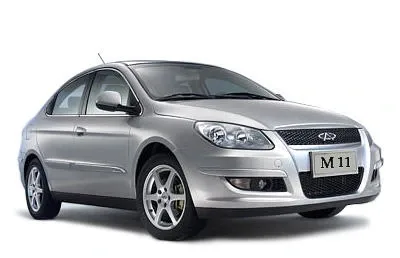
Chery M11: prices and specifications
2 generations Country of origin: China

The Chery M11 is a family of compact cars that became one of the representatives of the "second wave" of development of the Chinese automotive industry. The letter "M" in the model name stands for medium, and the number "11" indicates the body type (for sedan and hatchback, the designation "12" is used).
After numerous complaints about the quality of the first Chery models, the company's management invested significant funds in product development and improvement. These investments paid off, and one of the results was the M11/12 model, created in 2005. Both Chinese and foreign specialists worked on the project. The exterior and interior design was developed at the studio of the Italian company Pininfarina. The engines for the car were produced by engineers of the Austrian company AVL under the ACTECO brand, created specifically for Chery. The manual and automatic transmissions were also assembled in Austria. The steel for the body was ordered from Sweden, and the chassis tuning was handled by engineers from the British company Mira.
The concept of the model was first shown in 2006 at the Beijing Auto Show. Two years later, at the same event, the production version of the Chery M11/12 was presented, available in two body styles: sedan and five-door hatchback. In addition to the names M11 and M12 used in Ukraine and Russia, this model is known by seven other names in different markets: Chery J3, Chery Chance/Niche, Chery Cielo, Chery Tengo, Chery Skin/Skin Sport, Chery Orinoco, and Speranza M11/M12. The car is produced not only in China but also in Egypt, Venezuela, and Taiwan.
In Ukraine, official sales of the Chery M11/12 began in 2010. For the Ukrainian market, the model is equipped with a 1.6-liter gasoline engine paired with a five-speed manual transmission. The car has front-wheel drive.