
Advertising
About the Volvo brand
Sweden founded in 1924 Model range
General Information
Volvo (Volvo Aktiebolaget) is a Swedish company that manufactures passenger cars and trucks, as well as engines for various purposes, and a variety of agricultural, forestry, and household equipment.The headquarters is located in Gothenburg.
Corporate History
On July 25, 1924, at the Sturehof restaurant in Stockholm — a day that in the Swedish calendar is called Jacob's Day — the decision was made to create Volvo. The first prototype car, prepared by the company's founders, Assar Gabrielsson and Gustaf Larson, was called "Jakob," and its creation used the maximum number of Swedish-made components.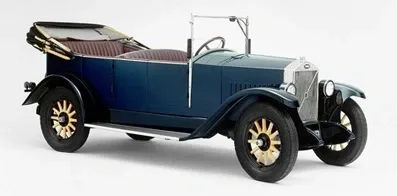
The enthusiasts' venture turned out to be successful, and from 1927, a company was founded to produce cars of the Volvo brand (from Latin volvo — I roll). By 1935, 10,000 cars had been sold in Sweden.
The first trucks were produced from 1928, and from 1931 the company has led Europe in the production of heavy trucks.
In the early 1940s, the company developed relatively inexpensive models Volvo PV36 and Volvo PV51, which became "people's cars" in Sweden. The war prevented the sale of these models in Europe, but in the first post-war years, powerful advertising campaigns brought the company fame in Europe and America.
The post-war model Volvo PV44 led in Sweden in sales until 1953 and became the basis for subsequent "hits" — PV 444 and PV 544. The presentation of the first mass-produced Volvo car — PV 444 — took place in 1944 at the famous Volvo exhibition in the Royal Tennis Hall in Stockholm. Also presented were the PV60 — the first bus with a diesel engine — and many other new products.
In 1953, the presentation of the first true Volvo station wagon — Duett — took place. Although the Duett was probably more suitable for small business owners, it marked the beginning of Volvo's orientation towards family-type cars.
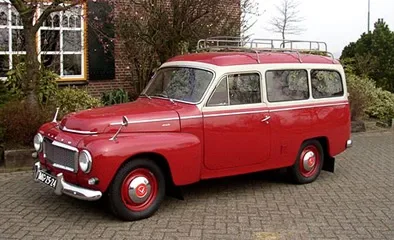
In 1956, the Volvo P 120 (sold in Scandinavian countries under the name Amazon) was released. This car was distinguished by its distinctly feminine contours. Soon the new model surpassed the PV in popularity.
In 1958, Gunnar Andersson, driving a PV 544, won the European Rally Championship. In 1965, the Volvo brand won the World Rally Championship.
Volvo became the first company in the world to install a three-point seatbelt in a production car in 1959. The creator of the new seatbelt, Nils Bohlin, received many awards, but more importantly: this belt saved millions of lives.
The product range expanded, and in 1959 the sports coupe Volvo P 1800 appeared.
In 1966, the Volvo 144 was released — "the world's safest car," which received the title of "Car of the Year" in Scandinavian countries.
In 1974, the Volvo 240 was presented — more modern and safer than the cars of the 140 series. It remained on sale until 1993 and was produced in 2.8 million units.
In the Netherlands in 1976, the Volvo 343 was released, a new important model with a unique transmission called Rem-Johan (Belt-Johan). Initially, the car had certain shortcomings, but over time they were corrected, and the model gained popularity.
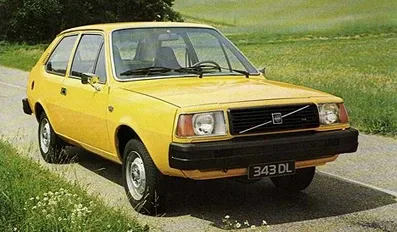
Volvo is the world's first car manufacturer to introduce a catalytic converter and lambda probe in 1976.
In 1982, the Volvo 760 model achieved worldwide success. At this time, due to changing market trends, the company was experiencing difficulties. Following the Volvo 760, more mass-market, "democratic" models 740 appeared, quickly conquering Sweden and other countries.
In 1985, the Volvo 480 ES was released in the Netherlands — a striking sports coupe that became the first front-wheel drive Volvo car. It was followed in 1988 by the Volvo 440, and a little later by the Volvo 460 sedan.
The appearance of the Volvo 960 and 940 occurred in 1990. The Volvo 960 had an aluminum 6-cylinder engine assembled at the new engine plant in Skövde. The car quickly entered the battle with rivals in the "luxury" class — primarily German ones. The Volvo 940, like the earlier models 740 and 240, became a people's car.
In 1991, the Volvo family car — 850 — entered the market and was a great success. With the SIPS system and other innovations, Volvo showed what a reliable side impact protection system looks like.
In 1994, Volvo released a completely new version of the Volvo 960.
At the Volvo plant in Born in 1995, new contenders for success were released — the Volvo S40 and V40.
In 1996, the Volvo C70 Coupe was presented to the public. This coupe, followed by the Volvo C70 Cab, was assembled at the plant in Uddevalla, which Volvo owned jointly with Tom Walkinshaw Racing.
In 1997, the V70 Cross Country was released. In 2000, the second-generation Volvo V70, built on a large platform, came out. At the same time, the Volvo Cross Country appeared.
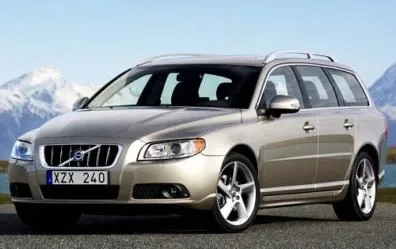
The Volvo S80 featured the inflatable curtain IC and the whiplash protection system WHIPS — the world's first safety devices of this type, and in 2000 this model was recognized as the world's safest car.
In 1999, the passenger car division Volvo Cars was sold to the Ford Motor Company.
In 2000, Volvo and Renault signed a joint agreement to create a single company for the production of trucks. From that moment, Volvo became the largest truck manufacturer in Europe and the second in the world.
Since November 2000, the S60 model has been on sale. This car features a large number of devices providing excellent passenger safety and was recognized in 2001 as the safest car.
In Detroit in 2002, the premiere of the SUV — Volvo XC90 — took place.
In 2004, two new products from the Swedish company appeared: the Volvo S40 and Volvo V50.
In 2005, the Japanese company Yamaha produced the first engine for the new Volvo XC90 V8.
In 2007, a new Volvo C30 appeared, the Volvo C70 and Volvo XC70/V70 were updated, and production of the Volvo XC60 began.
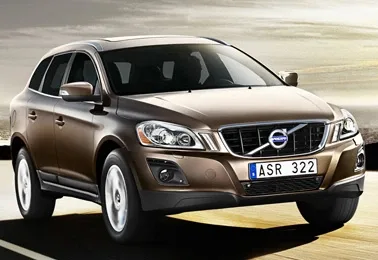
Volvo has earned a reputation as a manufacturer of expensive, prestigious, reliable, and safe cars (the company's role in the development and implementation of modern safety systems is widely known, for which the company has repeatedly received international awards).