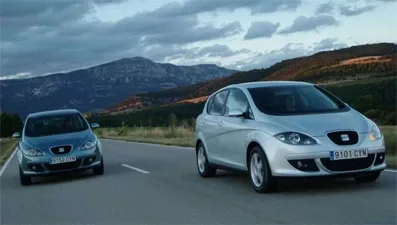
About the SEAT brand
Spain founded in 1950 Model range
General Information
SEAT (Sociedad Espanola de Automoviles de Turismo S. A.) is a Spanish car manufacturer that has been part of the Volkswagen Group since 1990. The company's headquarters are located in Barcelona. The brand positions itself as the Spanish division of Volkswagen Group, focusing on modern technologies, original design, and sporty character. This approach is reflected in the slogan "SEAT auto emocion".
Corporate History
SEAT was founded in 1950. Its founders were the National Institute of Industry (51%), six banks (42%), and FIAT, which received 7% of shares and a production license. Construction of the plant began in the free economic zone of Barcelona.
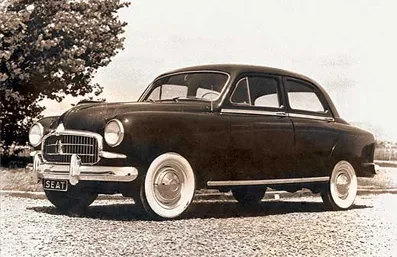
The first SEAT car rolled off the assembly line in 1953. By 1954, about 3,000 cars had been produced. Three years later, production of the Seat 600 model began. Soon, the daily output of the Seat 1500 reached 300 units. By 1965, the annual production volume exceeded 100,000 cars.
In 1966, the Seat 850 model was introduced. In 1968, production of the 124 model began, with an annual output reaching 200,000 units. In 1970, the Seat 124 coupe, Seat 1600, and Seat 1800 with a diesel engine appeared. Exports increased tenfold over five years.
SEAT's sports direction began in 1970. Later, the Special Vehicles Department was created at the plant, which eventually became the SEAT Sport division. Starting in 1972, Spanish drivers participated in national and European rally championships.
In 1974, the two-millionth Seat was produced. Sales reached one billion dollars, and the company ranked eighth among European car manufacturers. Despite the industry crisis, SEAT expanded by building a plant complex and warehouse in Martorell.
In 1980, FIAT refused to increase its stake in SEAT, ending 30 years of cooperation. In 1981, the company developed a new strategy, starting work on the Ronda, Ibiza, Malaga, and Marbella model lines. In 1982, cooperation agreements were signed with Volkswagen. In 1986, Volkswagen acquired 51% of SEAT's shares, and by the end of the year, its stake had grown to 75%. In 1989, construction of a new plant in Martorell began. In 1990, Volkswagen became the owner of 99.99% of SEAT's shares.
Three years later, the Martorell plant was ready for launch with a capacity of 2,000 cars per day. The official opening took place in February 1993 with the participation of King Juan Carlos I of Spain and Volkswagen Group President Ferdinand Piëch.
In the summer of 1984, the Seat Ibiza model was introduced, with daily production immediately reaching 530 units. The third-generation Seat Ibiza won the World Rally Championship in the 2-liter class three times (1996, 1997, 1999).
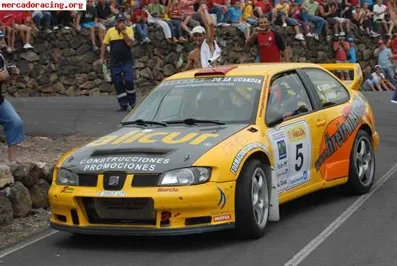
In the 1990s, SEAT Sport returned to the world rally scene with the Seat Toledo Maraton, and later with the Ibiza GTi 16V kit car, which successfully competed against the Peugeot 306 Maxi, Renault Megane, and Skoda Felicia Kit-Car. At the end of August 1998, the Seat Cordoba WRC debuted at the Rally Finland.
In March 1991, the front-wheel-drive mid-size car Seat Toledo with a transverse engine was introduced. In the fall of 1998, its new generation appeared. In terms of design, the four-door sedan Toledo belongs to the D class (like the Volkswagen Bora and Skoda Octavia).
In 1993, the Martorell plant produced only two models on the same platform. Five years later, eight different models were produced there. In addition to SEAT cars, the plant produced Volkswagen Polo Classic, Polo Variant, and Caddy. In 1998, the facility was modernized by Volkswagen specialists.
The front-wheel-drive minivan Seat Alhambra, a joint development of Volkswagen and Ford, was first shown in the fall of 1995 in Frankfurt. Since May 1997, the compact Seat Arosa based on the VW Polo was produced at the Volkswagen plant in Wolfsburg.
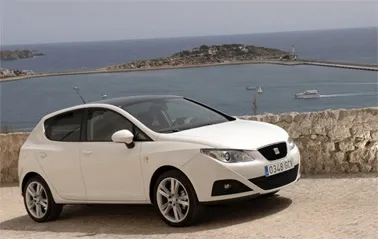
In September 2001, a new generation of the Ibiza model appeared (similar to the Skoda Fabia).
The premiere of the three- and five-door Seat Leon hatchbacks took place in the fall of 1999. The model is built on the Golf IV platform and belongs to the European C class. The Seat Leon Cupra modification became the company's most powerful car.
In 2000, the production of the 13-millionth SEAT car was celebrated — it was the Leon model, the brand's most popular. In 2001, the company produced 11 million cars. At the Martorell plant, on the same assembly line as the Seat Ibiza hatchback, its cargo-passenger version Inca, and the Cordoba sedan, identical models Volkswagen Caddy and Polo Classic were assembled, as well as the Seat Cordoba Vario station wagon and Volkswagen Polo Variant. Three more SEAT models were produced elsewhere: Marbella at the first Seat plant in Barcelona, the Alhambra minivan (as well as VW Sharan and Ford Galaxy) in Portugal, and the Arosa at Volkswagen's main plant in Germany.
SEAT in Ukraine
In 2003, Formula Motor Ukraine became the official importer of SEAT cars in Ukraine. Since October 2006, this company, together with Eurocar, launched serial production of the Seat Leon, Seat Altea, and Seat Toledo models.