
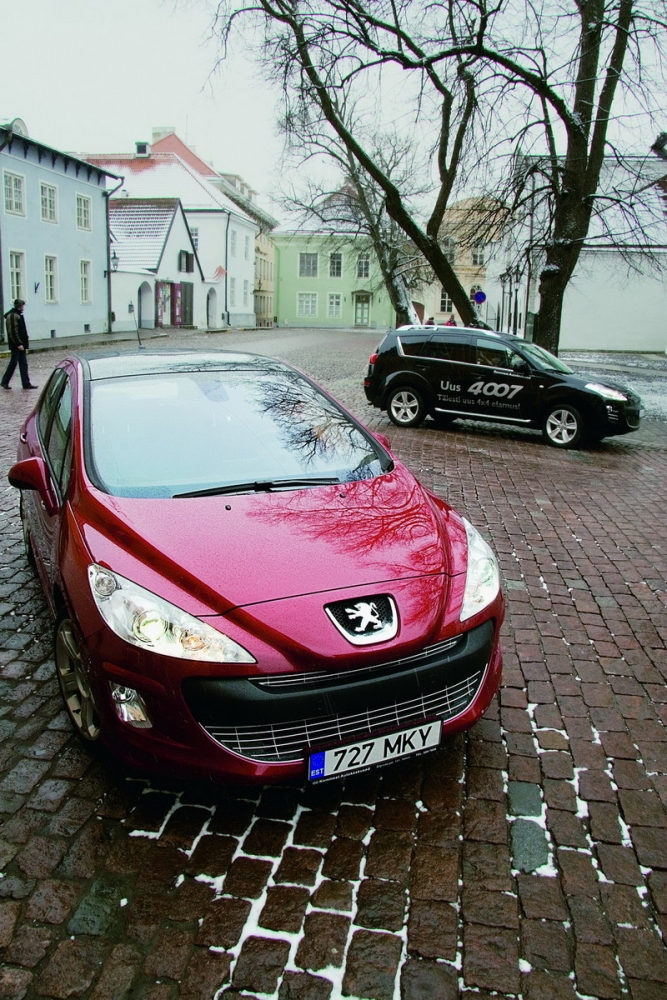
 Well, it's a good thing this combined test drive of these models wasn't organized in England, or this pair would have been Piglet and Winnie-the-Pooh... However, as they say, size doesn't matter, and appearances, as we know, can be deceiving. Further acquaintance with these two cars quickly showed that the 4007 is by no means prone to malicious hooliganism in the style of the Swedish fat man with a propeller, or the capricious carelessness of the British bear with sawdust in his head. And in the character of the 308, there is nothing of the naivety of the eternally whining Swedish boy or the softness of the squeaky British piglet. Lion and lion cub, perhaps, would be closer to the truth. To begin with, I have to sort out my relationship with the larger beast. Fortunately, I am free from the need to tell the whole story of its birth: this has already been done by my colleague Alexander Goryunov in his report on the Citroen C-Crosser test drive, which took place almost simultaneously with the Peugeot test – from there you will learn all about it (see p. 66). Well, it's a good thing this combined test drive of these models wasn't organized in England, or this pair would have been Piglet and Winnie-the-Pooh... However, as they say, size doesn't matter, and appearances, as we know, can be deceiving. Further acquaintance with these two cars quickly showed that the 4007 is by no means prone to malicious hooliganism in the style of the Swedish fat man with a propeller, or the capricious carelessness of the British bear with sawdust in his head. And in the character of the 308, there is nothing of the naivety of the eternally whining Swedish boy or the softness of the squeaky British piglet. Lion and lion cub, perhaps, would be closer to the truth. To begin with, I have to sort out my relationship with the larger beast. Fortunately, I am free from the need to tell the whole story of its birth: this has already been done by my colleague Alexander Goryunov in his report on the Citroen C-Crosser test drive, which took place almost simultaneously with the Peugeot test – from there you will learn all about it (see p. 66). |
 I'll only add that Peugeot is not such a newcomer to the production of all-wheel-drive vehicles: firstly, the company produced for a long time an army SUV (and its civilian version) P4 based on the "Mercedes" Gelandewagen, partially redesigned and equipped with its own diesel engine; secondly, there was also the magnificent sports sedan 405 Mi16x4, distinguished by amazing handling and stability. And that's not to mention the all-wheel-drive Peugeots and Citroens that have been alternately beating rivals in the World Rally Championship for years. So, I think the French could well have built a crossover with their own mind and forces, but preferred a commercially more profitable and, most importantly, fast path – "rebadging" an existing model of another manufacturer – the Mitsubishi Outlander XL. I'll only add that Peugeot is not such a newcomer to the production of all-wheel-drive vehicles: firstly, the company produced for a long time an army SUV (and its civilian version) P4 based on the "Mercedes" Gelandewagen, partially redesigned and equipped with its own diesel engine; secondly, there was also the magnificent sports sedan 405 Mi16x4, distinguished by amazing handling and stability. And that's not to mention the all-wheel-drive Peugeots and Citroens that have been alternately beating rivals in the World Rally Championship for years. So, I think the French could well have built a crossover with their own mind and forces, but preferred a commercially more profitable and, most importantly, fast path – "rebadging" an existing model of another manufacturer – the Mitsubishi Outlander XL. |
 Moreover, the Peugeot 4007 and Citroen C-Crosser actually have many more "blood relatives." The platform of the new Outlander was developed back in the days of the close but then still dissolved alliance of the Japanese with the DaimlerChrysler concern (now also dissolved into its component parts), and therefore on it, to one degree or another, are built the new Lancer (including the Evo version), the Jeep Patriot and Compass, the all-wheel-drive Dodge Caliber, the sports sedan of the same brand Avenger with its "twin" Chrysler Sebring, and even the newest Mitsubishi Delica D5 minivan. In a word, a big family in which the Outlander LX is both a brother, and a father, and a mother to the 4007. Moreover, the Peugeot 4007 and Citroen C-Crosser actually have many more "blood relatives." The platform of the new Outlander was developed back in the days of the close but then still dissolved alliance of the Japanese with the DaimlerChrysler concern (now also dissolved into its component parts), and therefore on it, to one degree or another, are built the new Lancer (including the Evo version), the Jeep Patriot and Compass, the all-wheel-drive Dodge Caliber, the sports sedan of the same brand Avenger with its "twin" Chrysler Sebring, and even the newest Mitsubishi Delica D5 minivan. In a word, a big family in which the Outlander LX is both a brother, and a father, and a mother to the 4007. |
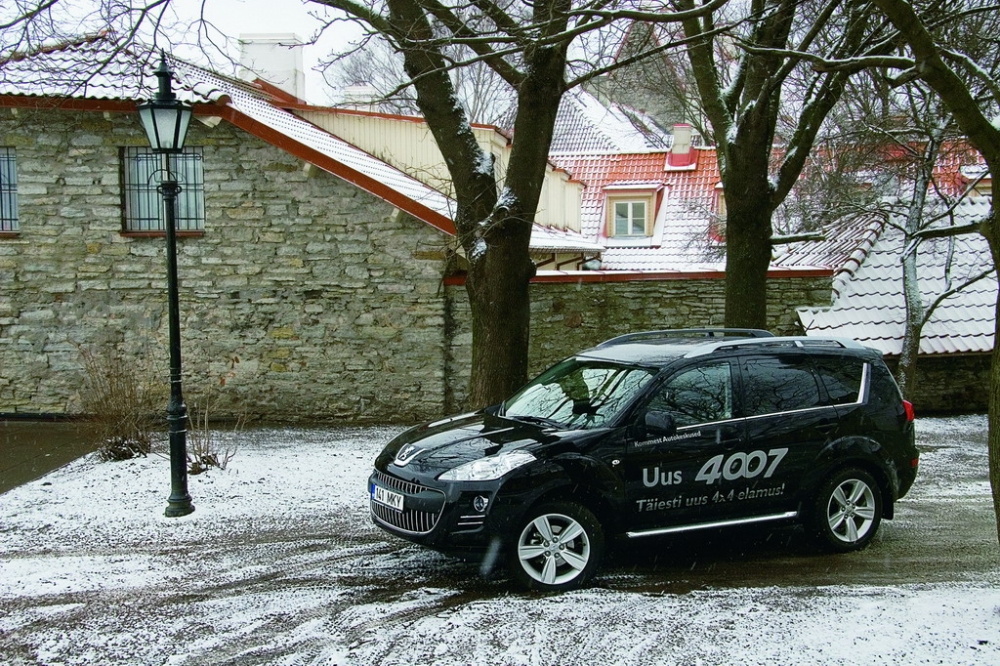
 Such an origin of the SUV with a huge Peugeot emblem on the front of the hood (this wording, by the way, is not an attempt to "beautifully" designate the car brand, but a literal description of its essence) immediately became a reason for many jokes: someone called it Peugeobishi, others found that its "face" resembles Kate Moss with Mike Tyson's jaw – as if after a failed plastic surgery, and still others suggested that the day after a fun party in a karaoke bar, Japanese workers could easily "attach" a "nose" from Peugeot and a "stern" from Citroen to a Mitsubishi, or vice versa... Such an origin of the SUV with a huge Peugeot emblem on the front of the hood (this wording, by the way, is not an attempt to "beautifully" designate the car brand, but a literal description of its essence) immediately became a reason for many jokes: someone called it Peugeobishi, others found that its "face" resembles Kate Moss with Mike Tyson's jaw – as if after a failed plastic surgery, and still others suggested that the day after a fun party in a karaoke bar, Japanese workers could easily "attach" a "nose" from Peugeot and a "stern" from Citroen to a Mitsubishi, or vice versa... |
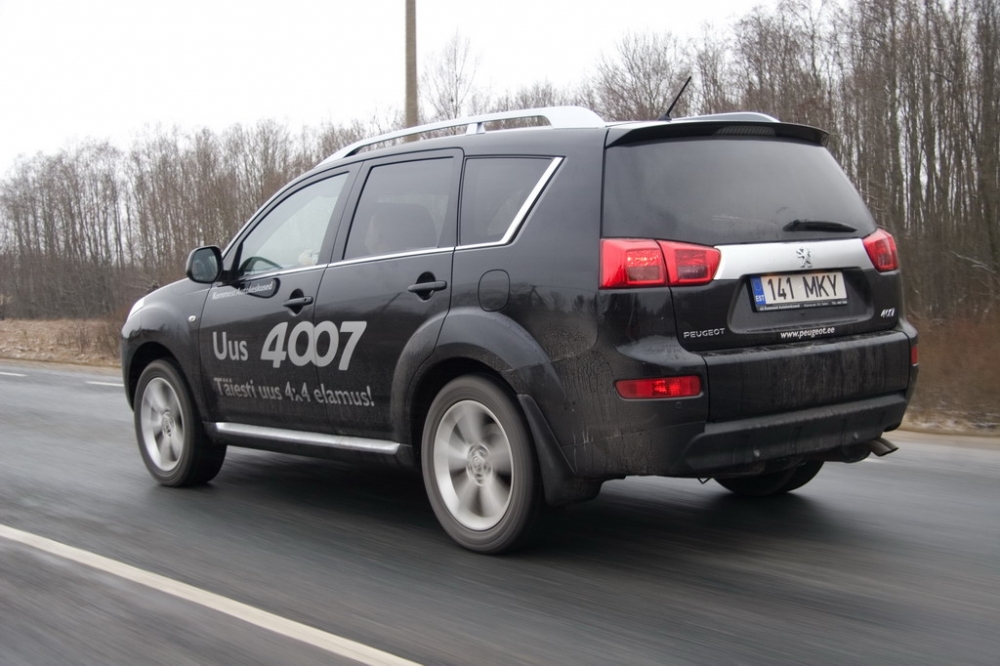
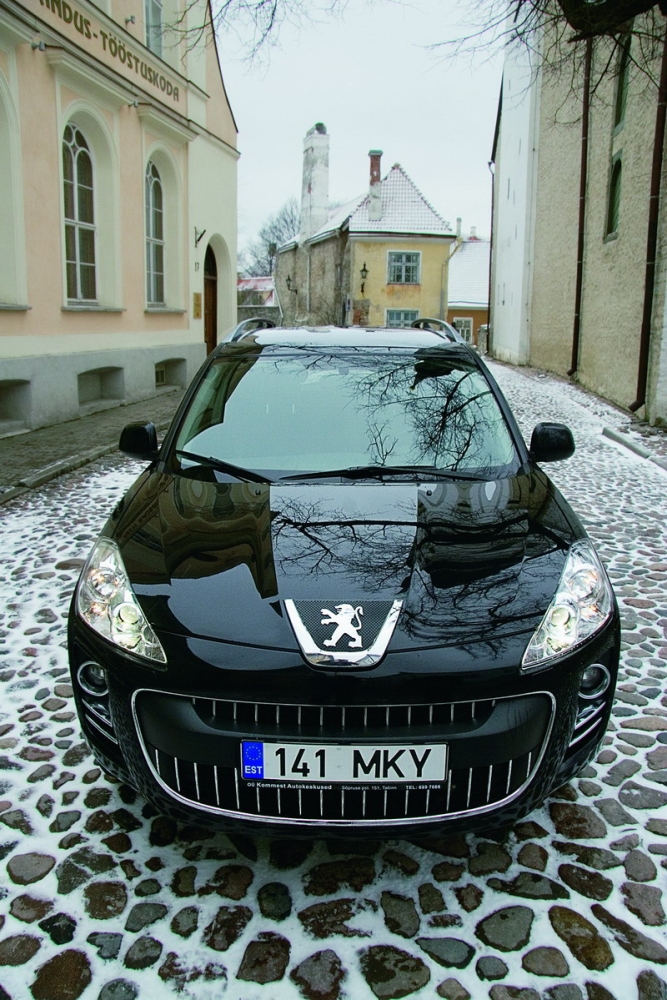 They say, however, that he who laughs last laughs best. And that, as its creators believe, will be the Peugeot 4007, designed to seriously push aside in the compact SUV market not only its Japanese donor, but also two of its compatriots, the main players in this segment – the Honda C-RV and Nissan X-Trail, as well as another newcomer – the Renault Koleos, which is also about to appear in dealer showrooms. All these cars, in essence, are derivatives of popular sedans and hatchbacks of the golf class, to which, in addition to the "off-road" body, they added also conditional off-road capabilities. Hence the persistently growing demand for such cars, which even the French, who resisted such dubious eclecticism the longest, could not withstand. Crossovers attract many citizens pathologically thirsting for "greatness" not so much by their "multifunctionality" as by the fact that they are outwardly very similar to large luxury SUVs, but at the same time do not cause the same irritation from others, are much more economical and do not risk falling under the additional taxation planned in a number of countries. Just like the C-Crosser, the 4007 is practically no different from its donor. Only the "face" of the car with characteristic "cat" eyes and a wide laughing mouth literally screams (or, if you will, growls): "I am a Peugeot! I am a lion!" The only thing missing is the V-shaped "racing" protrusion along the hood that distinguishes the latest passenger models of this brand (the same 308). But the pillars of the rear windows, slanted forward rather than backward, are just in the style of modern Peugeots, although "drawn" by the Japanese. The French also gave originality to the "stern," decorating it with different rear lights with a wide strip of matte aluminum between them, which visually "unloaded" and made the view of the crossover from behind more proportional. They say, however, that he who laughs last laughs best. And that, as its creators believe, will be the Peugeot 4007, designed to seriously push aside in the compact SUV market not only its Japanese donor, but also two of its compatriots, the main players in this segment – the Honda C-RV and Nissan X-Trail, as well as another newcomer – the Renault Koleos, which is also about to appear in dealer showrooms. All these cars, in essence, are derivatives of popular sedans and hatchbacks of the golf class, to which, in addition to the "off-road" body, they added also conditional off-road capabilities. Hence the persistently growing demand for such cars, which even the French, who resisted such dubious eclecticism the longest, could not withstand. Crossovers attract many citizens pathologically thirsting for "greatness" not so much by their "multifunctionality" as by the fact that they are outwardly very similar to large luxury SUVs, but at the same time do not cause the same irritation from others, are much more economical and do not risk falling under the additional taxation planned in a number of countries. Just like the C-Crosser, the 4007 is practically no different from its donor. Only the "face" of the car with characteristic "cat" eyes and a wide laughing mouth literally screams (or, if you will, growls): "I am a Peugeot! I am a lion!" The only thing missing is the V-shaped "racing" protrusion along the hood that distinguishes the latest passenger models of this brand (the same 308). But the pillars of the rear windows, slanted forward rather than backward, are just in the style of modern Peugeots, although "drawn" by the Japanese. The French also gave originality to the "stern," decorating it with different rear lights with a wide strip of matte aluminum between them, which visually "unloaded" and made the view of the crossover from behind more proportional. |
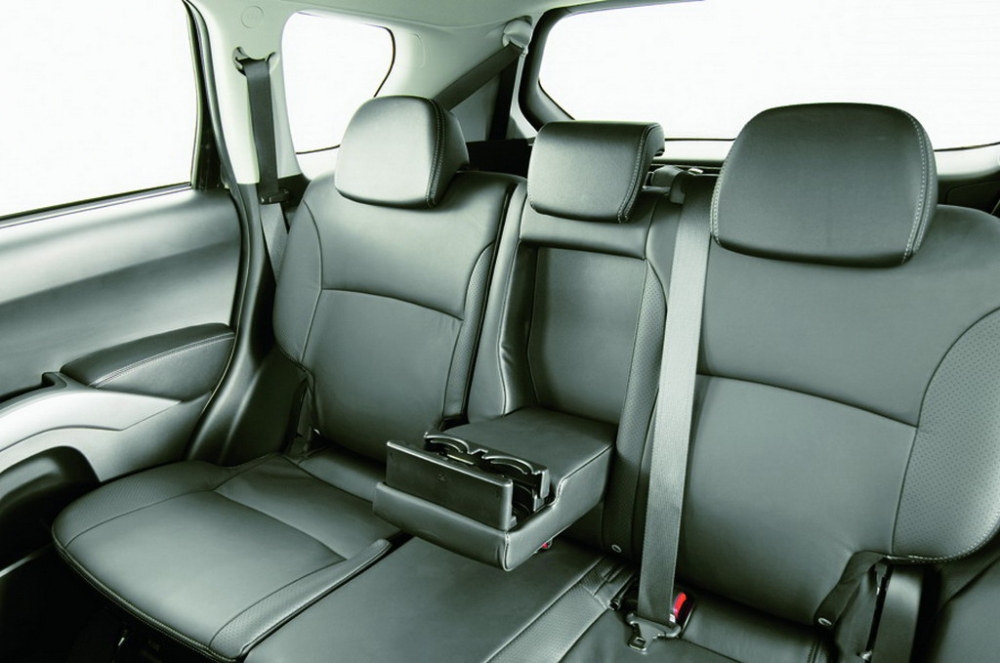
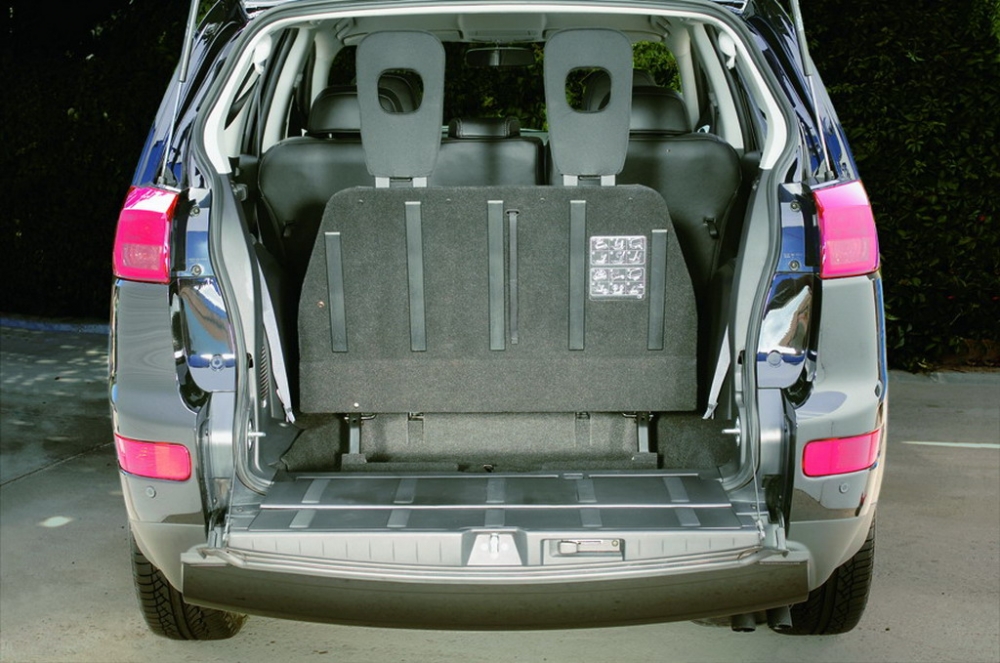
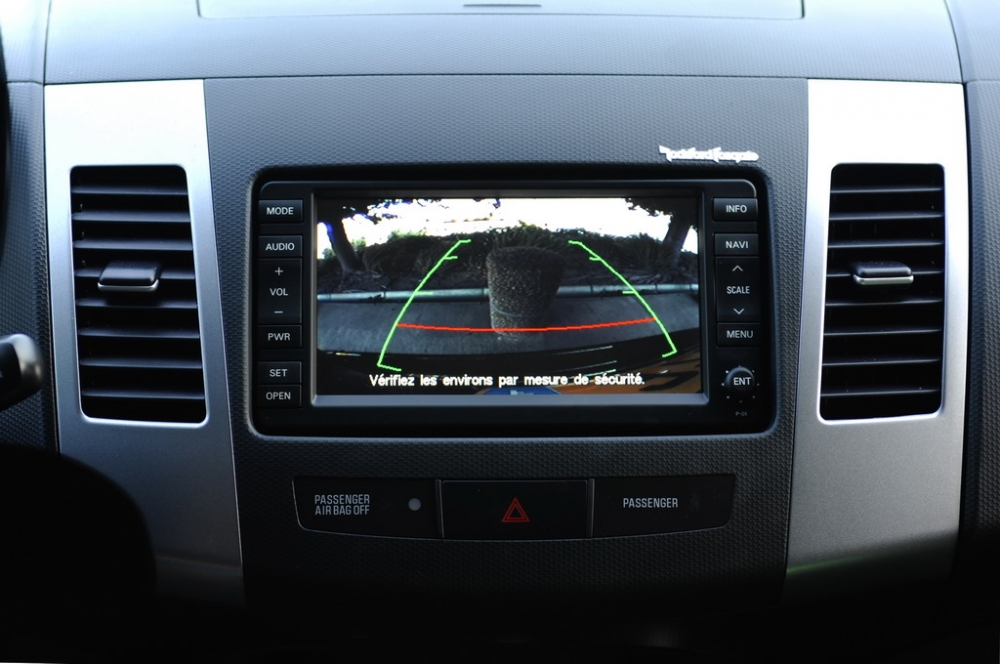 By this same strip, by the way, the rear door is divided into two parts: you can open only the upper one, or, if you need to load or unload something heavy and bulky, you can fold down the lower one – it is fixed exactly at floor level and can withstand a load of up to 200 kg. With the rear seats folded, the cargo compartment volume is 1686 dm³. However, not only can the luggage compartment be increased at the expense of part of the passenger cabin, but the cabin can also become larger at the expense of the luggage compartment, if you use what is not in the Outlander XL – the third row of seats. True, these seats are very conditional, only for kids, since adults sitting on them have to press their knees into their chin, so the French clearly got carried away by calling their crossover "seven-seater." By this same strip, by the way, the rear door is divided into two parts: you can open only the upper one, or, if you need to load or unload something heavy and bulky, you can fold down the lower one – it is fixed exactly at floor level and can withstand a load of up to 200 kg. With the rear seats folded, the cargo compartment volume is 1686 dm³. However, not only can the luggage compartment be increased at the expense of part of the passenger cabin, but the cabin can also become larger at the expense of the luggage compartment, if you use what is not in the Outlander XL – the third row of seats. True, these seats are very conditional, only for kids, since adults sitting on them have to press their knees into their chin, so the French clearly got carried away by calling their crossover "seven-seater." |
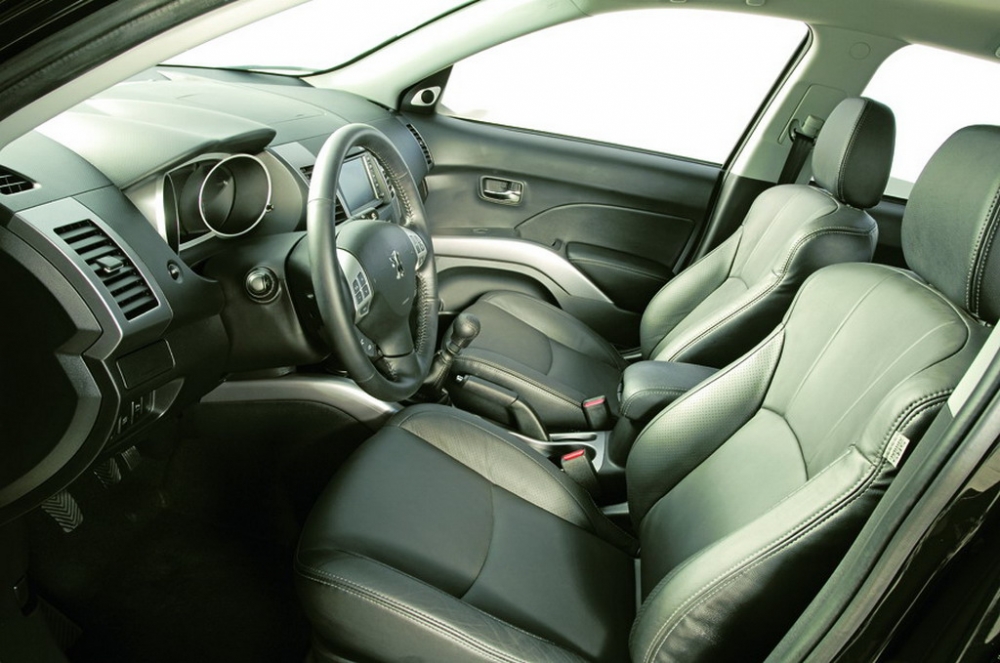
 It would be more accurate to talk about the 5+2 formula, or even 4+3, since the middle seat of the second row is also not too conducive to a long journey. But the seats of this row can be moved 80 mm forward and backward, their backrests are adjustable for tilt, and they fold automatically – just press the corresponding button. The driver's seating position, as the laws of the genre require, is high, but the seat is comfortable and holds the body well. The only thing is that the doors, when you get in and out of the car, do not want to close "by themselves," and you have to slam them harder from time to time. However, perhaps this was a feature of a particular car... It would be more accurate to talk about the 5+2 formula, or even 4+3, since the middle seat of the second row is also not too conducive to a long journey. But the seats of this row can be moved 80 mm forward and backward, their backrests are adjustable for tilt, and they fold automatically – just press the corresponding button. The driver's seating position, as the laws of the genre require, is high, but the seat is comfortable and holds the body well. The only thing is that the doors, when you get in and out of the car, do not want to close "by themselves," and you have to slam them harder from time to time. However, perhaps this was a feature of a particular car... |
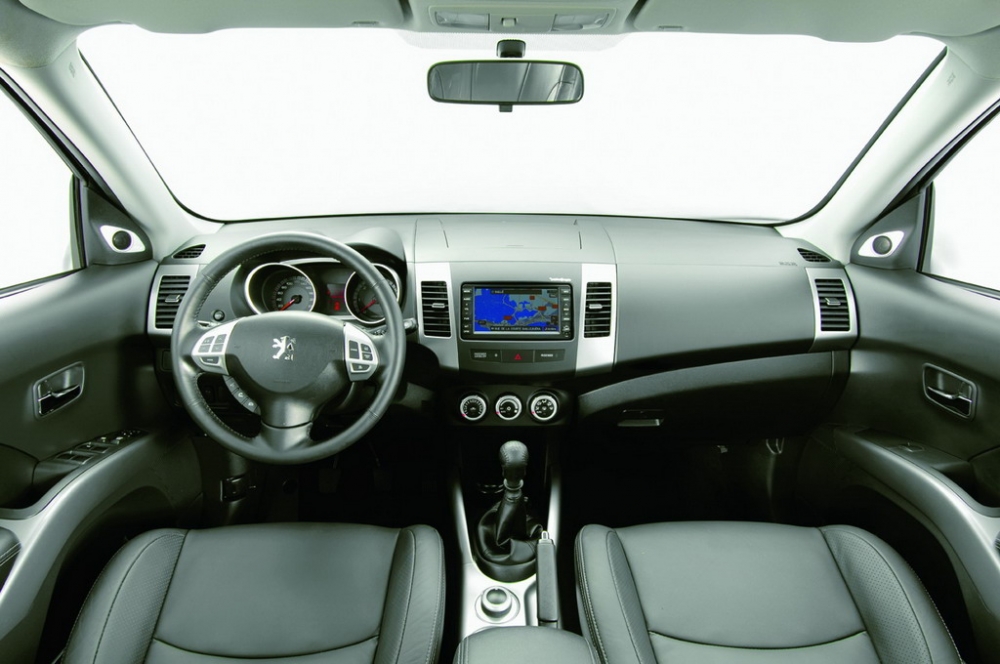
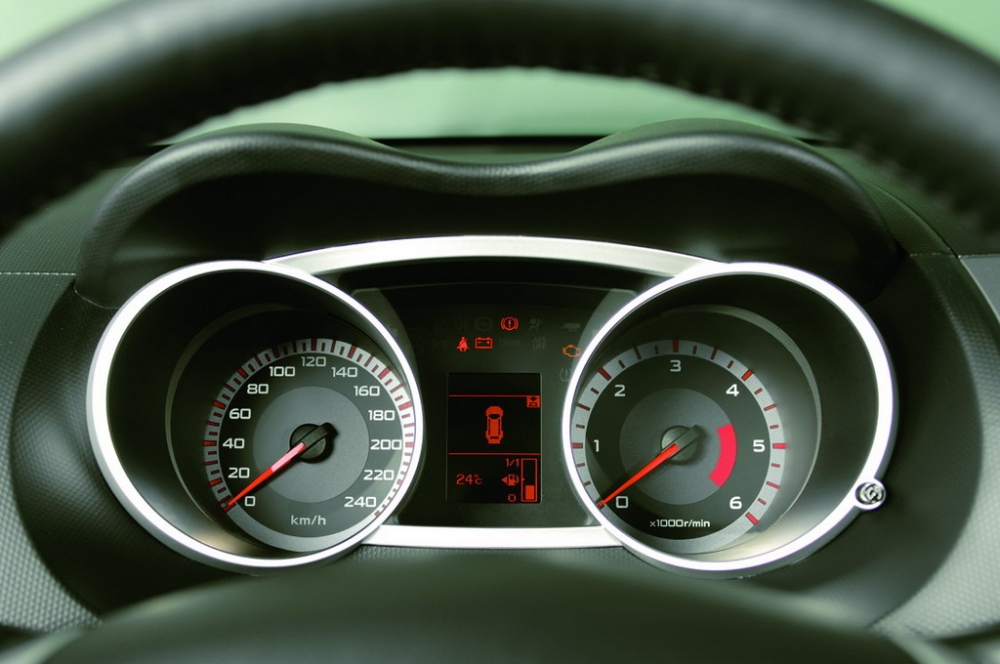
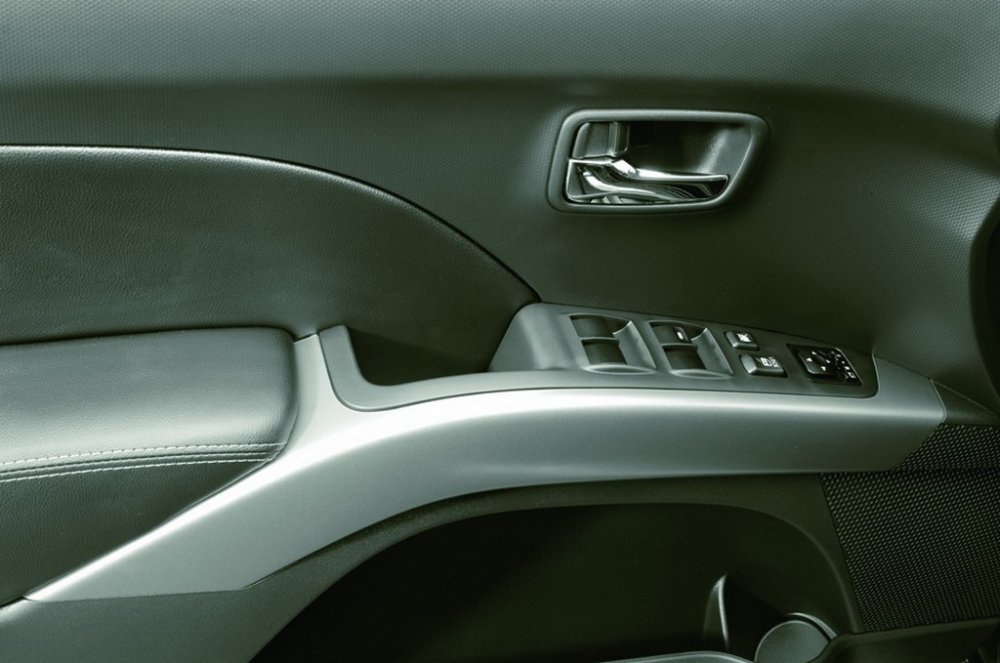
 Inside, apart from the third row of seats, the 4007 is a spitting image of the Outlander XL: the same "wells" of instruments in chrome frames, the same buttons and switches on the panel and steering wheel, and the steering wheel is the same – except that, of course, it features a lion instead of three diamonds, and the plastic feels softer to the touch and does not rattle on the move. Or did it seem so? After all, it would be strange if two varieties of these cars, assembled on the same line, used different plastic or were fastened with different quality levels... So comparing the interiors of these two cars is like trying to find differences in your own reflection in a mirror. And as soon as I, being inside, realize this, a remote comparison with the new Honda C-RV and Freelander 2, which I had the chance to drive recently, immediately suggests itself. The first impression is this: the C-RV is still more attractive, but the Freelander loses to the 4007 in that the latter is noticeably more spacious, although it costs much less. The first few dozen kilometers, my test partner and I drive at a relatively calm pace around Tallinn and its immediate surroundings, and the Peugeot 4007 proves itself in the highest degree worthy: comfortable, smooth on the move, possessing quite urban maneuverability and generally pleasant in all respects. For the purity of the experiment, we put our female companion behind the wheel, and the conclusions are confirmed: after several unsuccessful attempts (quite natural in the "era of automatic transmissions") to find a common language with the manual gearbox and clutch pedal, the fragile girl drives a rather large and heavy car for her as confidently as she does the women's magazine of which she is the editor-in-chief. And although the appearance of the 4007, unlike the same C-RV, is rather purely masculine, I think this car will be in demand by confident girls – in the version with automatic transmission, of course. Inside, apart from the third row of seats, the 4007 is a spitting image of the Outlander XL: the same "wells" of instruments in chrome frames, the same buttons and switches on the panel and steering wheel, and the steering wheel is the same – except that, of course, it features a lion instead of three diamonds, and the plastic feels softer to the touch and does not rattle on the move. Or did it seem so? After all, it would be strange if two varieties of these cars, assembled on the same line, used different plastic or were fastened with different quality levels... So comparing the interiors of these two cars is like trying to find differences in your own reflection in a mirror. And as soon as I, being inside, realize this, a remote comparison with the new Honda C-RV and Freelander 2, which I had the chance to drive recently, immediately suggests itself. The first impression is this: the C-RV is still more attractive, but the Freelander loses to the 4007 in that the latter is noticeably more spacious, although it costs much less. The first few dozen kilometers, my test partner and I drive at a relatively calm pace around Tallinn and its immediate surroundings, and the Peugeot 4007 proves itself in the highest degree worthy: comfortable, smooth on the move, possessing quite urban maneuverability and generally pleasant in all respects. For the purity of the experiment, we put our female companion behind the wheel, and the conclusions are confirmed: after several unsuccessful attempts (quite natural in the "era of automatic transmissions") to find a common language with the manual gearbox and clutch pedal, the fragile girl drives a rather large and heavy car for her as confidently as she does the women's magazine of which she is the editor-in-chief. And although the appearance of the 4007, unlike the same C-RV, is rather purely masculine, I think this car will be in demand by confident girls – in the version with automatic transmission, of course. |
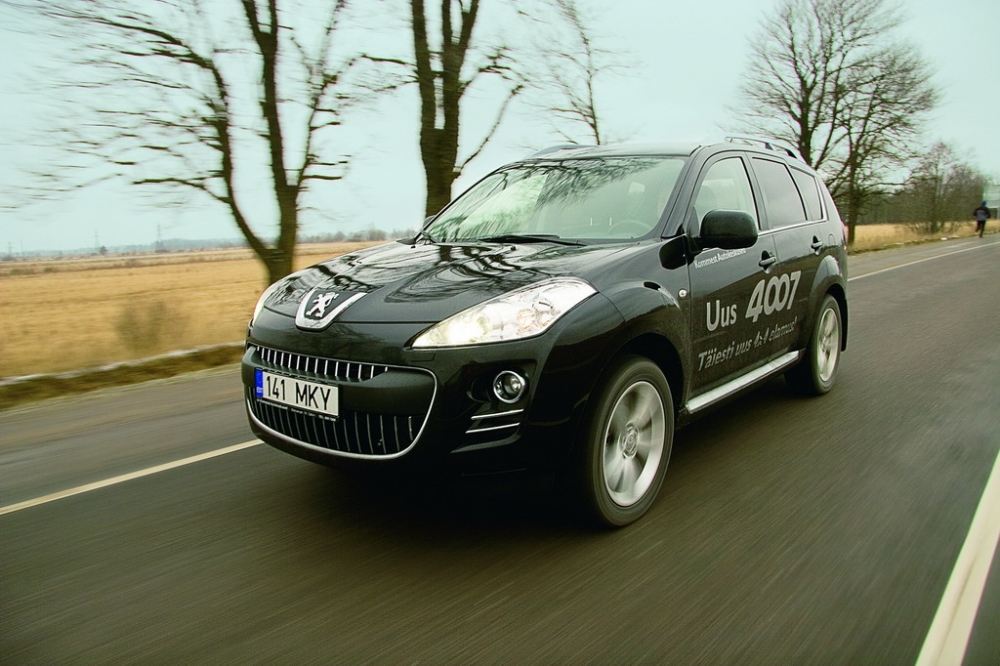 Our test car, however, has a "manual," and here it is worth noting that the Japanese gearbox works noticeably more collectedly than those familiar from original Peugeots, which are traditionally distinguished by some looseness in the gear lever travel. We will, however, return to the gearbox a little later, but for now it should be explained that under the hood of "our" car (original European specification) was a 160-horsepower Peugeot turbodiesel with a volume of 2.2 liters – the very engine (also known from the Freelander 2) in exchange for which the French got the right to hang the lion emblem on the "donor" Outlander. 386 Nm already at 2000 rpm is a serious torque that provides excellent traction, confident acceleration, and high engine elasticity, thanks to which driving at cruising (that is, permitted by traffic rules) speed on the highway behind the wheel of the 4007 also leaves the most favorable impression. Our test car, however, has a "manual," and here it is worth noting that the Japanese gearbox works noticeably more collectedly than those familiar from original Peugeots, which are traditionally distinguished by some looseness in the gear lever travel. We will, however, return to the gearbox a little later, but for now it should be explained that under the hood of "our" car (original European specification) was a 160-horsepower Peugeot turbodiesel with a volume of 2.2 liters – the very engine (also known from the Freelander 2) in exchange for which the French got the right to hang the lion emblem on the "donor" Outlander. 386 Nm already at 2000 rpm is a serious torque that provides excellent traction, confident acceleration, and high engine elasticity, thanks to which driving at cruising (that is, permitted by traffic rules) speed on the highway behind the wheel of the 4007 also leaves the most favorable impression. |
 However, when you get behind the wheel of the 308, you still cannot get rid of the feeling that you have moved from a bulldozer to a rocket. Light, fast, fantastically interactive – and this with a 120-horsepower naturally aspirated 1.6-liter engine! What can we say about the version with a turbocharged unit producing 150 hp, well known from the MINI Cooper S and awarded the "Engine of the Year 2007" (both engines are a joint development of Peugeot and BMW)! And the automatic transmission (the notorious Porsche Tiptronic), although it still "slows down" (the difference with the manual in acceleration to 100 km/h is more than 2 seconds), but, being refined, subjectively works more cheerfully than before. However, when you get behind the wheel of the 308, you still cannot get rid of the feeling that you have moved from a bulldozer to a rocket. Light, fast, fantastically interactive – and this with a 120-horsepower naturally aspirated 1.6-liter engine! What can we say about the version with a turbocharged unit producing 150 hp, well known from the MINI Cooper S and awarded the "Engine of the Year 2007" (both engines are a joint development of Peugeot and BMW)! And the automatic transmission (the notorious Porsche Tiptronic), although it still "slows down" (the difference with the manual in acceleration to 100 km/h is more than 2 seconds), but, being refined, subjectively works more cheerfully than before. |
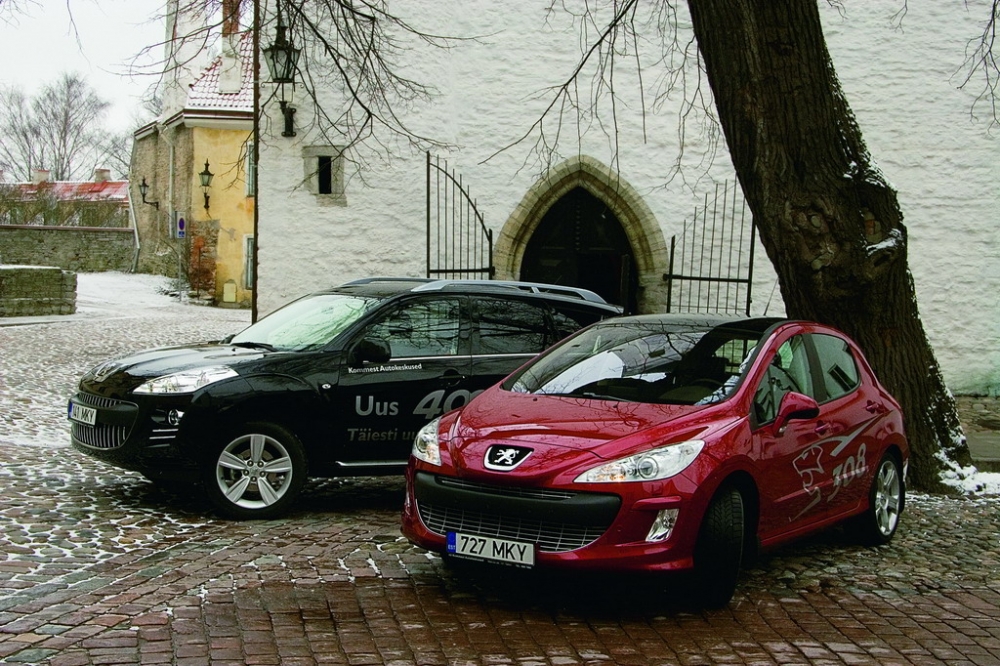
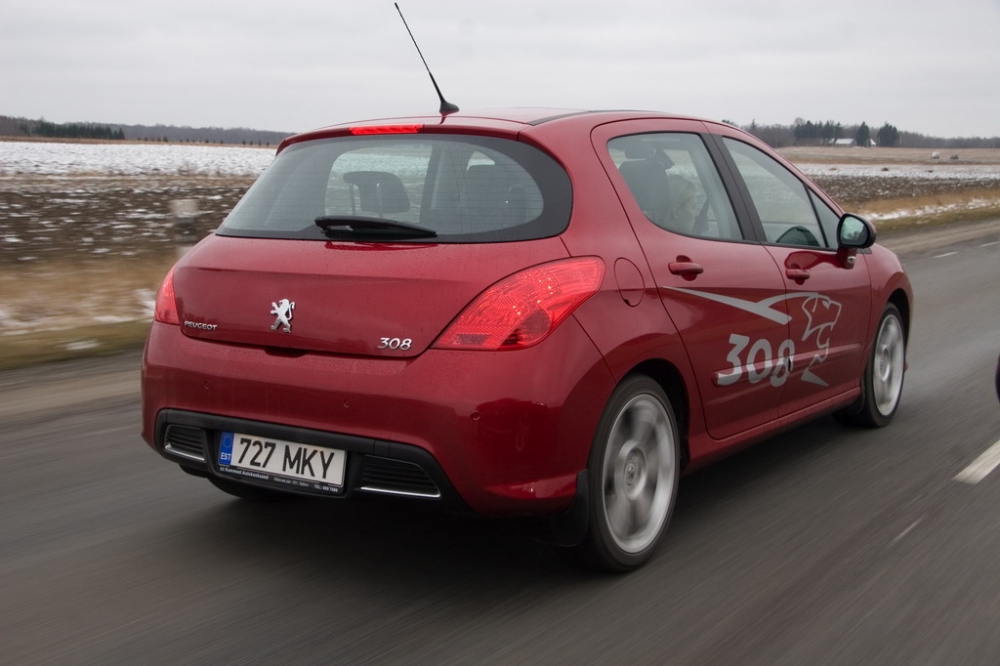
 A striking contrast with the "German-style" solid but boring, peacefully polite 307 – the new Peugeot hatch seems to have been given wings and a soul breathed into it. No, it has not become noticeably faster, but it has become livelier, it does not lull, but excites! This is immediately visible from its appearance: the V-shaped "nose" hanging over the bumper alone is worth it – a clear hint at, albeit not constructive, but genetic kinship with the formidable "Le Mans" prototype Peugeot 908! As one British colleague I had the chance to work with wittily noted, the production 308 looks the way a concept of the 307 could have looked. Again, as with the 207 model, two variants of the front end design are offered – the basic, "classic" and the more aggressive, dynamic Sport. A striking contrast with the "German-style" solid but boring, peacefully polite 307 – the new Peugeot hatch seems to have been given wings and a soul breathed into it. No, it has not become noticeably faster, but it has become livelier, it does not lull, but excites! This is immediately visible from its appearance: the V-shaped "nose" hanging over the bumper alone is worth it – a clear hint at, albeit not constructive, but genetic kinship with the formidable "Le Mans" prototype Peugeot 908! As one British colleague I had the chance to work with wittily noted, the production 308 looks the way a concept of the 307 could have looked. Again, as with the 207 model, two variants of the front end design are offered – the basic, "classic" and the more aggressive, dynamic Sport. |
 As for the driving qualities, in addition to the excellent engine, we should also thank the chassis itself. Yes, the 308 model, although it has become noticeably longer, wider (but slightly lower) both in itself and in track, is built on the same platform as the 307, which, as is known, became the first Peugeot car in which the torsion beam rear suspension was replaced with a simpler one, with a "U"-shaped beam working in torsion. As for the driving qualities, in addition to the excellent engine, we should also thank the chassis itself. Yes, the 308 model, although it has become noticeably longer, wider (but slightly lower) both in itself and in track, is built on the same platform as the 307, which, as is known, became the first Peugeot car in which the torsion beam rear suspension was replaced with a simpler one, with a "U"-shaped beam working in torsion. |
 As a result, the car lost the "signature" ride and refined handling characteristic of Peugeot. (At one time, in particular, I had the chance to drive a 206 model for a long time, and I never ceased to be amazed and delighted at how softly the suspension "swallowed" bumps, and how excellently the wheels held the road in corners, confidently resisting lateral acceleration. Add to this the transparent and precise steering, and it becomes clear why, in terms of chassis design and tuning, Peugeots surpassed their competitors.) As a result, the car lost the "signature" ride and refined handling characteristic of Peugeot. (At one time, in particular, I had the chance to drive a 206 model for a long time, and I never ceased to be amazed and delighted at how softly the suspension "swallowed" bumps, and how excellently the wheels held the road in corners, confidently resisting lateral acceleration. Add to this the transparent and precise steering, and it becomes clear why, in terms of chassis design and tuning, Peugeots surpassed their competitors.) |
 The engineers clearly worked hard on the chassis of the 308, and the "old good" feelings have returned! The "U"-shaped beam with an integrated anti-roll bar made in the form of a torsion bar, combined with an optimized front suspension and a wider, lower, and stiffer body, made it possible to achieve a ride even softer than that of the 307 model, but at the same time avoid critical body rolls in corners. Moreover, the kinematics of the rear suspension under the action of centrifugal forces during too-fast corner entry provides effective rear-wheel steering. The engineers clearly worked hard on the chassis of the 308, and the "old good" feelings have returned! The "U"-shaped beam with an integrated anti-roll bar made in the form of a torsion bar, combined with an optimized front suspension and a wider, lower, and stiffer body, made it possible to achieve a ride even softer than that of the 307 model, but at the same time avoid critical body rolls in corners. Moreover, the kinematics of the rear suspension under the action of centrifugal forces during too-fast corner entry provides effective rear-wheel steering. |
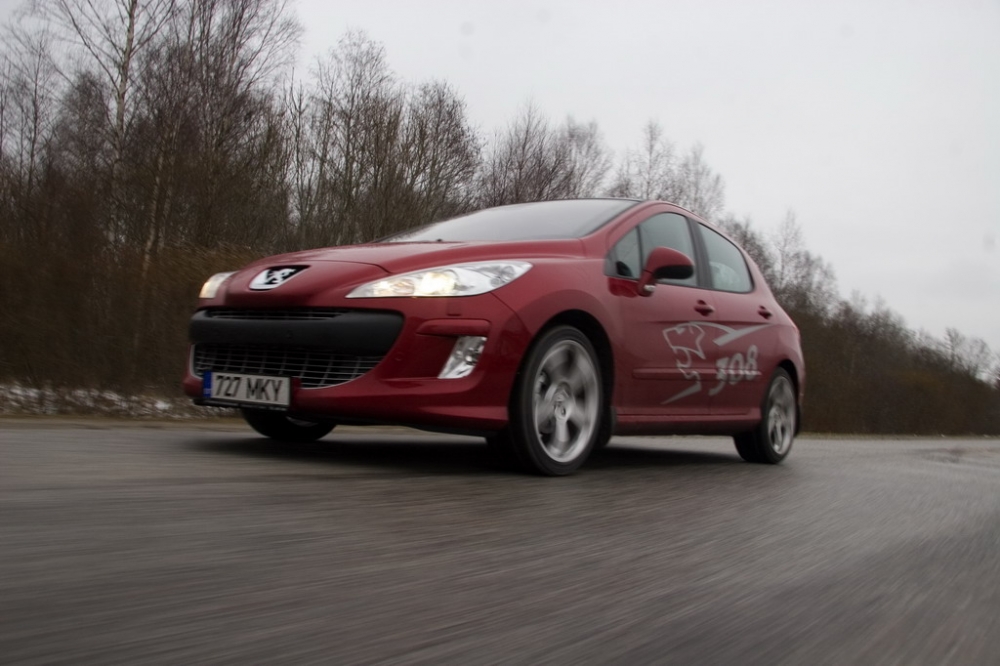 As a result, on this Peugeot, relying on its neutral handling, you can again drive "as if on rails"! The steering is also a match for the chassis (the power steering pump drive is electric, but the mechanism itself is "honest" hydraulics) – moderately weighted, providing precise reactions and a very clear connection with the road. And no French "jerkiness" of the brakes – they are as transparent as they are effective. It remains to add that the drag coefficient of the 308 is 0.29, and in this indicator it has no equal among similar competing cars. As a result, on this Peugeot, relying on its neutral handling, you can again drive "as if on rails"! The steering is also a match for the chassis (the power steering pump drive is electric, but the mechanism itself is "honest" hydraulics) – moderately weighted, providing precise reactions and a very clear connection with the road. And no French "jerkiness" of the brakes – they are as transparent as they are effective. It remains to add that the drag coefficient of the 308 is 0.29, and in this indicator it has no equal among similar competing cars. |
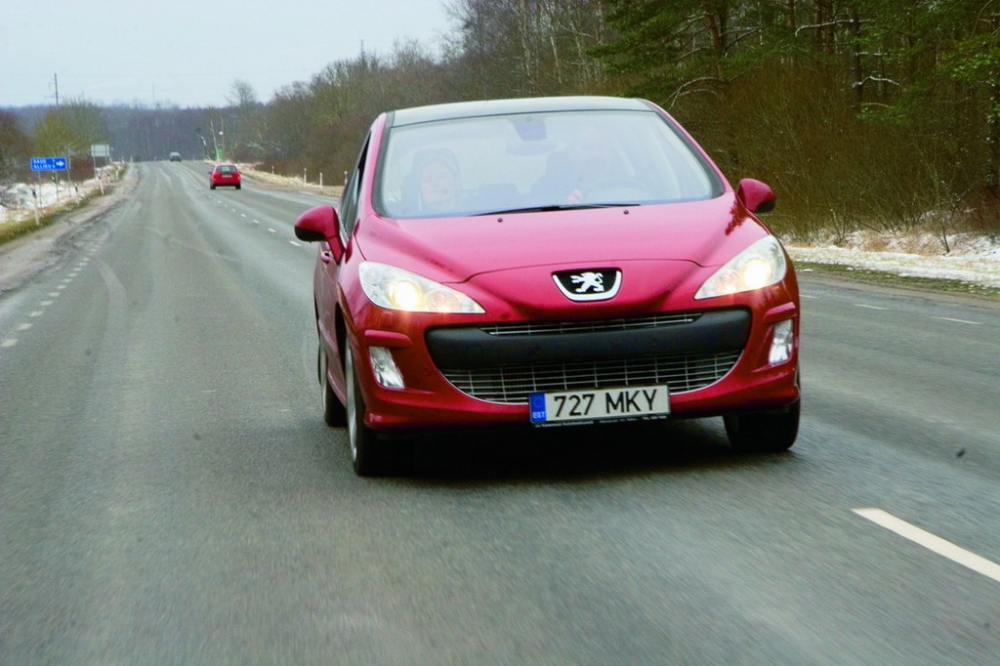 The Peugeot 308 is surprisingly loyal to the driver and, moreover, "omnivorous" in this regard, so it will surely appeal to girls as well (surely the presence in the ventilation system of an air freshener cartridge with a choice of six scents is designed for them), and a man will not be ashamed to get behind the wheel of this car. The driver's seat, mounted 15 mm lower than in the 307 model (due to which, in particular, the height of the car was reduced), provides a comfortable and sporty, low seating position even for a giant, but, being raised higher, allows a person with much smaller proportions to sit just as comfortably and cozily – we conscientiously checked this by seating our same companion behind the wheel during the trip and indulging in rest as passengers in the meantime. (Yes, yes, even automotive journalists sometimes do not mind loafing on part of the route and playing a kind of "Russian roulette," entrusting their precious lives to an attractive blonde behind the wheel!) The Peugeot 308 is surprisingly loyal to the driver and, moreover, "omnivorous" in this regard, so it will surely appeal to girls as well (surely the presence in the ventilation system of an air freshener cartridge with a choice of six scents is designed for them), and a man will not be ashamed to get behind the wheel of this car. The driver's seat, mounted 15 mm lower than in the 307 model (due to which, in particular, the height of the car was reduced), provides a comfortable and sporty, low seating position even for a giant, but, being raised higher, allows a person with much smaller proportions to sit just as comfortably and cozily – we conscientiously checked this by seating our same companion behind the wheel during the trip and indulging in rest as passengers in the meantime. (Yes, yes, even automotive journalists sometimes do not mind loafing on part of the route and playing a kind of "Russian roulette," entrusting their precious lives to an attractive blonde behind the wheel!) |
 Passengers in the Peugeot 308 also feel at ease, and not only in the front, but also in the rear seat: thanks to thinner (but no less strong and comfortable!) and specially curved backrests of the front seats, as well as a more compact rear suspension, there is noticeably more legroom in the back. You can also get something from the luggage compartment without going outside – using an additional handle on the luggage shelf, and the shelf itself can have a very convenient additional own luggage capacity of 8.75 liters. The total volume of various useful containers, in addition to the main luggage compartment (442/1398 l) "scattered" throughout the cabin, reaches 42 liters! Passengers in the Peugeot 308 also feel at ease, and not only in the front, but also in the rear seat: thanks to thinner (but no less strong and comfortable!) and specially curved backrests of the front seats, as well as a more compact rear suspension, there is noticeably more legroom in the back. You can also get something from the luggage compartment without going outside – using an additional handle on the luggage shelf, and the shelf itself can have a very convenient additional own luggage capacity of 8.75 liters. The total volume of various useful containers, in addition to the main luggage compartment (442/1398 l) "scattered" throughout the cabin, reaches 42 liters! |
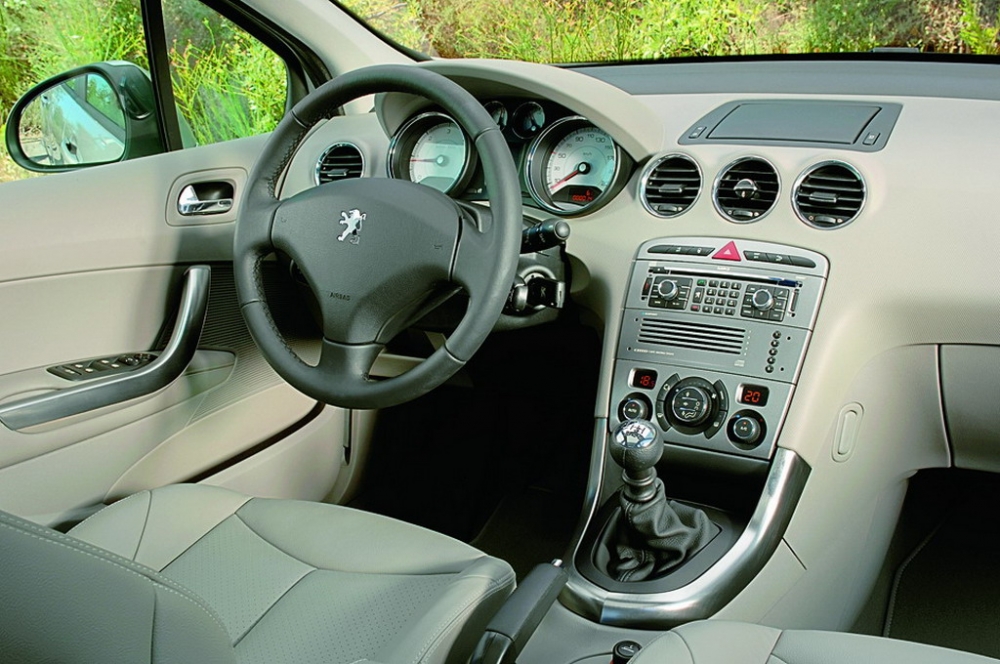 The interior, which implements the further development of the revolutionary concept of "semi-tall," essentially one-box layout, first applied in the 307 model, seems to have been deliberately built "around" its occupants. It is comfortable, practical, and in its style harmonizes very well with the flashy and swift appearance of the car. Whether it's a city drive or a long journey in such a car – it's a sheer pleasure. The plastic in the cabin, thanks to its texture, looks expensive, feels soft and pleasant to the touch, and does not rattle or creak on the move. The operation of the handles and switches of the climate and multimedia system (changer for five discs, MP3, Bluetooth) is, I would say, noble (at the Audi level), and they are conveniently located on a very compact control unit panel. The interior, which implements the further development of the revolutionary concept of "semi-tall," essentially one-box layout, first applied in the 307 model, seems to have been deliberately built "around" its occupants. It is comfortable, practical, and in its style harmonizes very well with the flashy and swift appearance of the car. Whether it's a city drive or a long journey in such a car – it's a sheer pleasure. The plastic in the cabin, thanks to its texture, looks expensive, feels soft and pleasant to the touch, and does not rattle or creak on the move. The operation of the handles and switches of the climate and multimedia system (changer for five discs, MP3, Bluetooth) is, I would say, noble (at the Audi level), and they are conveniently located on a very compact control unit panel. |
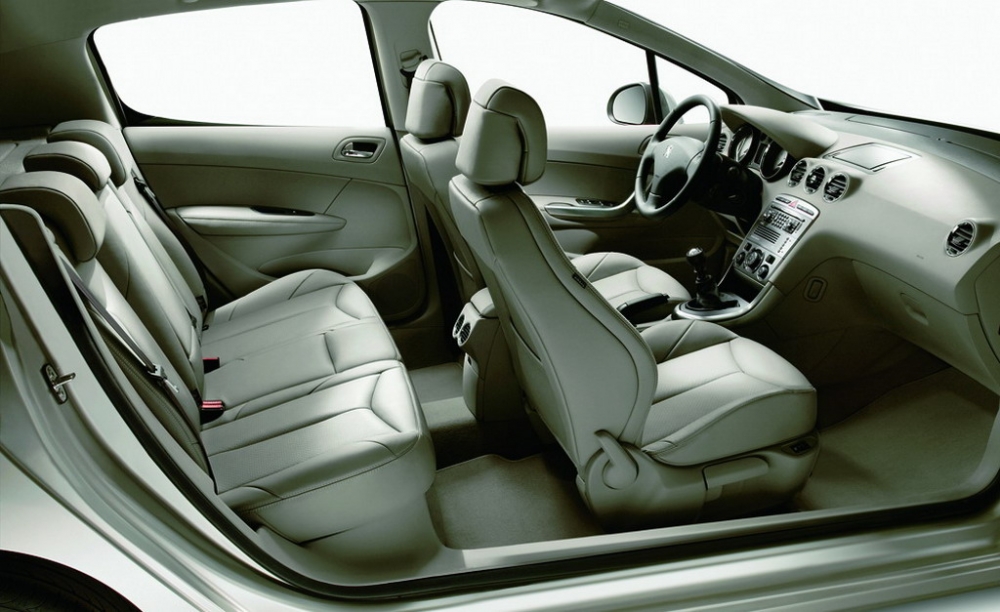 On the front panel – nothing superfluous at all, it is not overloaded, as is often the case now, and due to this, among other things, the round, chrome-ringed ventilation nozzles look very impressive (two more such "circles" – on the central console for passengers in the rear seat), which in their design and shape echo the dials of the instrument panel. And overall, thanks to the record glazing area, especially with the panoramic roof that our car had, the interior of the 307 will please even a claustrophobe. Space and light all around. And silence... And five stars on the Euro NCAP scale... If only this "lion cub" did not cost as much as larger D-class sedans... On the front panel – nothing superfluous at all, it is not overloaded, as is often the case now, and due to this, among other things, the round, chrome-ringed ventilation nozzles look very impressive (two more such "circles" – on the central console for passengers in the rear seat), which in their design and shape echo the dials of the instrument panel. And overall, thanks to the record glazing area, especially with the panoramic roof that our car had, the interior of the 307 will please even a claustrophobe. Space and light all around. And silence... And five stars on the Euro NCAP scale... If only this "lion cub" did not cost as much as larger D-class sedans... |
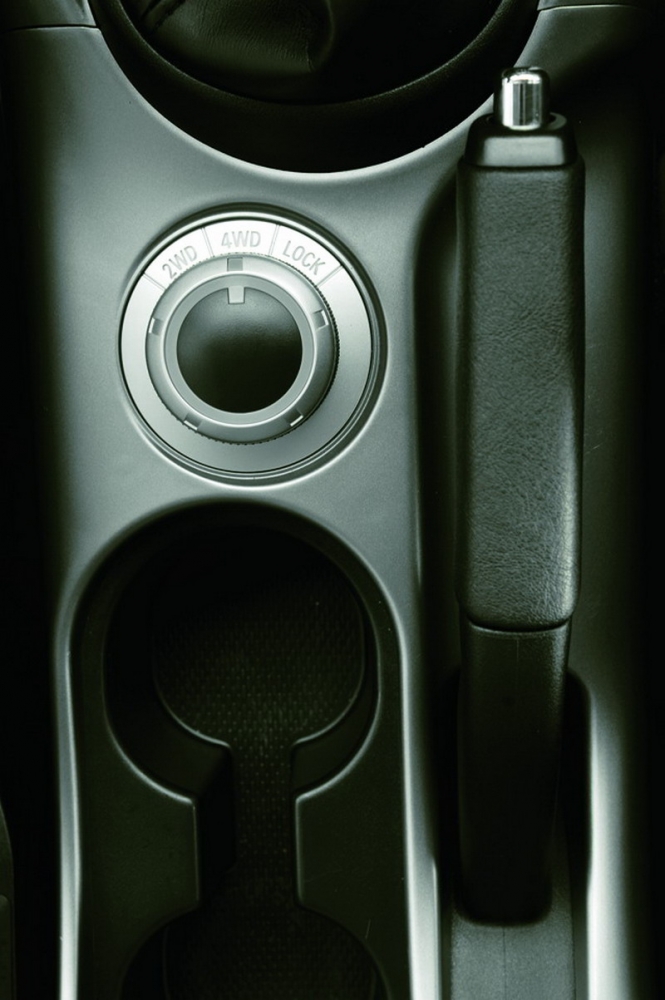
 Almost the entire way back from the destination to Tallinn, I again drive the 4007. It has already gotten dark, fine wet snow is falling from the sky, making the asphalt, which is not ideal anyway, also slippery, there are many cars going in the same and opposite directions on just two lanes, and I have to push hard to get there on time, no longer considering the risk of paying a huge fine and other risks... Almost the entire way back from the destination to Tallinn, I again drive the 4007. It has already gotten dark, fine wet snow is falling from the sky, making the asphalt, which is not ideal anyway, also slippery, there are many cars going in the same and opposite directions on just two lanes, and I have to push hard to get there on time, no longer considering the risk of paying a huge fine and other risks... And here a couple of times I almost break into a cold sweat: when trying to change lanes fairly quickly during overtaking at a speed of about 150 km/h, the Peugeot 4007 starts to swerve frighteningly from side to side, and you have to “catch” it, without waiting for the stabilization system to react! Well, I never! Moreover, we are the first in Russia to test this car, so we cannot compare our own feelings about it with the opinions of colleagues, but the Peugeot company itself declares excellent and confident handling for this car, and there is no reason not to trust this statement, and the Outlander XL in this regard did not “misbehave” either... Maybe the French messed up something in the suspension settings? I swap places with my highly experienced partner – the result is the same. Moving on more carefully, we try to understand what the problem is and, by trial and error, we get to the transmission mode switch located on the center tunnel. We switch it to the automatic (electronically controlled) all-wheel drive mode (before that we were driving in the “standard” front-wheel drive mode), and immediately everything falls into place – both the wheels and the car as a whole: it gains the promised stability and now performs overtaking lane changes with absolute confidence, and generally holds the road much “firmer” and dives into corners better under such conditions and at such speed. Conclusion: for “standard” city and highway driving, front-wheel drive alone is quite sufficient, but in critical modes it is worth accepting the extra fuel consumption and engaging all-wheel drive. After all, apparently, 386 Nm on just the front wheels with “unattended” rear wheels is too much, and with too sharp a supply of traction to them, they tend to tear the steering wheel out of your hands. By the way, with the same switch mentioned above, you can also set all-wheel drive with locking, which provides maximum wheel grip on the road surface and favorably distinguishes the Peugeot 4007 from most direct competitors, except perhaps the same Freelander 2. In any case, it is capable of overcoming quite “decent” off-road conditions – not too sticky, of course. In the absence of a low range, the very low first gear ratio of the manual transmission helps it in this. Which, by the way, goes very well with the character of the French turbodiesel. It is equipped with the third generation of Bosch common-rail injection system and is head and shoulders above (and at the same time much quieter) the “Volkswagen” two-liter, which was originally equipped on the original Outlander XL. It is enough to compare at least the dynamic characteristics of the two cars: the diesel “Frenchman” accelerates to 100 km/h almost a second faster than the “Japanese” and reaches a speed 13 km/h faster. In Russia, however, the Peugeot 4007 with this engine will appear only in the fall, when it begins to be paired with an automatic transmission (until now, only a “manual” that is not too in demand among our potential owners of such cars is possible). Meanwhile, a version with the “native” Japanese 170-horsepower gasoline engine with a displacement of 2.4 liters with the proprietary electronic control system for valve timing and lift (MIVEC) has gone on sale, but with a significantly lower, and therefore not so critical for front-wheel drive, torque, combined with both a manual gearbox and an automatic continuously variable transmission with the ability to manually shift “pseudo-gears”. Be that as it may, lovers of cars of this type should like the Peugeot 4007, which also has a certain off-road capability. It remains only to decide why, instead of the usual Outlander, it is worth buying exactly “the same, but with mother-of-pearl buttons” (that is, with the “mouth” of the air intake and a lion on the hood). And here an anecdote involuntarily comes to mind about how a Frenchman and a Japanese once argued. The first says: “A Frenchman is better than a Japanese!” “What is better?” – the second wonders. “Than a Japanese!” – the first reasonably replies... |
The Kid and Karlson
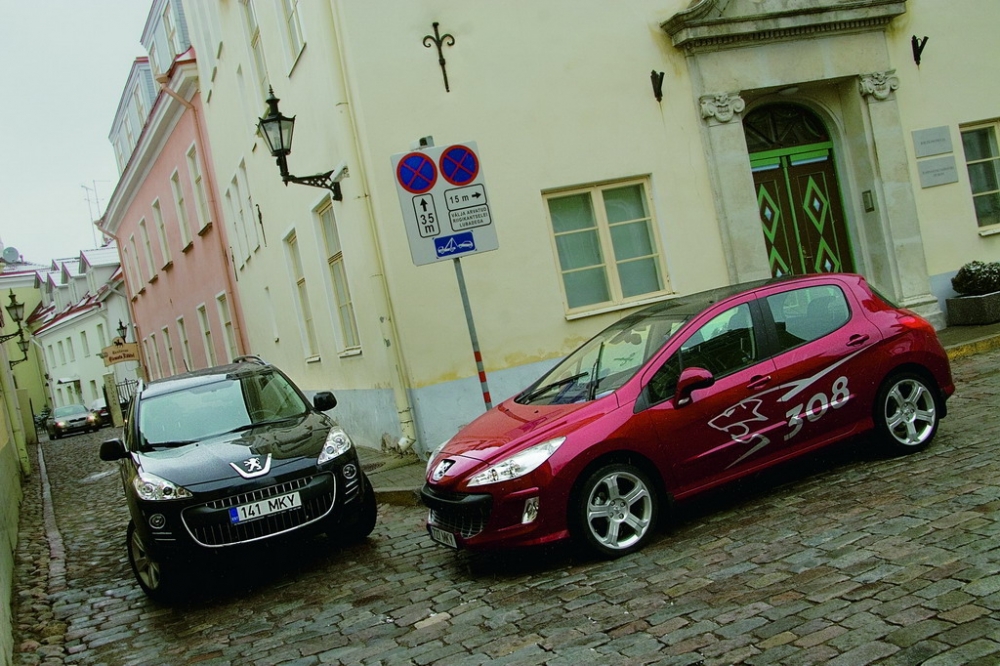
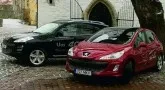
Estonia, Tallinn... Sweden is just a stone's throw away. Perhaps that's why, at first glance at the Peugeot 308 and 4007 standing side by side, this association naturally came to mind: The Kid and Carlson.
Test drive photos
Comments
No comments yet. Say the first word.