
About the Mitsubishi brand
Japan founded in 1873 Model range
General Information
Mitsubishi is a major Japanese automobile manufacturer. The corporation's headquarters is located in Tokyo. The automotive division, Mitsubishi Motors, is part of Mitsubishi Heavy Industries, which is engaged in heavy industry.
Corporate History
The company was founded by Yataro Iwasaki in 1873. Initially, it was involved in shipbuilding and repair. Even during the founder's lifetime, the company expanded its interests to various technical innovations of the time. In 1875, after several name changes, it became known as Mitsubishi Mail Steamship Company — this is considered the beginning of all modern Mitsubishi companies.
The first Mitsubishi Motors car, the 1917 Model A, was largely similar to Ford cars. Production was discontinued in 1921 due to low demand for passenger cars in Japan.
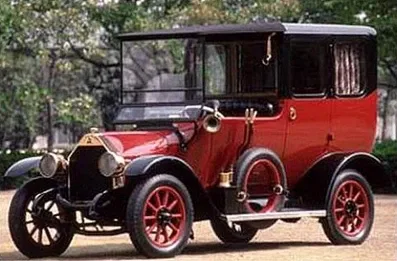
Starting in 1924, production of heavy-duty trucks and buses under the Fuso brand began. Garbage trucks and watering vehicles were produced for Tokyo. In 1935, the first Japanese bus with a diesel engine was created. After World War II, the company produced motor scooters and three-wheeled delivery vehicles. Buses reappeared in 1946, and in 1947, with an electric motor. By the end of 1945, Mitsubishi, in addition to shipping, was involved in shipbuilding, banking, transportation services, mining, real estate operations, and chemical production.
In 1946, the Mizushima appeared — a small three-wheeled vehicle, reliable and inexpensive, suitable for short-distance transportation in the post-war period. Later, a closed two-seater cabin was installed on it. In the same year, the first Mitsubishi motor scooter, the Silver Pigeon, was released, emphasizing practicality and economy.
In 1951, the company released the T31 truck with an air suspension system. The T380 became the first Japanese truck with a tipping platform. Mitsubishi trucks and pickups are produced in a full range, but only light and medium models reach the European market. The L200 pickup handles off-road conditions well. Mass production of passenger cars began in 1960 with the Mitsubishi 500 sedan.
In 1962, the Minica appeared — the first 4-seat compact class car. It was built on the Mitsubishi 360 chassis (from 1960) and equipped with a two-stroke air-cooled engine with a displacement of 359 cc, which allowed it to be classified in the lowest tax category. In the same year, production of the Colt 600 began — a larger and more comfortable family car. In 1965, the Mitsubishi Colt 800 appeared, becoming the first car in Japan with a fastback layout. In 1963, the Mitsubishi Rosa series of small buses and the Canter family of light trucks were released.
In 1969, Mitsubishi entered the higher-class car market. The Colt Galant sedan became the progenitor of a family of prestigious cars that won numerous victories in rallies and received Car of the Year awards. The 1969 Galant embodied the best developments of its time and became the founder of an entire market segment in Japan. By the end of the 1960s, Mitsubishi had earned a reputation as a manufacturer of quality cars with a wide model range, actively introducing new technologies.
In 1970, the automotive division of Mitsubishi Heavy Industries became independent and was named Mitsubishi Motors Corporation (MMC). In 1972, the Galant 16GLS won the overall classification of the 7th Southern Cross Rally. The following year, the Lancer 1600GSR won the same competition.
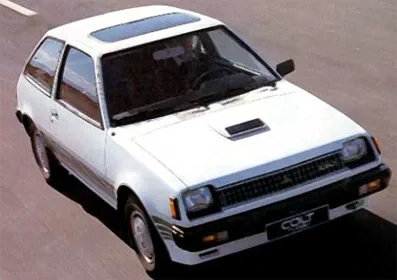
At the end of the decade, Motor Fan magazine awarded the Mitsubishi Colt 1400 GLX the title of Car of the Year in Japan, and Pickup, Van & 4WD magazine awarded the Mitsubishi L200 the title of USA's Pickup of the Year. Since 1983, Mitsubishi cars have been equipped with an electronic suspension system.
In 1982, the popular urban SUV Pajero was released. In 2000, its 5-door version entered the European market. The Pajero received numerous awards in various countries around the world. In 1986, it was named UK's What Car? Off-Roader of the Year. The Mitsubishi Space Runner/RVR minivan was introduced in 1983. A new generation was released in May 1991, and in the fall of that year, the car was shown in Europe under the name Space Runner.
In 1984, the Mitsubishi Galant received the German Das Goldene Lenkrad (Golden Steering Wheel) award. The Colt and Lancer, popular in Europe, also received this award. In 1989, the sports car 3000GT/GTO was presented in Tokyo as the HSX prototype. Since May 1992, the Libero station wagon has been produced. In 1999, the all-wheel drive version of the Lancer GSR Evolution VI went on sale.
In the fall of 1991, the Space Wagon/Grandis model entered the European market. A new generation was presented in Tokyo in October 1997, and in Europe in 1998. The Mitsubishi Eclipse, a powerful sports car of the Golf class, was first introduced in January 1994. An updated model appeared in 1996. The Space Gear (Delica for the Japanese market) — a minivan based on the Pajero — was first introduced in May 1994. The high-mobility modification Space Gear 4WD is built on an SUV chassis.
In 1995, Mitsubishi produced its first car in Europe: the first Carisma rolled off the assembly line of the Nedcar plant in the Netherlands (a joint venture between Mitsubishi Motors, Volvo, and the Dutch government).
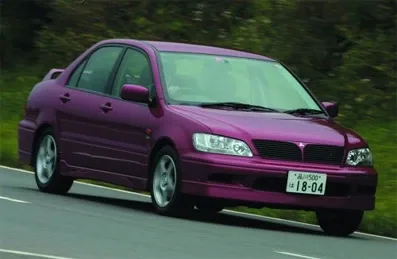
In 1996, the revolutionary Mitsubishi GDI (Gasoline Direct Injection) engine was developed — the first mass-produced engine with direct gasoline injection into the cylinders, combining fuel efficiency close to that of a diesel and the power of a gasoline engine. By the end of 1997, the GDI engine was installed on the Galant, Pajero, Diamante, Challenger (Montero Sport), Chariot (Space Wagon), RVR (Space Runner) for the domestic Japanese market, and the Carisma for Europe. The Space Star minivan was first introduced in the fall of 1998. The model is produced at the joint venture with Volvo in the Netherlands and is intended for the European market. The 2001 model year Mitsubishi Colt was offered in three trim levels: Base, Comfort, and Elegance.
Mitsubishi in Ukraine
The official dealer of Mitsubishi Motors in Ukraine is the company "NIKO - Ukraine". Its main activities are the sale of new Mitsubishi cars, their warranty and technical maintenance, and the sale of original spare parts, accessories, and auto cosmetics. The company's structure includes a car sales and service complex, a showroom for selling cars, accessories, and spare parts, as well as service stations.
"NIKO - Ukraine" is also represented in the regions by subsidiaries: "NIKO - Donetsk" in Donetsk, "NIKO - Dnepropetrovsk" in Dnepropetrovsk, "NIKO - West" in Lviv, "NIKO - Chernivtsi" in Chernivtsi, SE "Alliance" in Kyiv, and "NIKO - SICH" in Zaporizhzhia.