
 Well, a brief excursion into the practice of using the Japanese language in Russia is just for starters. The main thing, of course, is that we all know: the sun used to be brighter, the grass greener, and the cabbage soup more sour. And the water was wetter too. It's the same with cars. From all sides you constantly hear: “Yes, back in our day there were cars – not like today's lot...” And now – do you hear it? Bang! Boom!! Crash!!! These strict guardians of the acid-base balance of cabbage soup and the immutability of the habits and design of iconic sports cars are tearing the latest Lancer Evolution to shreds. Here, of course, catching the trend, one could get busy and add one's voice to this harmonious choir of critics, making an impression of the same “all-knowing professor” and “cool racer,” and generally inflate one's ego beyond measure by mercilessly kicking the new four-wheeled victim... Well, a brief excursion into the practice of using the Japanese language in Russia is just for starters. The main thing, of course, is that we all know: the sun used to be brighter, the grass greener, and the cabbage soup more sour. And the water was wetter too. It's the same with cars. From all sides you constantly hear: “Yes, back in our day there were cars – not like today's lot...” And now – do you hear it? Bang! Boom!! Crash!!! These strict guardians of the acid-base balance of cabbage soup and the immutability of the habits and design of iconic sports cars are tearing the latest Lancer Evolution to shreds. Here, of course, catching the trend, one could get busy and add one's voice to this harmonious choir of critics, making an impression of the same “all-knowing professor” and “cool racer,” and generally inflate one's ego beyond measure by mercilessly kicking the new four-wheeled victim... |
 But somehow, I really don't feel like becoming another “professor of sour cabbage soup,” and even more so writing something contrary to my own feelings and opinion. And that opinion is this: the car turned out wonderful, although, indeed, in many ways fundamentally different compared to the predecessors that created the “Evo cult.” This is all the more obvious to me because for a long period I drove an Evo VIII, and even earlier I spent quite a lot of time behind the wheel of an Evo VI Tommy Makkinen Edition. Even between these two cars there was already a big difference: the signature “six” was much stiffer and unbridledly sharp, wild, much closer in habits to a real rally car than the later “eight.” And even then, devoted adherents of the model were tearing their hair out over this, burning tires in the old days... But somehow, I really don't feel like becoming another “professor of sour cabbage soup,” and even more so writing something contrary to my own feelings and opinion. And that opinion is this: the car turned out wonderful, although, indeed, in many ways fundamentally different compared to the predecessors that created the “Evo cult.” This is all the more obvious to me because for a long period I drove an Evo VIII, and even earlier I spent quite a lot of time behind the wheel of an Evo VI Tommy Makkinen Edition. Even between these two cars there was already a big difference: the signature “six” was much stiffer and unbridledly sharp, wild, much closer in habits to a real rally car than the later “eight.” And even then, devoted adherents of the model were tearing their hair out over this, burning tires in the old days... |
 And now it's the same, and the first thing you notice behind the wheel of the “ten” (although the model is officially called not Lancer Evo X, but simply Lancer Evolution) is the disappearance of the classic “teeth-rattling” surge when the turbo kicks in. Yes, as naive as it may seem, it was largely the wild acceleration from about 3000 rpm that caused “kindergarten” delight and made this car so desirable and adored. And although the new “hot” Lancer is more powerful and accelerates faster (or only slightly slower in the version with automatic transmission) than the previous ones, subjectively it seems less “hot.” A trend, however. And now it's the same, and the first thing you notice behind the wheel of the “ten” (although the model is officially called not Lancer Evo X, but simply Lancer Evolution) is the disappearance of the classic “teeth-rattling” surge when the turbo kicks in. Yes, as naive as it may seem, it was largely the wild acceleration from about 3000 rpm that caused “kindergarten” delight and made this car so desirable and adored. And although the new “hot” Lancer is more powerful and accelerates faster (or only slightly slower in the version with automatic transmission) than the previous ones, subjectively it seems less “hot.” A trend, however. |
 Yes, indeed, fans of the “evolution” already have plenty to be stunned about, and now also... Wait, an Evo with an “automatic”??? Yes, now also an “automatic,” or rather, a robotic transmission with two clutches – as a “sacrilegious” alternative to the traditional manual for the Evo. And what's more, Mitsubishi representatives openly declare their “betrayal” of Evo fans in a declaration that could be titled “Let Us Renounce the Old World” and which, in brief, sounds like this: “We see no point in producing the same product for decades, repeating itself in everything, as if frozen in development. Yes, indeed, fans of the “evolution” already have plenty to be stunned about, and now also... Wait, an Evo with an “automatic”??? Yes, now also an “automatic,” or rather, a robotic transmission with two clutches – as a “sacrilegious” alternative to the traditional manual for the Evo. And what's more, Mitsubishi representatives openly declare their “betrayal” of Evo fans in a declaration that could be titled “Let Us Renounce the Old World” and which, in brief, sounds like this: “We see no point in producing the same product for decades, repeating itself in everything, as if frozen in development. |
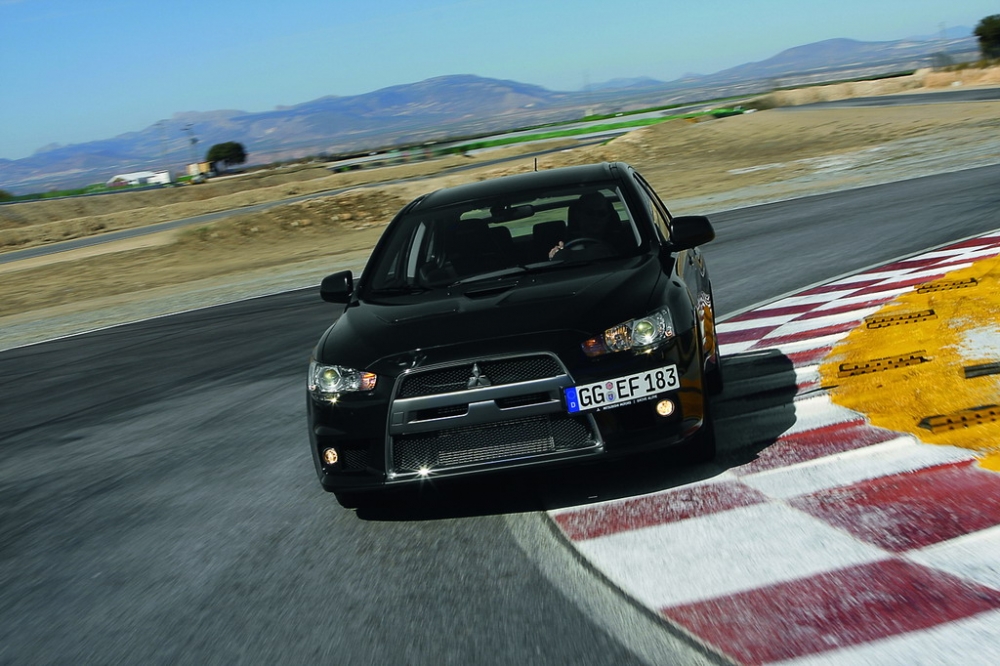 Therefore – down with routine! – we have built a completely new car, and our goal is an equally new positioning and a new, much wider circle of buyers. We say “goodbye” to the boyish community of street racers and the eternal “backyard” rivalry with the Subaru WRX STi. Our new benchmarks are the BMW M3 and Audi RS4. Accordingly, our new sports car is not another routine Evo with the index X, but a revolutionary and more respectable Lancer Evolution.” In short, I created you, and I will destroy you. Therefore – down with routine! – we have built a completely new car, and our goal is an equally new positioning and a new, much wider circle of buyers. We say “goodbye” to the boyish community of street racers and the eternal “backyard” rivalry with the Subaru WRX STi. Our new benchmarks are the BMW M3 and Audi RS4. Accordingly, our new sports car is not another routine Evo with the index X, but a revolutionary and more respectable Lancer Evolution.” In short, I created you, and I will destroy you. |
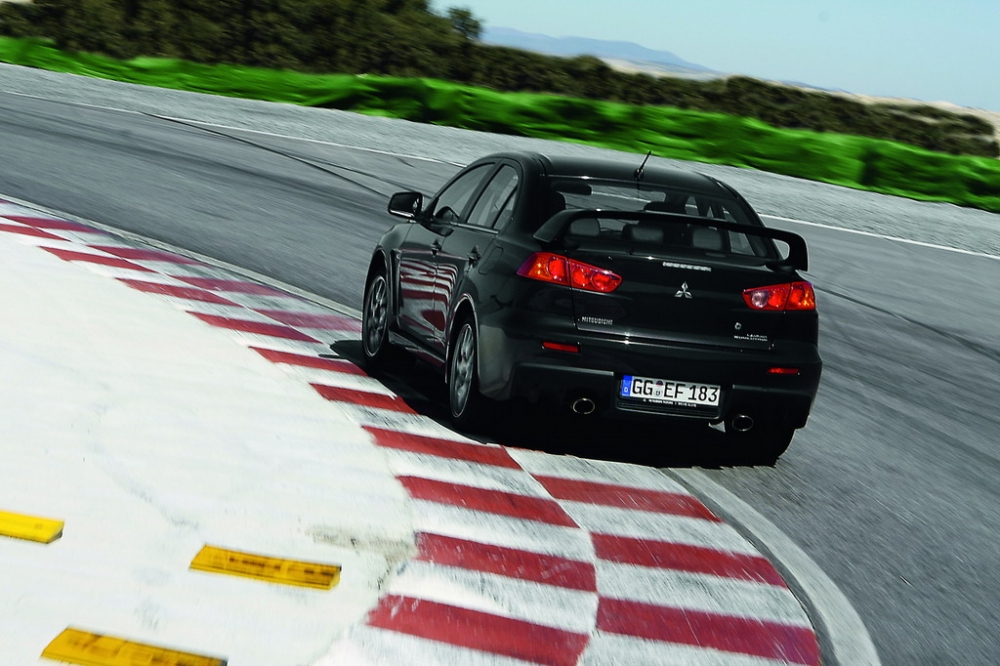 No more, no less. But if the eternal competitors at Subaru “went to the people” by giving the base Impreza a marketable look, while trying to preserve as much as possible the character of the “charged” version for the fans, then Mitsubishi's marketers decided to put an end to the situation where the base Lancer was becoming increasingly bland, and the Evo versions were becoming wilder and having nothing in common except a primitive interior. Therefore, the base version of the new-generation Lancer was given an initially more aggressive and sporty, extraordinary look, made significantly more comfortable, richly equipped, and refined, and deliberately, from the very start of development, provided for the creation of a full-fledged sports car on its basis. No more, no less. But if the eternal competitors at Subaru “went to the people” by giving the base Impreza a marketable look, while trying to preserve as much as possible the character of the “charged” version for the fans, then Mitsubishi's marketers decided to put an end to the situation where the base Lancer was becoming increasingly bland, and the Evo versions were becoming wilder and having nothing in common except a primitive interior. Therefore, the base version of the new-generation Lancer was given an initially more aggressive and sporty, extraordinary look, made significantly more comfortable, richly equipped, and refined, and deliberately, from the very start of development, provided for the creation of a full-fledged sports car on its basis. |
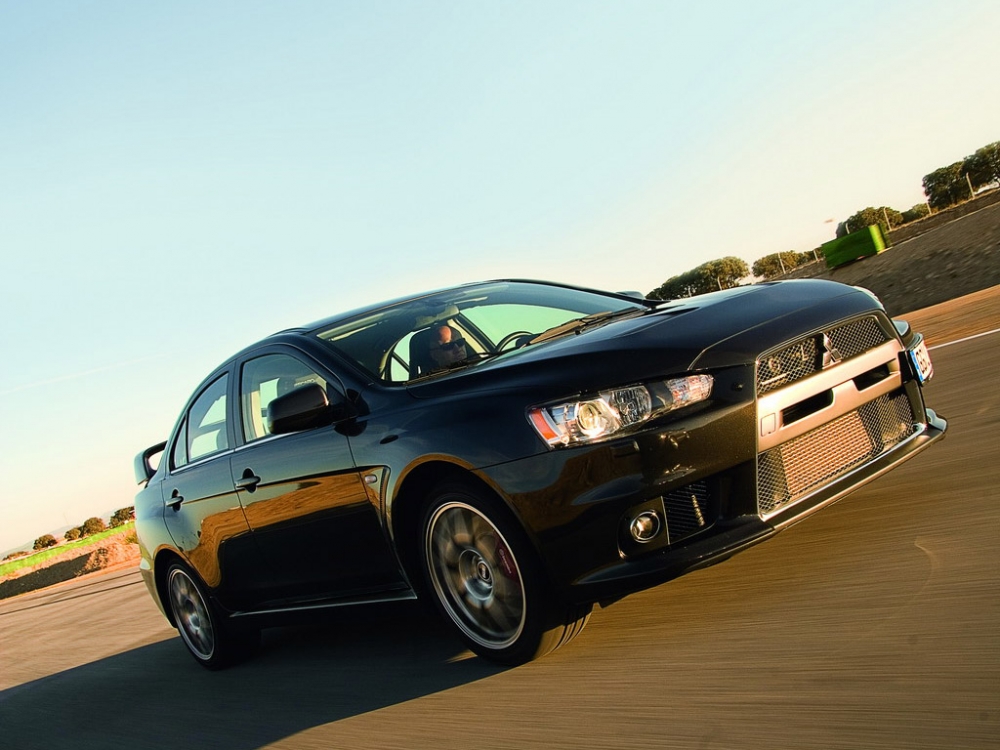
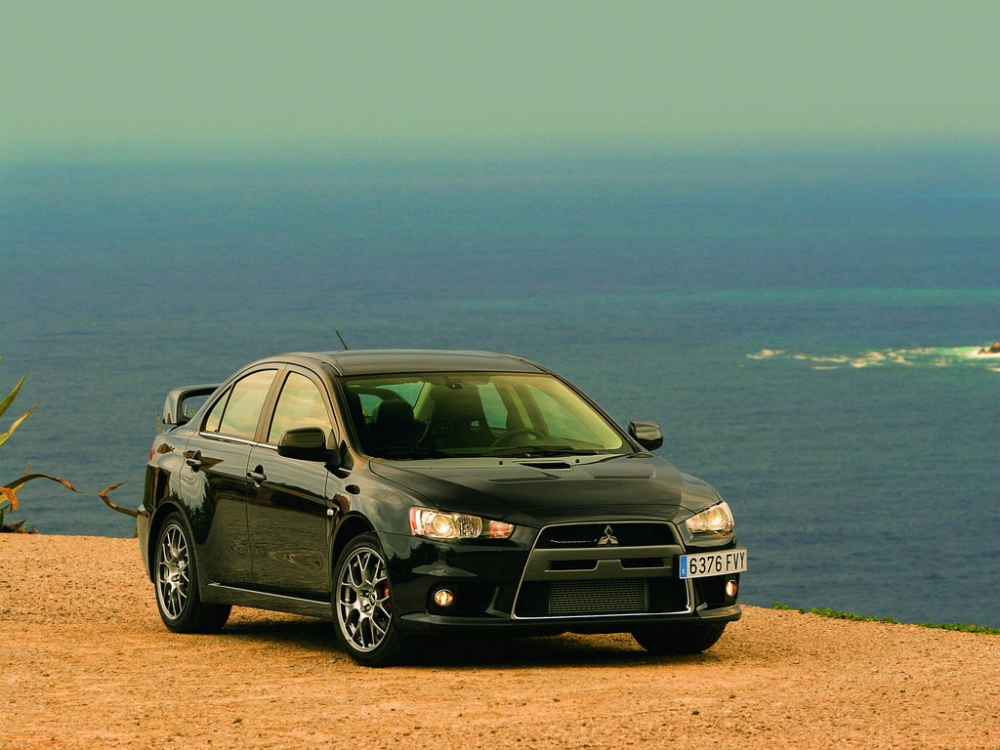
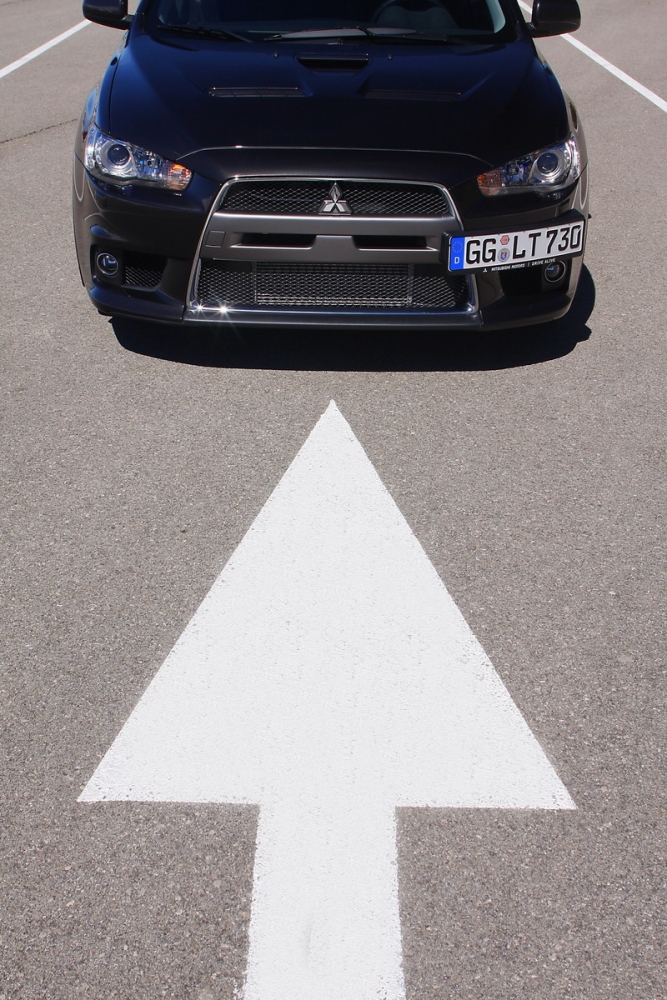
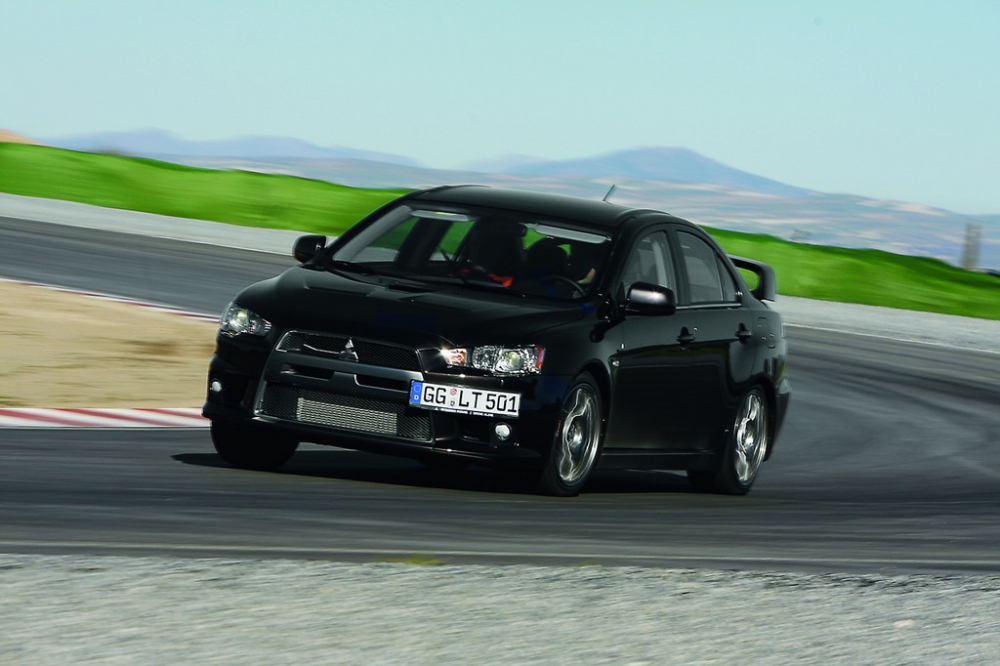 Well, that's a very serious claim, and you understand this already just from the appearance of the new Evolution. First, the compact sedan has become noticeably larger – due to an increase in wheelbase by 25 mm, track width and height by 30 mm, and width by 40 mm. Second, indeed, flesh of the flesh of the base version, the “charged” Lancer looks much more attractive and convincing than before, including thanks to the trapezoidal “mouth” of the front air intake – a kind of paraphrase on the theme of the front end of modern Audis. Well, that's a very serious claim, and you understand this already just from the appearance of the new Evolution. First, the compact sedan has become noticeably larger – due to an increase in wheelbase by 25 mm, track width and height by 30 mm, and width by 40 mm. Second, indeed, flesh of the flesh of the base version, the “charged” Lancer looks much more attractive and convincing than before, including thanks to the trapezoidal “mouth” of the front air intake – a kind of paraphrase on the theme of the front end of modern Audis. |
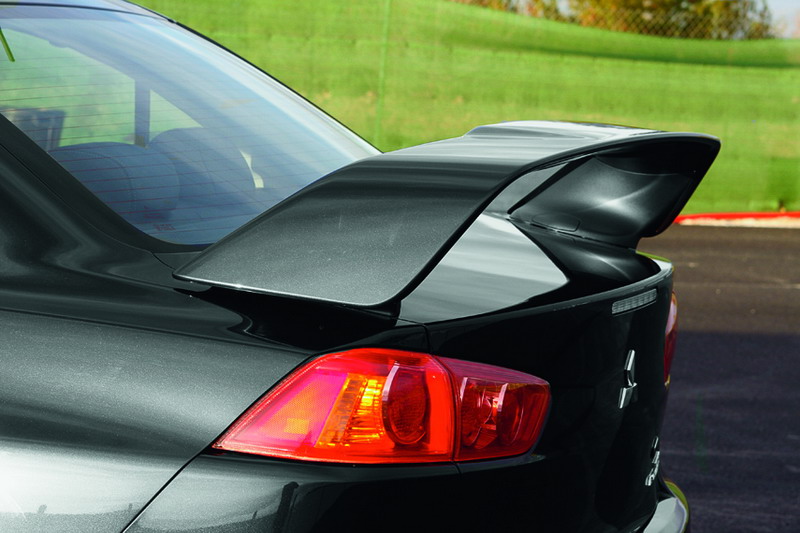
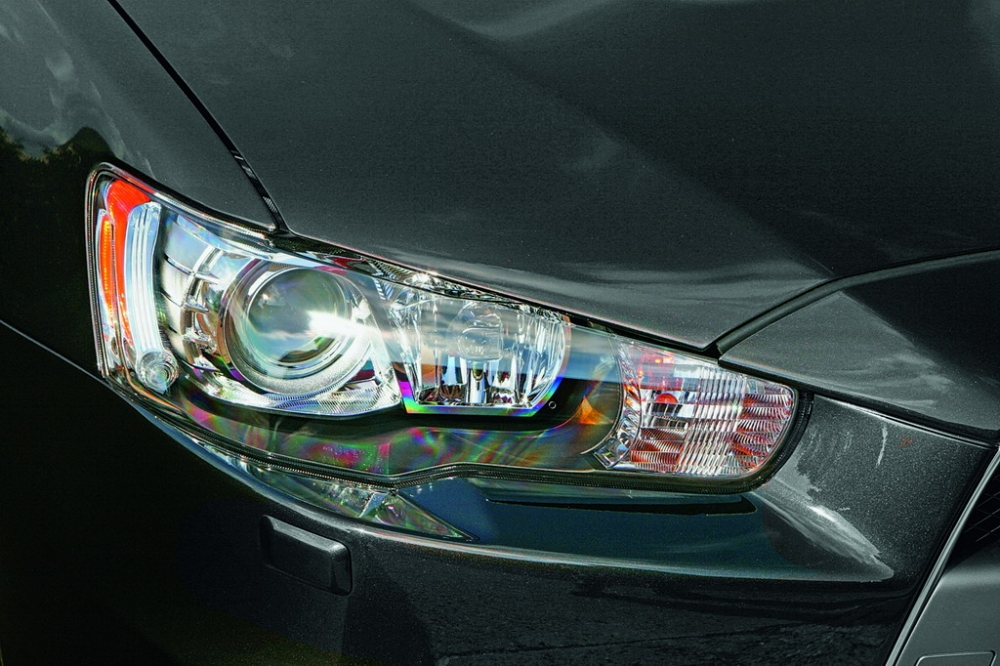
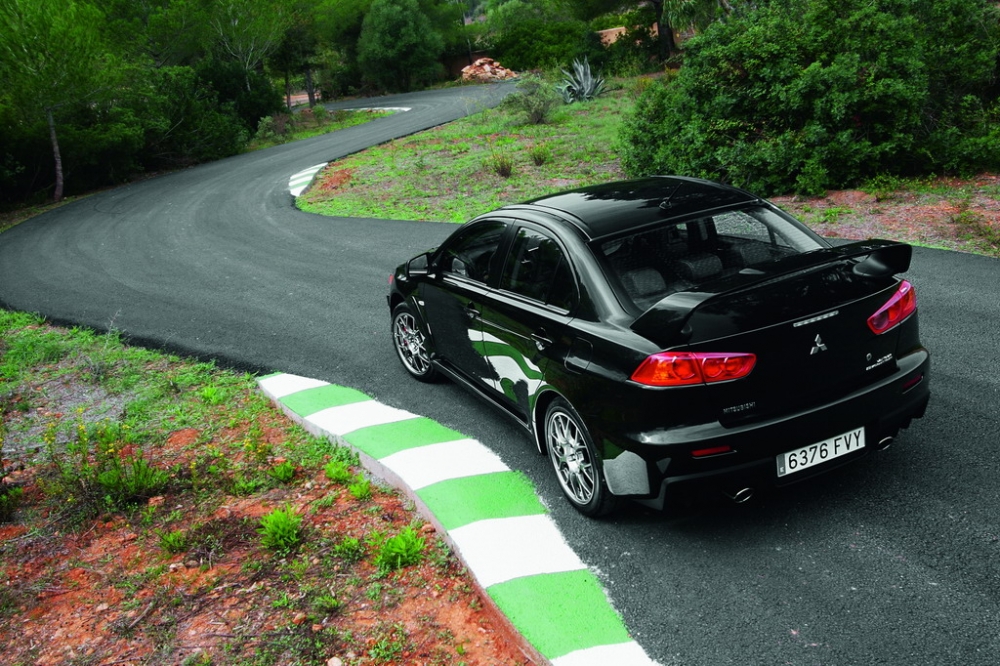 While in the geometry of the “rear” one can quite clearly recognize something between a Lexus and an Alfa Romeo. And the air duct deflectors on the hood and behind the front wheel arches (here there is almost a direct quotation of the Mazda RX-8), the front spoiler, and the rear wing, which add additional visual power and aggressiveness, look much more organic, stylish, and noble than before. Let's leave on the conscience of Mitsubishi's designers the deliberate or unintentional borrowings based on the principle of “from the world by a thread – a shirt for the poor,” and admit that as a result the car turned out surprisingly cohesive, well-proportioned, beautiful, and acquired a more expensive and striking look. While in the geometry of the “rear” one can quite clearly recognize something between a Lexus and an Alfa Romeo. And the air duct deflectors on the hood and behind the front wheel arches (here there is almost a direct quotation of the Mazda RX-8), the front spoiler, and the rear wing, which add additional visual power and aggressiveness, look much more organic, stylish, and noble than before. Let's leave on the conscience of Mitsubishi's designers the deliberate or unintentional borrowings based on the principle of “from the world by a thread – a shirt for the poor,” and admit that as a result the car turned out surprisingly cohesive, well-proportioned, beautiful, and acquired a more expensive and striking look. |
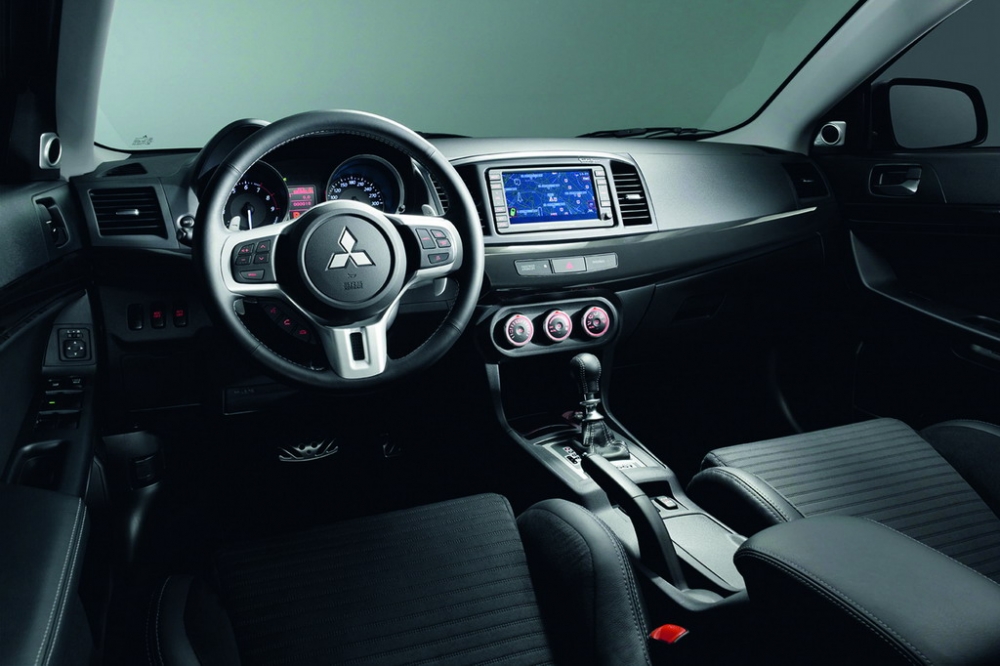
 This impression is reinforced when you get inside: there is no trace left of the former, I'm not afraid to say, shabbiness of the design. Now, sitting in the cabin of the new Evolution, you feel as if you are in a well-appointed apartment with European-quality renovation, not in a orphan's room of a student dorm with stools instead of armchairs. By the way, the new Recaro sports seats, unlike the previous ones, provide a much more comfortable, “cockpit” seating position. Everything in the cabin pleases the eye even in the base GSR trim. And the leather upholstery with contrasting stitching, the premium Rockford Fosgate audio system with 9 speakers (including a 25-centimeter subwoofer) and a 650-watt amplifier, a 7-inch LCD display and built-in hard drive for the navigation system, cruise control, built-in Bluetooth™ device, and a “keyless” door unlocking and engine start system – this is equipment unthinkable before for Evo versions, but now available in the top MR trim (in which the new car was provided for the test), gives the sensations of driving the Lancer Evolution a qualitatively different, incomparably higher level. This impression is reinforced when you get inside: there is no trace left of the former, I'm not afraid to say, shabbiness of the design. Now, sitting in the cabin of the new Evolution, you feel as if you are in a well-appointed apartment with European-quality renovation, not in a orphan's room of a student dorm with stools instead of armchairs. By the way, the new Recaro sports seats, unlike the previous ones, provide a much more comfortable, “cockpit” seating position. Everything in the cabin pleases the eye even in the base GSR trim. And the leather upholstery with contrasting stitching, the premium Rockford Fosgate audio system with 9 speakers (including a 25-centimeter subwoofer) and a 650-watt amplifier, a 7-inch LCD display and built-in hard drive for the navigation system, cruise control, built-in Bluetooth™ device, and a “keyless” door unlocking and engine start system – this is equipment unthinkable before for Evo versions, but now available in the top MR trim (in which the new car was provided for the test), gives the sensations of driving the Lancer Evolution a qualitatively different, incomparably higher level. |
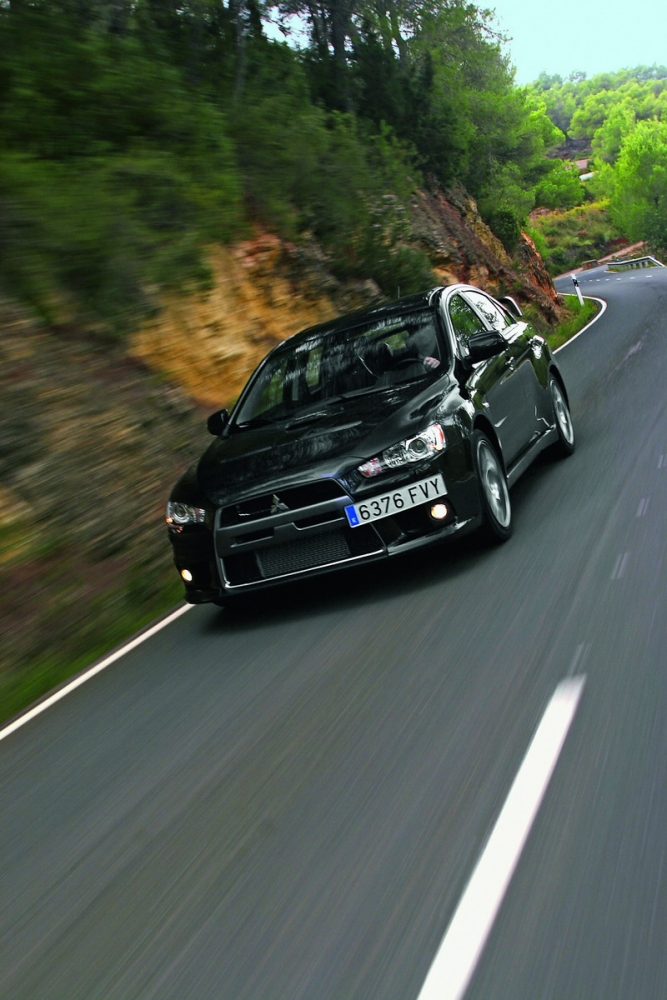
 Nevertheless, the main virtues of this car should still be its driving qualities, and they could be fully tested. Fortunately, the test organized in Spain for Russian journalists by the distributor of Mitsubishi Motors in Russia – the company “ROLF Import” – included both highway and much rarer racetrack components. Already the first kilometers behind the wheel of the new “charged” Lancer convince: when used on ordinary roads, its behavior is a significant step forward. Without losing any of its agility, the sedan has become softer, more “politically correct” in its habits, and provides an even more intuitive level of control. Nevertheless, the main virtues of this car should still be its driving qualities, and they could be fully tested. Fortunately, the test organized in Spain for Russian journalists by the distributor of Mitsubishi Motors in Russia – the company “ROLF Import” – included both highway and much rarer racetrack components. Already the first kilometers behind the wheel of the new “charged” Lancer convince: when used on ordinary roads, its behavior is a significant step forward. Without losing any of its agility, the sedan has become softer, more “politically correct” in its habits, and provides an even more intuitive level of control. |
 Behind that apparent ease with which the new Evolution holds the required trajectory even in the most complex corners lies the work of the most sophisticated intelligent all-wheel drive system Super All Wheel Control (S-AWC), already familiar from the eighth and ninth generations of the Evo, but significantly improved. The fundamental functions of this system – automatic control of the active center differential (ADC) and counteraction to rotation around the vertical axis (AYC) – have been supplemented with a sensor for the degree of the mentioned rotation and a brake force regulator, which allows the car to more accurately “guess” the driver's intentions and more effectively prevent his mistakes – especially when driving on the verge of flying off. Behind that apparent ease with which the new Evolution holds the required trajectory even in the most complex corners lies the work of the most sophisticated intelligent all-wheel drive system Super All Wheel Control (S-AWC), already familiar from the eighth and ninth generations of the Evo, but significantly improved. The fundamental functions of this system – automatic control of the active center differential (ADC) and counteraction to rotation around the vertical axis (AYC) – have been supplemented with a sensor for the degree of the mentioned rotation and a brake force regulator, which allows the car to more accurately “guess” the driver's intentions and more effectively prevent his mistakes – especially when driving on the verge of flying off. |
 As before, for example, if you enter a fast corner too “optimistically,” the S-AWC system will anticipate your attempt to correct the resulting understeer on your own and add torque to the loaded outer wheel. But now it also brakes, if the pedal effort is insufficient, the inner front wheel, helping the car to safely make the turn. Moreover, from now on, an active stabilization system ASC has been added to all this, which, however, can be completely switched off. Of course, a reasonable question arises: how exciting is it to drive such a “computer on wheels” that almost everything decides and does for the driver? It depends on what you mean by “excitement.” If it's the ability to, out of boredom, tear around burning rubber in a controlled drift on some area isolated from public roads, then not very. Although those who buy a very expensive car precisely for this can be counted on the fingers of one hand. If we are talking about the ability to experience a truly magical feeling that behind the wheel of this car you can do what would seem impossible, and at the same time enjoy its comfort – then yes, it is very exciting. And there are a hundred times more people who want exactly that. Moreover, all auxiliary systems work correctly, seamlessly, without creating in the driver a feeling of interference in the control of the car through “kicks in the rear.” As before, for example, if you enter a fast corner too “optimistically,” the S-AWC system will anticipate your attempt to correct the resulting understeer on your own and add torque to the loaded outer wheel. But now it also brakes, if the pedal effort is insufficient, the inner front wheel, helping the car to safely make the turn. Moreover, from now on, an active stabilization system ASC has been added to all this, which, however, can be completely switched off. Of course, a reasonable question arises: how exciting is it to drive such a “computer on wheels” that almost everything decides and does for the driver? It depends on what you mean by “excitement.” If it's the ability to, out of boredom, tear around burning rubber in a controlled drift on some area isolated from public roads, then not very. Although those who buy a very expensive car precisely for this can be counted on the fingers of one hand. If we are talking about the ability to experience a truly magical feeling that behind the wheel of this car you can do what would seem impossible, and at the same time enjoy its comfort – then yes, it is very exciting. And there are a hundred times more people who want exactly that. Moreover, all auxiliary systems work correctly, seamlessly, without creating in the driver a feeling of interference in the control of the car through “kicks in the rear.” |
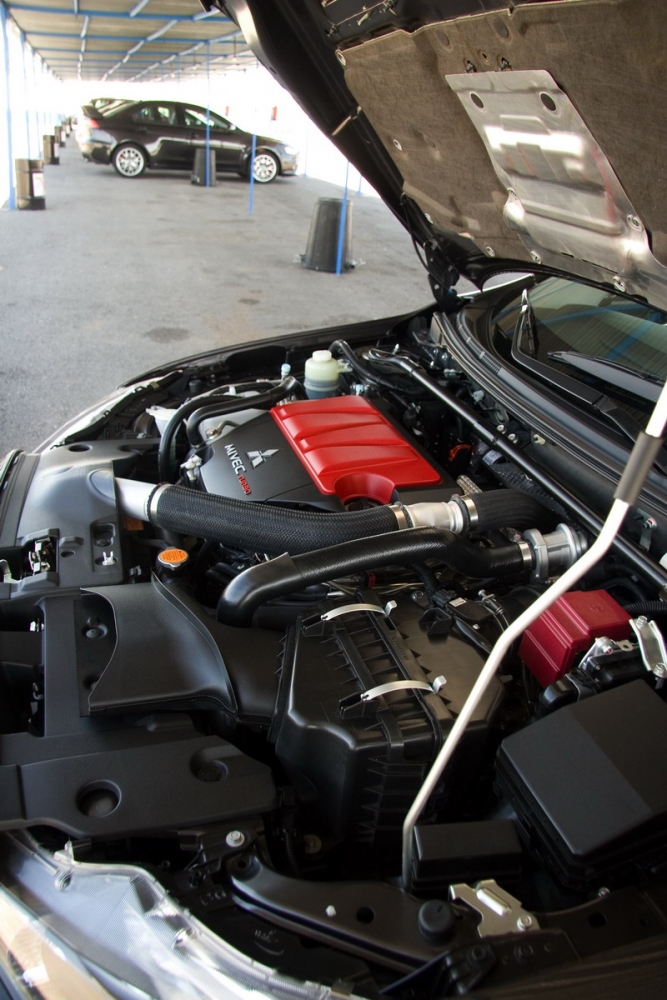
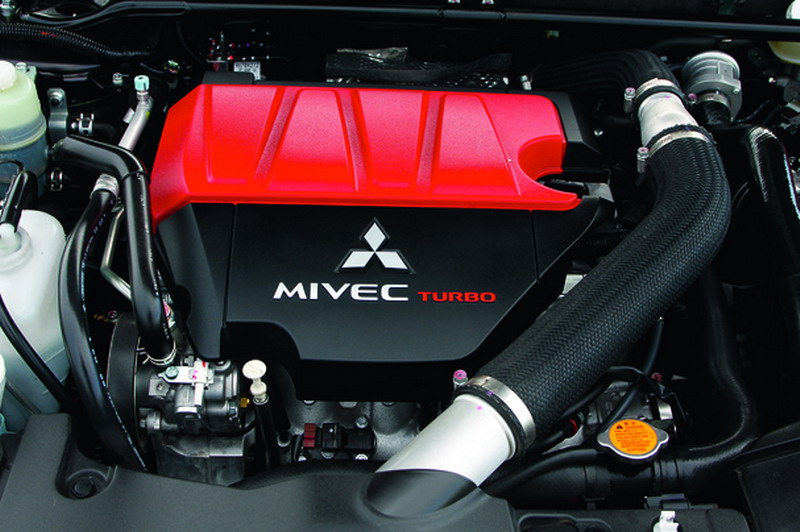
 Just as linearly, but very assertively, the 295-horsepower twin-cam turbo engine now works – of the same architecture as that of the base Lancer, but fundamentally modified. Built, like the car itself, on a “global” platform developed by Mitsubishi jointly with Chrysler, it has nothing in common (except for the displacement and the presence of the MIVEC electronic valve timing control system) with the unit that equipped all previous Evo versions. Its main difference is an aluminum block instead of a cast iron one. Overall, the engine has become stronger, its energy output has been increased, and at the same time, the weight has been significantly reduced by 12 kg and the center of gravity by 10 mm, which, in turn, improved the weight distribution and handling of the car. Smooth and powerful traction across almost the entire rev range allows you to change the rhythm of movement at any moment and use the gas pedal as a very fine control instrument. Just as linearly, but very assertively, the 295-horsepower twin-cam turbo engine now works – of the same architecture as that of the base Lancer, but fundamentally modified. Built, like the car itself, on a “global” platform developed by Mitsubishi jointly with Chrysler, it has nothing in common (except for the displacement and the presence of the MIVEC electronic valve timing control system) with the unit that equipped all previous Evo versions. Its main difference is an aluminum block instead of a cast iron one. Overall, the engine has become stronger, its energy output has been increased, and at the same time, the weight has been significantly reduced by 12 kg and the center of gravity by 10 mm, which, in turn, improved the weight distribution and handling of the car. Smooth and powerful traction across almost the entire rev range allows you to change the rhythm of movement at any moment and use the gas pedal as a very fine control instrument. |
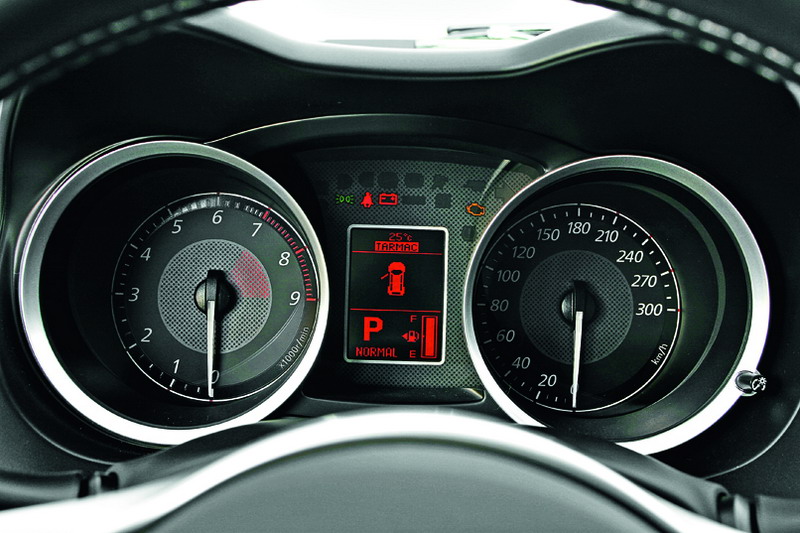
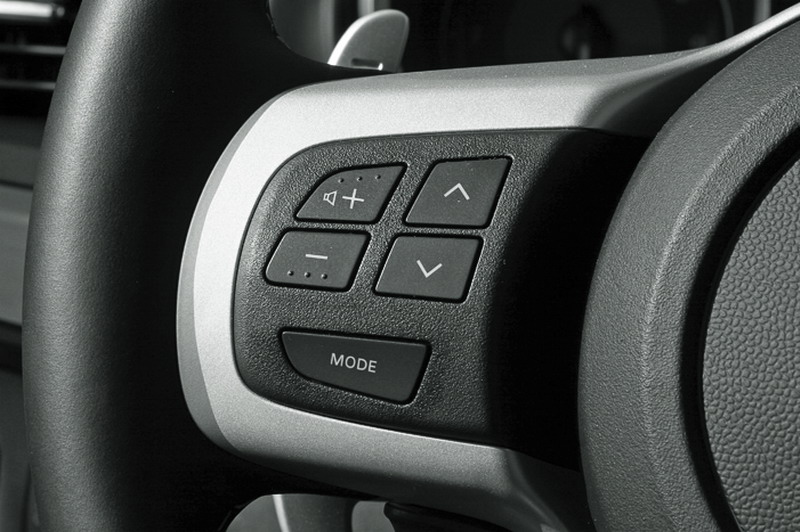
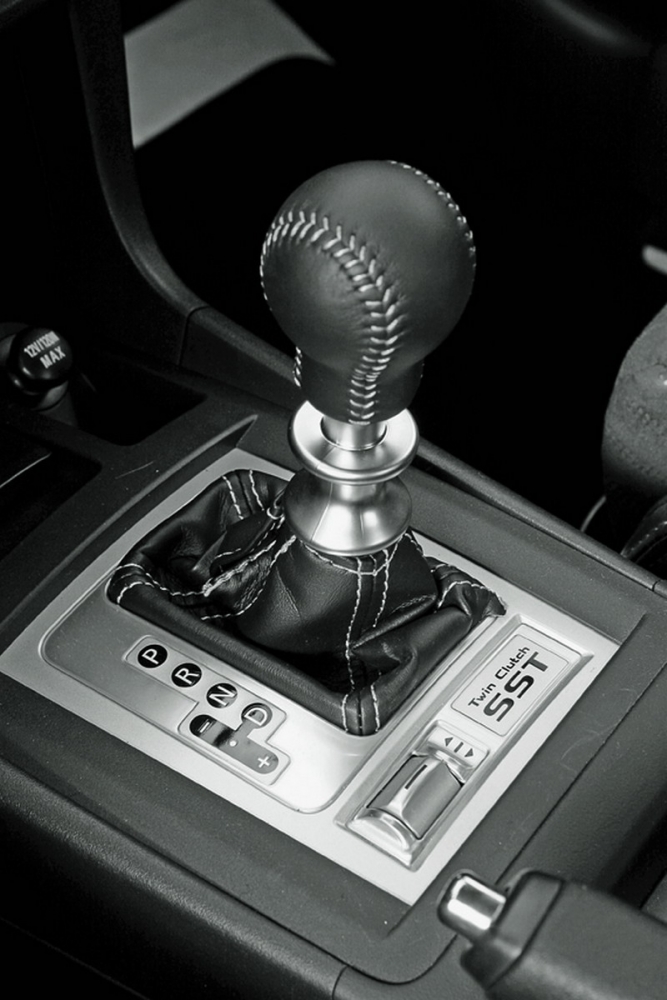
 A logical pair for the new engine was the new transmission. The robotic 6-speed gearbox of the new generation Twin Clutch SST (Sport Shift Transmission) is similar in its principle of operation to the DSG system used in VW/Audi models. In Normal mode, the “robot” shifts gears, saving fuel, early and with smoothness not inferior to the best automatic transmissions, and driving in this mode in city traffic is a pleasure. You switch to Sport mode – and the electronics hold gears longer, while speeding up the shifting process itself. S-Sport mode, which makes sense to use only when driving at a racing pace, “aggravates” the result to an even greater extent, bringing the shifting algorithm as close as possible to skillful manual shifting. You can also shift gears manually – both with the selector lever itself and with the aluminum-trimmed paddle shifters behind the steering wheel, which give the car a special charm and solidity. Lovers of even more interactive control can, however, purchase the Lancer Evolution with the classic 5-speed manual transmission. And it, as the Japanese assure, embodies all the experience of the brand's participation in motor racing. It is claimed that the new manual transmission provides the transmission of more torque due to wider gear teeth without increasing the external dimensions of the gearbox. Moreover, such compactness was achieved by abandoning... the reverse gear! But this does not mean that the Lancer Evolution with a manual transmission can now only go forward. The innovative (and, as Mitsubishi representatives say, unprecedented to date) solution provides for the simultaneous engagement of the 1st and 3rd gears to provide reverse! Gears 1 through 4 have closer ratios, the ratio of 1st gear is lowered, which contributes to a more confident start from a standstill, and the ratio of 5th, on the contrary, is raised, which provides more comfortable movement at high speed. A logical pair for the new engine was the new transmission. The robotic 6-speed gearbox of the new generation Twin Clutch SST (Sport Shift Transmission) is similar in its principle of operation to the DSG system used in VW/Audi models. In Normal mode, the “robot” shifts gears, saving fuel, early and with smoothness not inferior to the best automatic transmissions, and driving in this mode in city traffic is a pleasure. You switch to Sport mode – and the electronics hold gears longer, while speeding up the shifting process itself. S-Sport mode, which makes sense to use only when driving at a racing pace, “aggravates” the result to an even greater extent, bringing the shifting algorithm as close as possible to skillful manual shifting. You can also shift gears manually – both with the selector lever itself and with the aluminum-trimmed paddle shifters behind the steering wheel, which give the car a special charm and solidity. Lovers of even more interactive control can, however, purchase the Lancer Evolution with the classic 5-speed manual transmission. And it, as the Japanese assure, embodies all the experience of the brand's participation in motor racing. It is claimed that the new manual transmission provides the transmission of more torque due to wider gear teeth without increasing the external dimensions of the gearbox. Moreover, such compactness was achieved by abandoning... the reverse gear! But this does not mean that the Lancer Evolution with a manual transmission can now only go forward. The innovative (and, as Mitsubishi representatives say, unprecedented to date) solution provides for the simultaneous engagement of the 1st and 3rd gears to provide reverse! Gears 1 through 4 have closer ratios, the ratio of 1st gear is lowered, which contributes to a more confident start from a standstill, and the ratio of 5th, on the contrary, is raised, which provides more comfortable movement at high speed. |
 In defense of the robotic transmission, it is worth noting that although it accelerates the new Evolution to “a hundred” almost a second slower, in “overtaking” acceleration from 60 to 100 km/h, on the contrary, it turns out to be faster by as much as 1.7 seconds (3.4 versus 5.1)! The suspension did not go unnoticed by the “revisionists” from Mitsubishi either. Its design is the same – inverted McPherson struts in front and a “multi-link” in the rear, but its geometry has been revised and key components strengthened. The ride of the new Lancer is properly stiff, but not “wooden” – over the entire test route of a couple of hundred kilometers and the trip the next day to the “Guadis” racetrack north of Granada and back, not the slightest feeling of discomfort arose. Only a feeling of pleasure. And sometimes... horror! In defense of the robotic transmission, it is worth noting that although it accelerates the new Evolution to “a hundred” almost a second slower, in “overtaking” acceleration from 60 to 100 km/h, on the contrary, it turns out to be faster by as much as 1.7 seconds (3.4 versus 5.1)! The suspension did not go unnoticed by the “revisionists” from Mitsubishi either. Its design is the same – inverted McPherson struts in front and a “multi-link” in the rear, but its geometry has been revised and key components strengthened. The ride of the new Lancer is properly stiff, but not “wooden” – over the entire test route of a couple of hundred kilometers and the trip the next day to the “Guadis” racetrack north of Granada and back, not the slightest feeling of discomfort arose. Only a feeling of pleasure. And sometimes... horror! |
 Anyone who knows how to and loves to drive fast knows that when you move from the driver's seat to the passenger seat, such driving sometimes turns from pleasure into outright torture with a nauseating effect. Therefore, not having the slightest desire to subject myself to such suffering on those sections of the route where a partner would be behind the wheel, I prudently preferred the company of a girl from a glossy men's magazine, absolutely uninvolved in all this, to the company of desperate colleagues-“racers” – counting on a serene rest in the passenger seat. And I was cruelly mistaken. Anyone who knows how to and loves to drive fast knows that when you move from the driver's seat to the passenger seat, such driving sometimes turns from pleasure into outright torture with a nauseating effect. Therefore, not having the slightest desire to subject myself to such suffering on those sections of the route where a partner would be behind the wheel, I prudently preferred the company of a girl from a glossy men's magazine, absolutely uninvolved in all this, to the company of desperate colleagues-“racers” – counting on a serene rest in the passenger seat. And I was cruelly mistaken. |
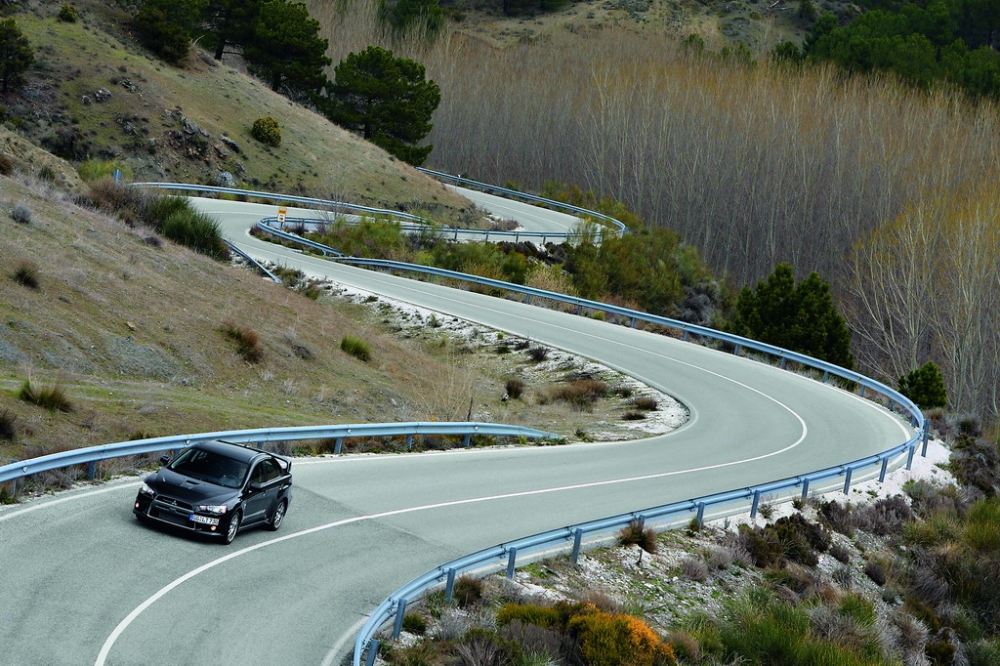
 Knowing nothing about oversteer or understeer, nor about corrective steering wheel movements and “steering” with the accelerator pedal, my partner simply trusted the car's clever electronics, and... While I was frozen in horror in the passenger seat, the girl boldly pressed the gas pedal and safely navigated the clearly impassable at such speed turns of the snowy mountain serpentine (yes, while it was +22°C in Granada, the nearby Sierra Nevada ski resort was literally drowning in snow!) Moreover, she did it without the slightest strain and with such composure, as if she had been doing nothing else all her life – although just ten minutes earlier, being a passenger herself, she begged me to deliver her to her destination alive and unharmed. And this is the main argument in favor of such a car, which the Lancer Evolution has become and which allows people without special skills to enjoy fast driving, doing a considerable part of the work for them and instantly correcting their mistakes. Knowing nothing about oversteer or understeer, nor about corrective steering wheel movements and “steering” with the accelerator pedal, my partner simply trusted the car's clever electronics, and... While I was frozen in horror in the passenger seat, the girl boldly pressed the gas pedal and safely navigated the clearly impassable at such speed turns of the snowy mountain serpentine (yes, while it was +22°C in Granada, the nearby Sierra Nevada ski resort was literally drowning in snow!) Moreover, she did it without the slightest strain and with such composure, as if she had been doing nothing else all her life – although just ten minutes earlier, being a passenger herself, she begged me to deliver her to her destination alive and unharmed. And this is the main argument in favor of such a car, which the Lancer Evolution has become and which allows people without special skills to enjoy fast driving, doing a considerable part of the work for them and instantly correcting their mistakes. |
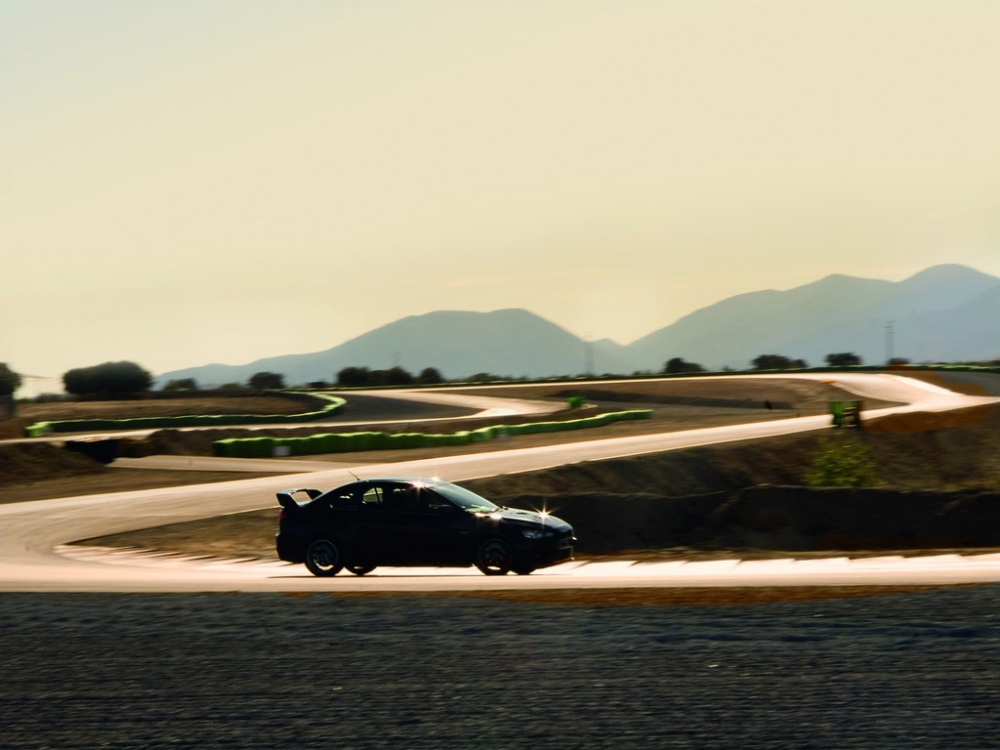
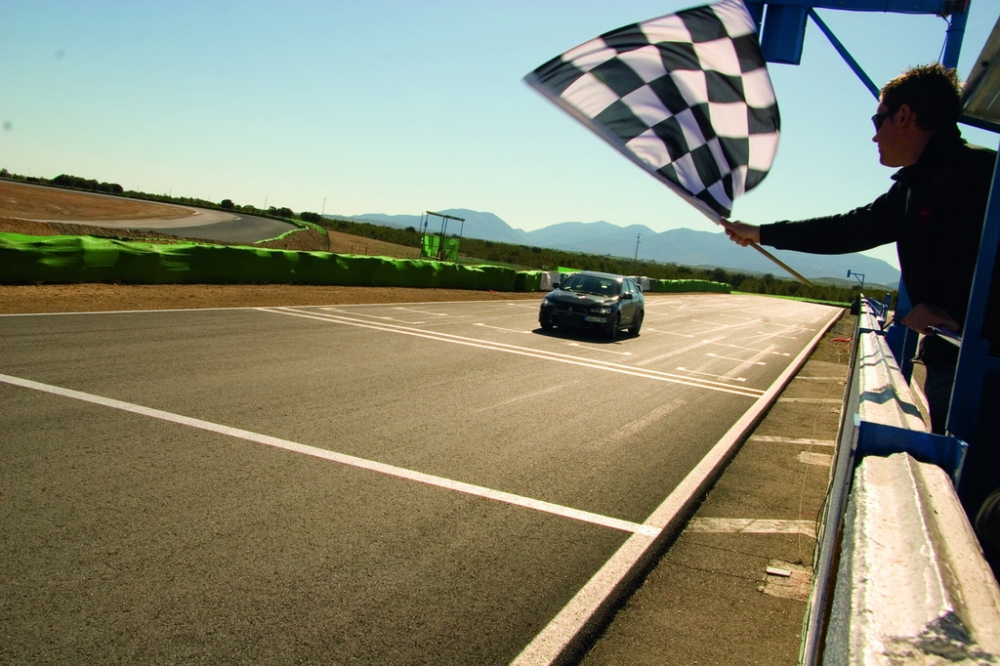
 But even the most “smart” and safe car has its own, albeit very high, limits of the possible, which must be felt. And it is safer to determine these limits empirically not on mountain roads of general use, but on a racetrack with wide gravel “traps.” And here it is, the racetrack. A feeling of greater freedom in interaction with the car appears, and the level of reasonable fear that controls driving along the edge of a mountain gorge more effectively than any electronic system, here, on the contrary, decreases to a minimum. But even the most “smart” and safe car has its own, albeit very high, limits of the possible, which must be felt. And it is safer to determine these limits empirically not on mountain roads of general use, but on a racetrack with wide gravel “traps.” And here it is, the racetrack. A feeling of greater freedom in interaction with the car appears, and the level of reasonable fear that controls driving along the edge of a mountain gorge more effectively than any electronic system, here, on the contrary, decreases to a minimum. |
 A brief briefing from the Japanese gurus, a couple of questions to the professional racer Boris Shulmeister participating in the test (whose assessment of the car, by the way, generally coincides with the author's), a couple of familiarization laps behind the safety car, as if before the start of a race from a standstill, and... “gas to the floor,” soul out of body! Not quite, of course – it's just that your soul merges with the soul of the car (even if it's electronic), and the stronger this fusion, the more confidently it devours the kilometers of the track. And again the same feeling arises, but only even more vivid and stunning: you understand that if you don't have sufficient skills of a professional racer, it's simply impossible to take a corner at such speed, but the Evolution... inexplicably takes it! A brief briefing from the Japanese gurus, a couple of questions to the professional racer Boris Shulmeister participating in the test (whose assessment of the car, by the way, generally coincides with the author's), a couple of familiarization laps behind the safety car, as if before the start of a race from a standstill, and... “gas to the floor,” soul out of body! Not quite, of course – it's just that your soul merges with the soul of the car (even if it's electronic), and the stronger this fusion, the more confidently it devours the kilometers of the track. And again the same feeling arises, but only even more vivid and stunning: you understand that if you don't have sufficient skills of a professional racer, it's simply impossible to take a corner at such speed, but the Evolution... inexplicably takes it! |
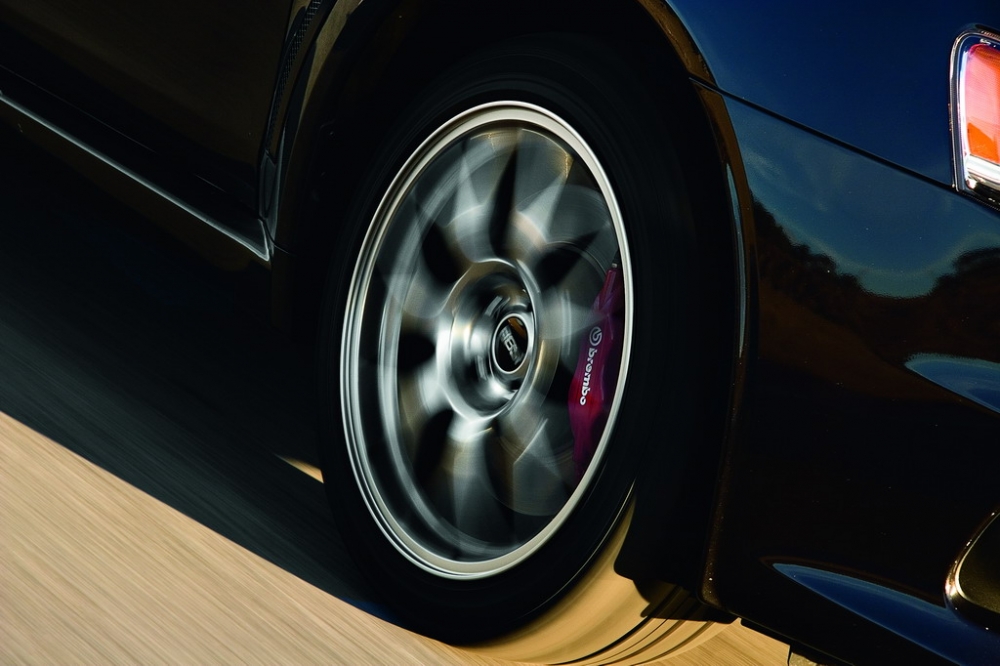
 The stability and tenacity of the car are phenomenal – on the track you feel this most acutely. The chassis is like a monolith – thanks to the increased by 39% torsional rigidity and by 64% – tensile rigidity (due to this, the Evo has become heavier, which is largely where the additional engine power went). But if you turn off the stability system, relying on your own skill to take corners either on the ideal trajectory or by “steering” with the rear axle, the car acquires a special liveliness. True, since its handling is much closer to neutral than it was in previous versions, quite sharp actions are required to send the “rear” into a slide. But the interconnection of your hands and feet through the steering wheel and pedals with the wheels, albeit through the protective electronic “gasket” of S-AWC, seems simply metaphysical. And the main thing: as Mitsubishi representatives claim, although on straights due to the increased weight it does not outpace the Evo IX, it is much faster in corners, and due to this, on a lap of 2.4 km it brings the predecessor a full 2 seconds! As they say, comments are unnecessary... The tenth-generation Lancer Evolution will be offered in two versions – the base GSR and the “luxury,” but also more extreme MR. The equipment of the first already includes Enkei alloy wheels, Brembo brake mechanisms with ventilated discs, bi-xenon headlights with rotating light elements of the adaptive front lighting system AFS, rain and light sensors, and nine airbags/curtains. The stability and tenacity of the car are phenomenal – on the track you feel this most acutely. The chassis is like a monolith – thanks to the increased by 39% torsional rigidity and by 64% – tensile rigidity (due to this, the Evo has become heavier, which is largely where the additional engine power went). But if you turn off the stability system, relying on your own skill to take corners either on the ideal trajectory or by “steering” with the rear axle, the car acquires a special liveliness. True, since its handling is much closer to neutral than it was in previous versions, quite sharp actions are required to send the “rear” into a slide. But the interconnection of your hands and feet through the steering wheel and pedals with the wheels, albeit through the protective electronic “gasket” of S-AWC, seems simply metaphysical. And the main thing: as Mitsubishi representatives claim, although on straights due to the increased weight it does not outpace the Evo IX, it is much faster in corners, and due to this, on a lap of 2.4 km it brings the predecessor a full 2 seconds! As they say, comments are unnecessary... The tenth-generation Lancer Evolution will be offered in two versions – the base GSR and the “luxury,” but also more extreme MR. The equipment of the first already includes Enkei alloy wheels, Brembo brake mechanisms with ventilated discs, bi-xenon headlights with rotating light elements of the adaptive front lighting system AFS, rain and light sensors, and nine airbags/curtains. |
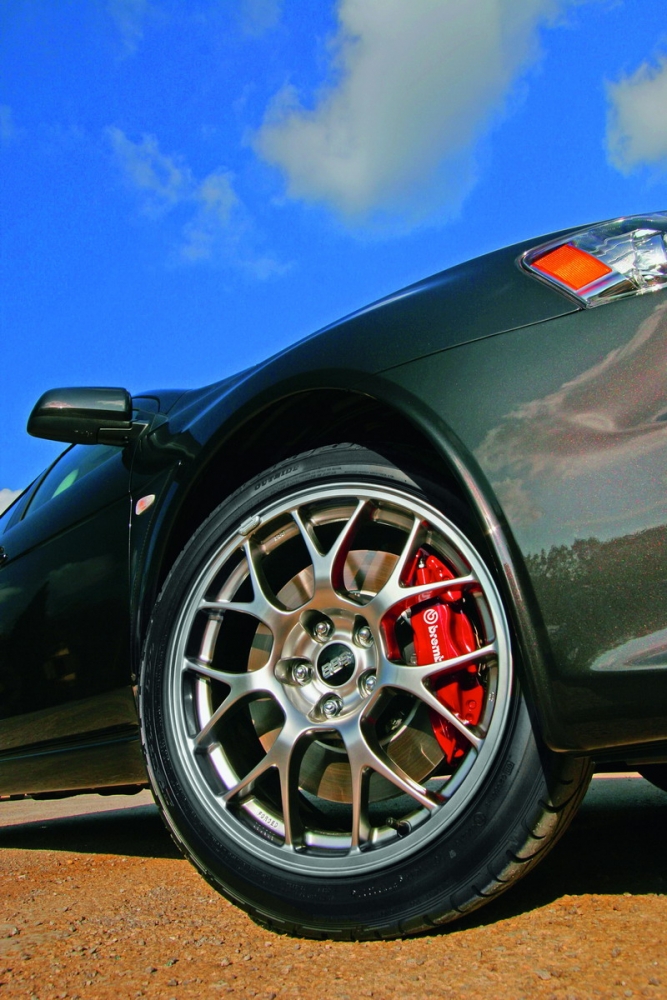
 The additional, providing better wheel grip with the track, steering sharpness and directional stability, especially in corners, “high-speed” package (High Performance Package) for the more expensive MR version provides for the installation of Bilstein shock absorbers and Eibach springs, composite front Brembo brake discs and forged aluminum BBS wheels (which significantly reduces unsprung masses), as well as high-speed tires with stiffer sidewalls and improved grip. Of course, all this costs money. And the price of the new Evolution will be significantly higher than the previous one – probably around 70 thousand dollars. This will become a weighty “counterweight” capable of outweighing the desire to own such a car. And will those who have such money want to spend it on a Mitsubishi car, and not a BMW or Audi? Everything necessary for this to happen is in the tenth Evo – a bright character, striking appearance, increased comfort, the proper level of respectability. People not suffering from pathological snobbery should take such a step, if only to stand out worthily from the crowd. So the new product has chances of success, and good ones. A car created according to the old recipe would be doomed to slow death. It is characteristic that while sales of sports car models in Europe over the past 10 years have increased by 1600% (!), Evo sales have steadily declined and in the year before last amounted to only 2.5 thousand cars. And, no matter what the orthodox grumble under their breath, the Lancer Evolution is still good and has even become better on the race track. Now it has also become incomparably more comfortable and pleasant in everything else, much more adapted to the conditions of urban, “utilitarian” movement, not excluding “traffic light races” (which will no longer be as exhausting as in the case of previous Evo versions with their famous “turbo surge”). This is also the manufacturer's sound calculation. So, apparently, the era of the previous Evo and the isolated, detached from real life handful of their fans has simply inevitably passed. And the new Lancer Evolution from the point of view of marketing and common sense is an undoubted bull's-eye. The additional, providing better wheel grip with the track, steering sharpness and directional stability, especially in corners, “high-speed” package (High Performance Package) for the more expensive MR version provides for the installation of Bilstein shock absorbers and Eibach springs, composite front Brembo brake discs and forged aluminum BBS wheels (which significantly reduces unsprung masses), as well as high-speed tires with stiffer sidewalls and improved grip. Of course, all this costs money. And the price of the new Evolution will be significantly higher than the previous one – probably around 70 thousand dollars. This will become a weighty “counterweight” capable of outweighing the desire to own such a car. And will those who have such money want to spend it on a Mitsubishi car, and not a BMW or Audi? Everything necessary for this to happen is in the tenth Evo – a bright character, striking appearance, increased comfort, the proper level of respectability. People not suffering from pathological snobbery should take such a step, if only to stand out worthily from the crowd. So the new product has chances of success, and good ones. A car created according to the old recipe would be doomed to slow death. It is characteristic that while sales of sports car models in Europe over the past 10 years have increased by 1600% (!), Evo sales have steadily declined and in the year before last amounted to only 2.5 thousand cars. And, no matter what the orthodox grumble under their breath, the Lancer Evolution is still good and has even become better on the race track. Now it has also become incomparably more comfortable and pleasant in everything else, much more adapted to the conditions of urban, “utilitarian” movement, not excluding “traffic light races” (which will no longer be as exhausting as in the case of previous Evo versions with their famous “turbo surge”). This is also the manufacturer's sound calculation. So, apparently, the era of the previous Evo and the isolated, detached from real life handful of their fans has simply inevitably passed. And the new Lancer Evolution from the point of view of marketing and common sense is an undoubted bull's-eye. |
Judo revolution
“Dzu” in Japanese means “ten”. It sounds, perhaps, more convincing than “kyu” (“nine”), “hachi” (“eight”), and especially “shichi” (“seven”). If only because the word “dzu” is very consonant with the surname of the famous champion boxer, and the other mentioned Japanese numerals evoke far from winning associations in Russian. But is it the same with the “charged” tenth-generation Lancer?
Test drive photos
Comments
No comments yet. Say the first word.