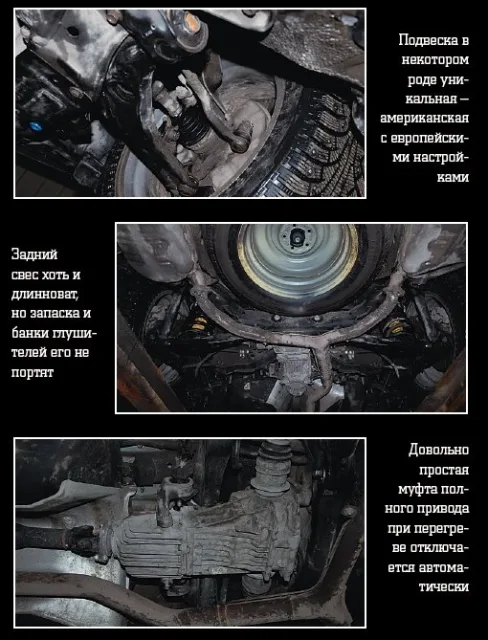
The client gets exactly what they expected. Is the suspension stiff? Absolutely. Does it try to seem dynamic? Of course. A Japanese car for pragmatic business people? Exactly! That's why it can't be called truly stiff or truly sporty. Is that a downside? Not at all! It's an excellent choice for those who want a car in the spirit of American station wagons, but with European settings. Who else can offer something similar? Volvo with its XC 90, Honda with the "suitcase" Pilot, and Subaru with Tribeca. I'd add the Hyundai iX55 here, but it has barely any European in it. Audi Q7? And who can afford it these days?
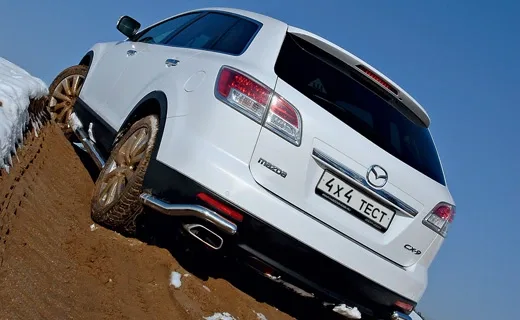
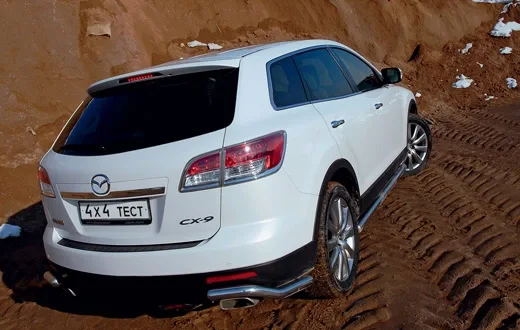
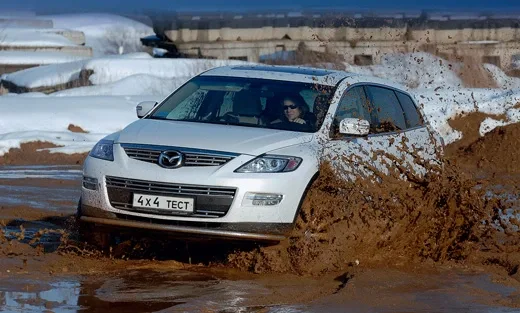
Mazda itself boldly lists Nissan Pathfinder, Toyota LC200, Volkswagen Touareg, and BMW X5 as its rivals. Only punks who like to hang out in a crowd, no matter with whom, could have put together such a company. Volkswagen doesn't make three-row cars, and it also has air suspension and a low-range gear with lockers. BMW and Nissan Pathfinder are also five-seaters, and the latter again has a "low-range." Toyota, on the other hand, is a true SUV with a solid rear axle: how can a typical crossover like the CX-9, which doesn't even have a center lock, compete with it? We still don't know whether Mazda's marketers want to confuse us, are wandering in the fog themselves, or simply gave in to their fantasies.
IN SLAVERY TO THE CYLINDER
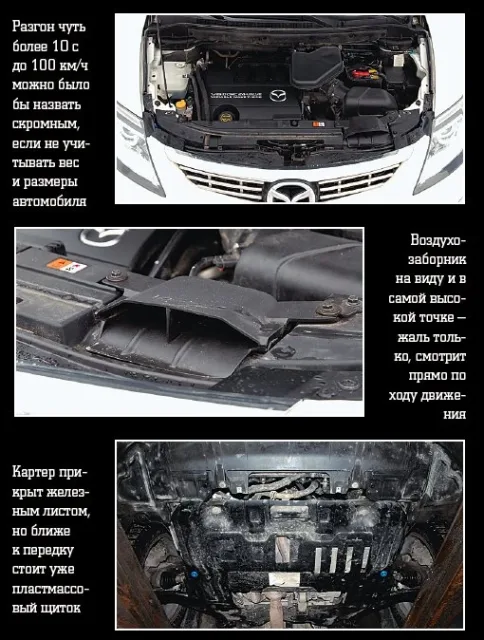
The all-wheel drive in the Mazda is subordinate to a fifteen-centimeter steel cylinder packed with discs. At Mazda's technical conference, I saw it in cross-section. It's sealed, but it sits in the same housing as the rear differential to be cooled by its oil. As soon as the temperature reaches 100 degrees, the discs disengage—and the Mazda becomes front-wheel drive. As soon as the temperature drops to 60 degrees, the all-wheel drive is back in action. But should you worry? This only happens during extreme wheelspin. And the electronics prevent it from spinning.
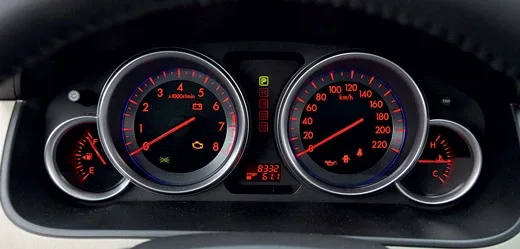
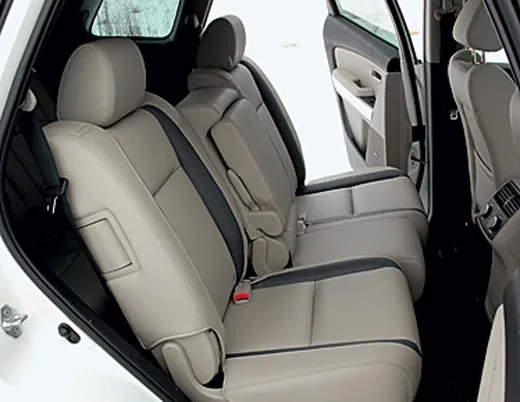
The coupling is generally one of the most reliable parts. To make a demonstration piece, Mazda representatives looked for a used unit, but couldn't find a single scrapped coupling. They had to fork out and cut a new one.
Of what I heard at Mazda's technical conference, that's not even the most interesting part. There was also talk about safety. According to Mazda's internal rules, after an accident, almost everything related to passive safety is replaced in the car. Not only belt pretensioners and airbags are discarded. Even the wiring is changed: after an electrical signal passes through it to the airbags, it no longer meets standards. Even the airbag control module is considered non-functional. Interestingly, Mazda and Ford share the same supplier for this module, but according to Ford's rules, it's only replaced after five accidents. Insurance companies are tearing their hair out: after all, most post-accident costs fall on them.
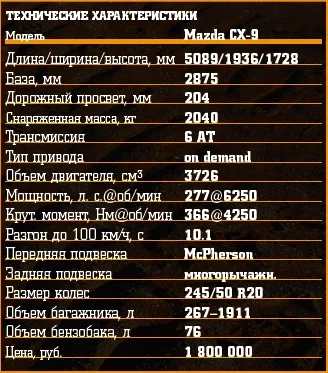
SPECS: MAZDA CX-9
THE CURB WON'T WIN
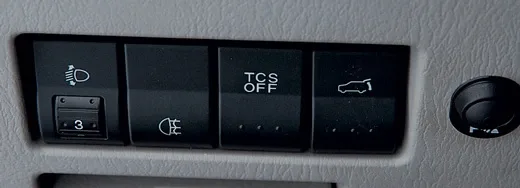
So, the Mazda is not only a spacious and reliable car, but also a safe one. But how does it handle off-road? At the presentation in Uzbekistan (see Club 4x4 No. 1'2009), there was no off-roading. But in the Moscow region, there's much more of it. True, the only button on the "Japanese" car's panel that you can rely on in case of trouble is the traction control off button. When the speed reaches 15 km/h, the electronics automatically kicks back in. I found that this is just enough to climb onto a curb. Don't count on anything more. This car is heavy, and the engine's characteristics peak at too high RPMs.
Disabling the traction control system is often not necessary. For example, to drive on slopes and bumps, it's just what you need. The Mazda's electronics handle a wheel hanging in the air. Although I'd prefer to drive off-road in the lighter CX-7. It darts over hills much more cheerfully, even though it's structurally no different. The CX-7 just begs to be tested for strength—last year we churned up half a sand quarry in it, and we wanted more. But sitting in the CX-9 in front of, say, a snowy forest clearing, you feel like turning back and, after reaching the nearest BP gas station, eating an oatmeal cookie and flipping through fresh press. Sit and think: "Good thing I didn't charge into that forest. What was I looking for there?" This is certainly a sensible approach, but if you're that rational, do you even need a crossover? Maybe a minivan would suit you better?
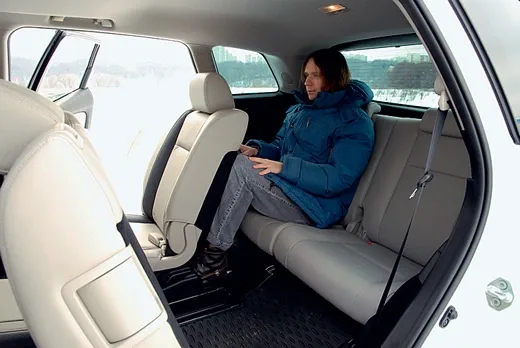
QUARTER TO THREE IS LATE
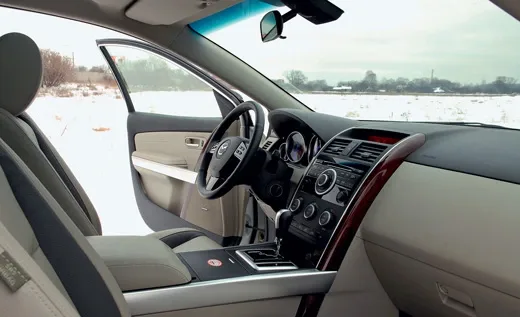
The Mazda handles reliably even at high speeds—up to 180 km/h. Perhaps I'd even make its chassis a bit duller to add smoothness and soften the sharpness. But then what about zoom-zoom? It's impossible to understand what "vzhik-vzhik" really does in cars like the CX-9 and BT-50. This concept is stretched over them like a tight stocking—it seems too forced here. Without it, would Mazda's face, its image, disappear? And why have it in this form? If you want to make a person steer actively, then make sure their elbows don't hit the armrests! Okay, let's forget that it's impossible to hold the wheel in a sporty "quarter to three" position. But even with the classic "ten to two," you sometimes have to turn the steering wheel at least a little. Perhaps taxi drivers would appreciate such ergonomics: for them, the main thing is to prop up their left elbow to smoke out the window more comfortably, and fix their right one to write SMS on the go. Is that really the target audience? We expect six-seat all-wheel-drive taxis in all Russian cities.