
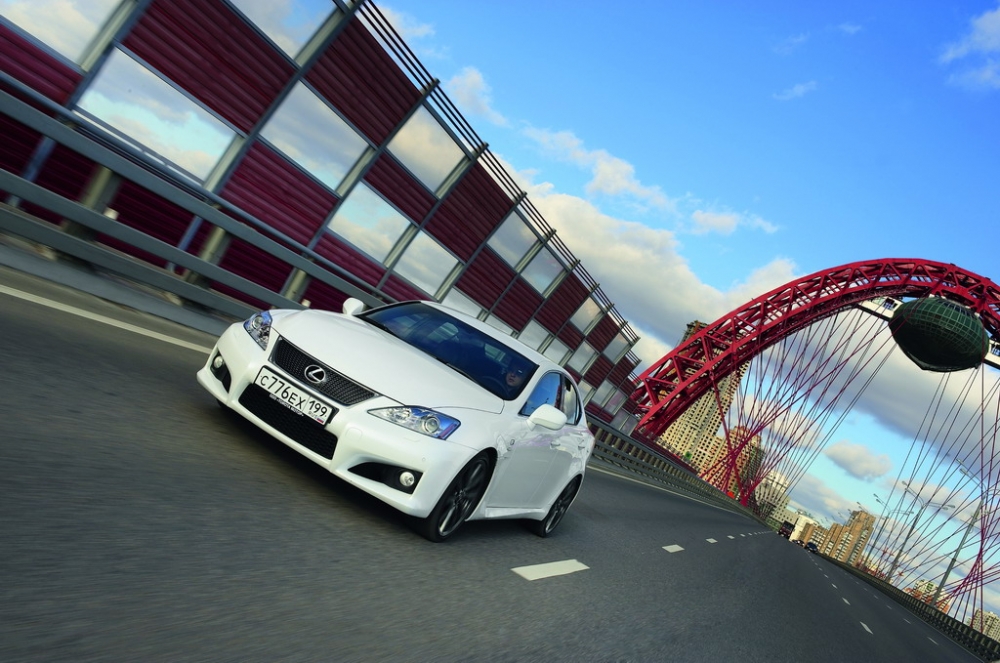
 To truly mature, this car needed time. The first generation successfully tested the IS abbreviation. The public got to know the car, and gradually it gained fans around the world (the sedan and wagon were sold in America, Europe, and Japan under the name Altezza). Three years ago, the second generation debuted, making the lineup even more successful and recognizable. And then came the time to radically raise the status of the little Lexus! So in January 2007 in Detroit, the most aggressive of modern Lexus models debuted – the IS-F. From across the ocean, it showed a blue fist to the famous German trio. A little later, a landing of compact sports cars arrived in Europe after its debut in Geneva. To truly mature, this car needed time. The first generation successfully tested the IS abbreviation. The public got to know the car, and gradually it gained fans around the world (the sedan and wagon were sold in America, Europe, and Japan under the name Altezza). Three years ago, the second generation debuted, making the lineup even more successful and recognizable. And then came the time to radically raise the status of the little Lexus! So in January 2007 in Detroit, the most aggressive of modern Lexus models debuted – the IS-F. From across the ocean, it showed a blue fist to the famous German trio. A little later, a landing of compact sports cars arrived in Europe after its debut in Geneva. |
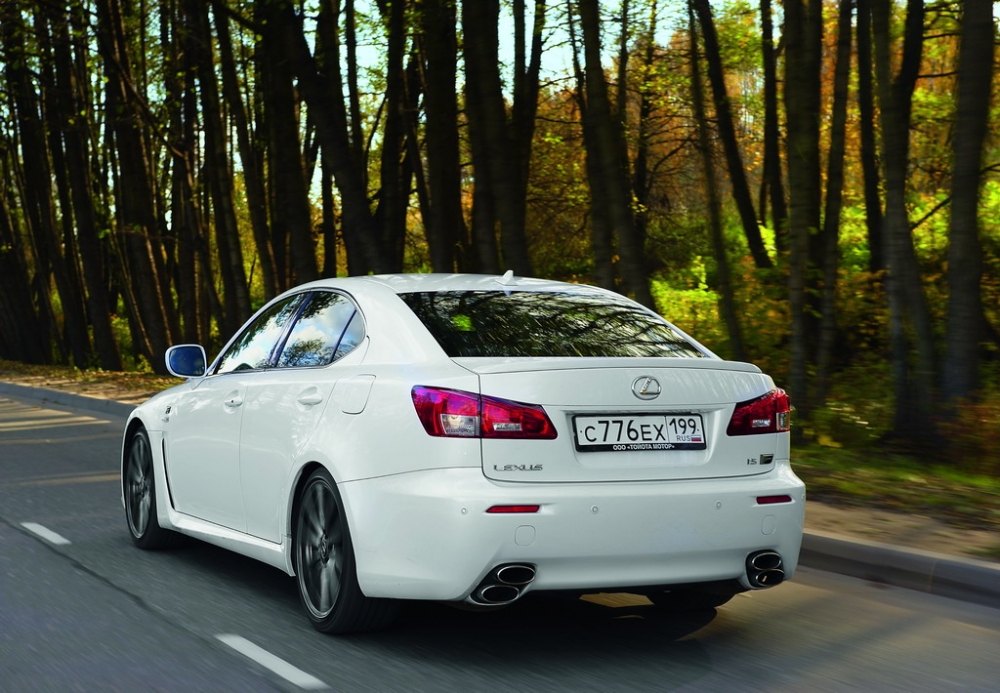
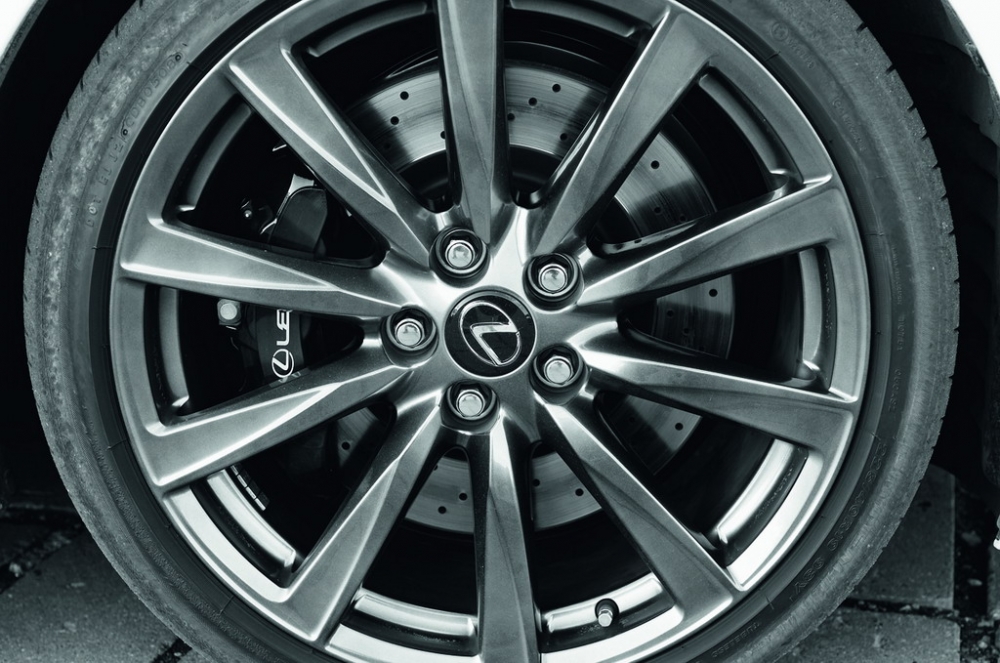
 But the first legal example reached Russia only a year later. We waited for the IS-F for a test for almost six months! And all the time we were afraid that someone would crash it, hit it, or offend it – as often happens with fast cars in automotive journalism practice. At the beginning of summer, I first saw the pearl IS-F in the parking lot of the Lexus Russian office. But then I could only look at it. I walked around, sighed – I liked it! In mid-autumn, the sedan was finally given to touch. But we still started the test with an inspection. The exterior was upgraded in a European way. The car became more muscular in the fender and bumper areas, and the look was completed by huge wheels with Bridgestone Potenza 225/40 R19 tires at the front and 255/35 R19 at the rear. With the F exterior package, the car gained an unshakable and finished appearance. But that's not all. Such a super sedan needs special touches that add flavor. For the IS-F, these are the backward-slanted L letters on the sides, which start with slits on the fenders and stretch along the sills. And, of course, the vertically paired exhaust pipes. The solution is so simple and radical that it has already been copied by a representative of high automotive fashion – the Ferrari California! But the first legal example reached Russia only a year later. We waited for the IS-F for a test for almost six months! And all the time we were afraid that someone would crash it, hit it, or offend it – as often happens with fast cars in automotive journalism practice. At the beginning of summer, I first saw the pearl IS-F in the parking lot of the Lexus Russian office. But then I could only look at it. I walked around, sighed – I liked it! In mid-autumn, the sedan was finally given to touch. But we still started the test with an inspection. The exterior was upgraded in a European way. The car became more muscular in the fender and bumper areas, and the look was completed by huge wheels with Bridgestone Potenza 225/40 R19 tires at the front and 255/35 R19 at the rear. With the F exterior package, the car gained an unshakable and finished appearance. But that's not all. Such a super sedan needs special touches that add flavor. For the IS-F, these are the backward-slanted L letters on the sides, which start with slits on the fenders and stretch along the sills. And, of course, the vertically paired exhaust pipes. The solution is so simple and radical that it has already been copied by a representative of high automotive fashion – the Ferrari California! |
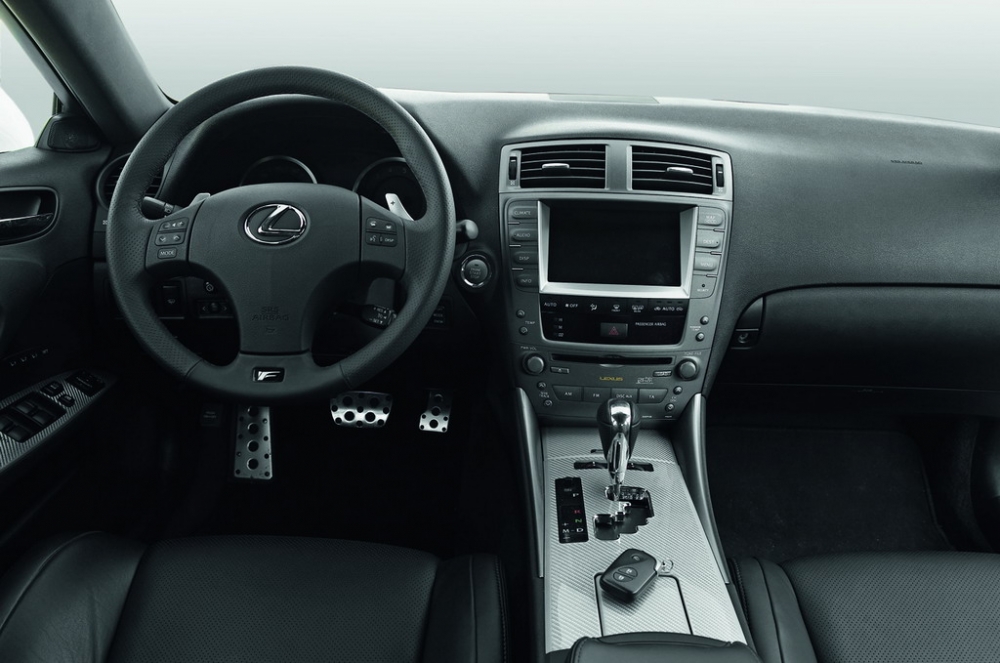
 And inside, there's no sporty pompousness either. Why would a car with a five-liter engine under the hood need show-offs? The letter F here and there, trim with a material resembling carbon in structure and aluminum in color, metal pedal covers, and seats with pronounced support. That's probably all. Nothing more is needed. Here, the mood is born not from jewelry, but from the car's inner content. When you start the newest V8, your blood doesn't start boiling simultaneously with the fuel supply to the cylinders. The engine is tightly tucked away in its compartment and only rumbles with the exhaust while warming up. There's no such distinctly metallic sound with which the M3 engine warms up. The Lexus is more intelligent. And inside, there's no sporty pompousness either. Why would a car with a five-liter engine under the hood need show-offs? The letter F here and there, trim with a material resembling carbon in structure and aluminum in color, metal pedal covers, and seats with pronounced support. That's probably all. Nothing more is needed. Here, the mood is born not from jewelry, but from the car's inner content. When you start the newest V8, your blood doesn't start boiling simultaneously with the fuel supply to the cylinders. The engine is tightly tucked away in its compartment and only rumbles with the exhaust while warming up. There's no such distinctly metallic sound with which the M3 engine warms up. The Lexus is more intelligent. |
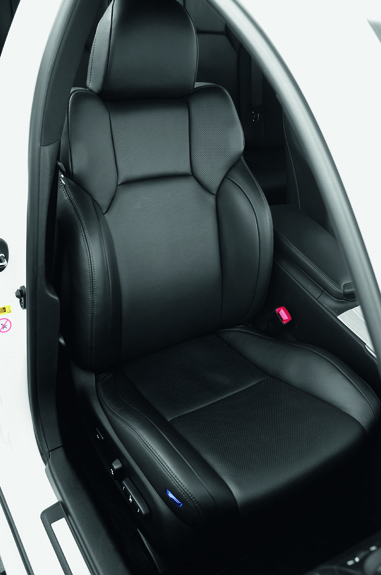
 When it comes to sport, in the cabin you shouldn't pay attention to anything except seating comfort and precise ergonomics. The seats not only look soft – they really are. You sit down – and you sink in. It's good and comfortable, but it seems that until the first serious turn. A mistaken opinion – the side support bolsters hold not only your back but also your legs well. They grip tenaciously but gently. In sport, there's no place for compromises, but if we're talking about urban sport, then such compromise seats of the IS-F seem like the optimal choice. The engine warms up, the revs drop, and it becomes completely quiet in the cabin. I roll out into dense evening traffic and find that there's no opportunity to properly provoke the engine. When it comes to sport, in the cabin you shouldn't pay attention to anything except seating comfort and precise ergonomics. The seats not only look soft – they really are. You sit down – and you sink in. It's good and comfortable, but it seems that until the first serious turn. A mistaken opinion – the side support bolsters hold not only your back but also your legs well. They grip tenaciously but gently. In sport, there's no place for compromises, but if we're talking about urban sport, then such compromise seats of the IS-F seem like the optimal choice. The engine warms up, the revs drop, and it becomes completely quiet in the cabin. I roll out into dense evening traffic and find that there's no opportunity to properly provoke the engine. |
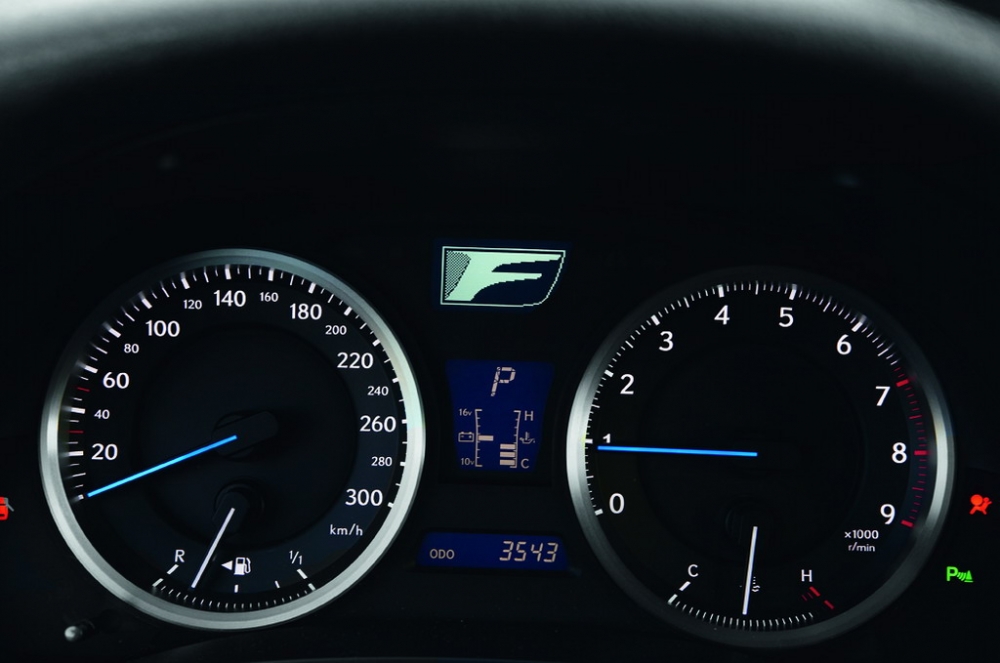
 I drive calmly, smoothly accelerating on the torque, which the low end is generously supplied with. I rev the engine to a maximum of 3500 and am surprised at how quiet it is. The automatic, like a good sports referee, is completely unnoticeable. It's somewhere in the depths, changing gears so quickly and smoothly that I began to suspect it of wanting to seem like a CVT. It's good that on the small display between the instruments, you can show information about the engaged gear. Sixth gear – 70 km/h, on the tachometer – less than 1500 rpm. Sport is lurking. And I unforgivably relaxed... Not so! As soon as a free takeoff strip opened ahead, I instinctively slammed the accelerator pedal. The automatic stirred, dropped three gears, and the engine's voice suddenly cut through with a rich, beautiful baritone that accompanied the tachometer's movement until the rev limiter. What a surprise exhaust! My heart also did a kick-down and began beating at an accelerated rhythm. The cars on the sides froze, everyone turned around... I drive calmly, smoothly accelerating on the torque, which the low end is generously supplied with. I rev the engine to a maximum of 3500 and am surprised at how quiet it is. The automatic, like a good sports referee, is completely unnoticeable. It's somewhere in the depths, changing gears so quickly and smoothly that I began to suspect it of wanting to seem like a CVT. It's good that on the small display between the instruments, you can show information about the engaged gear. Sixth gear – 70 km/h, on the tachometer – less than 1500 rpm. Sport is lurking. And I unforgivably relaxed... Not so! As soon as a free takeoff strip opened ahead, I instinctively slammed the accelerator pedal. The automatic stirred, dropped three gears, and the engine's voice suddenly cut through with a rich, beautiful baritone that accompanied the tachometer's movement until the rev limiter. What a surprise exhaust! My heart also did a kick-down and began beating at an accelerated rhythm. The cars on the sides froze, everyone turned around... |
 But the traffic jam, like a black hole, quickly sucked in the free space, and the IS-F merged with the flow. It's generally well disguised. Remove the four pipes from the rear, and no one would think that under the hood of a compact sedan are a full five liters of specially prepared Japanese engine! Five liters... – a traffic police officer says respectfully and thoughtfully hands me back my documents. Five liters! – the parking lot security guards mutter and purse their lips respectfully. Five liters – is that a lot or a little when it comes to a truly small car? As practice shows, just right! The Japanese did their best: the engine organically integrated into the car's design, and its mass does not negatively affect handling. The weight distribution, though not ideal, is close to it (55/45). Modern Lexus models are following the path of complicating the design and introducing additional electronic systems that, one way or another, interfere with the car's control. The IS-F is no exception. The proprietary VDIM dynamic control system constantly operates the brakes, the steering with variable gear ratio, the gearbox, the stability system, and traction control. But the traffic jam, like a black hole, quickly sucked in the free space, and the IS-F merged with the flow. It's generally well disguised. Remove the four pipes from the rear, and no one would think that under the hood of a compact sedan are a full five liters of specially prepared Japanese engine! Five liters... – a traffic police officer says respectfully and thoughtfully hands me back my documents. Five liters! – the parking lot security guards mutter and purse their lips respectfully. Five liters – is that a lot or a little when it comes to a truly small car? As practice shows, just right! The Japanese did their best: the engine organically integrated into the car's design, and its mass does not negatively affect handling. The weight distribution, though not ideal, is close to it (55/45). Modern Lexus models are following the path of complicating the design and introducing additional electronic systems that, one way or another, interfere with the car's control. The IS-F is no exception. The proprietary VDIM dynamic control system constantly operates the brakes, the steering with variable gear ratio, the gearbox, the stability system, and traction control. |
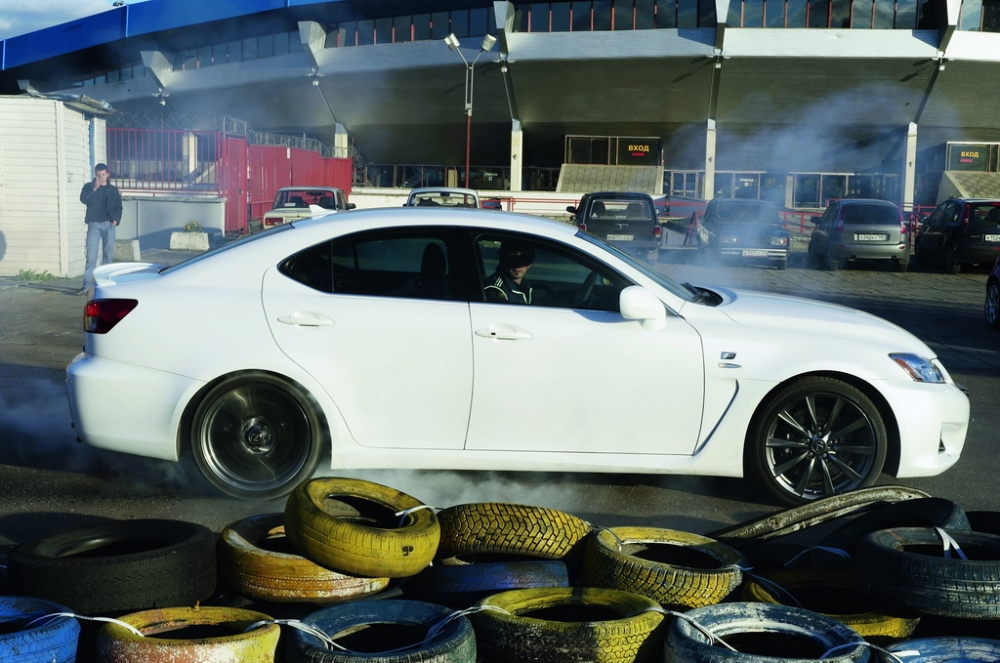
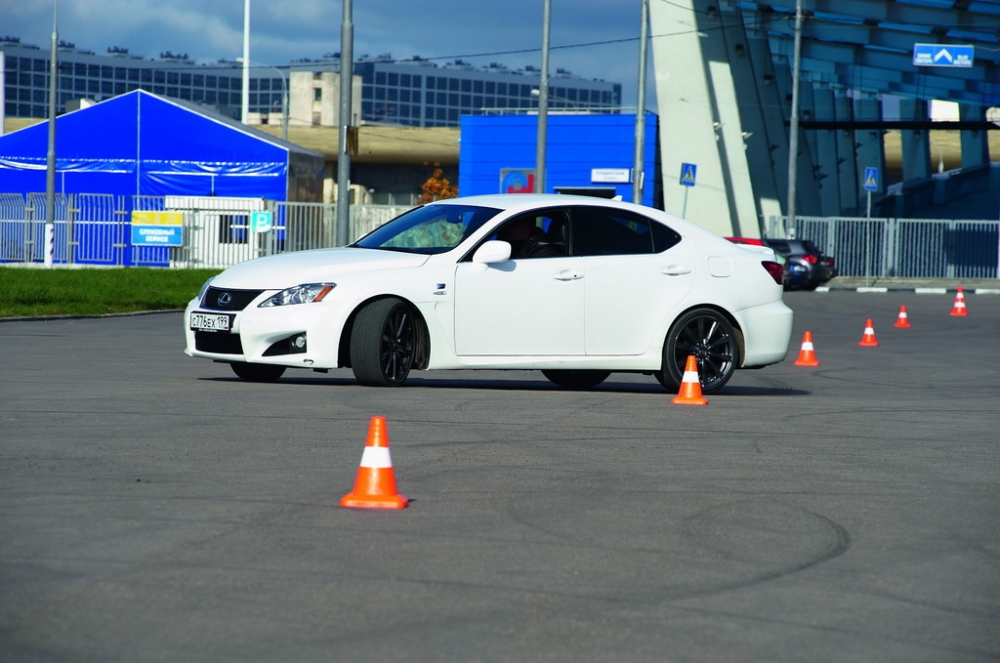
 In addition, specifically for this car, VDIM was equipped with a function simulating a self-locking differential between the drive wheels. The latter works even if you completely turn off the stability system (by long pressing). The operation of the self-lock becomes noticeable in truly hot modes, when the driver is flattened by adrenaline, the driver in turn rapes the tires, and those leave holes in the asphalt. The car enthusiastically polishes the track surface with two wheels. There it is – a drifter's dream! We liked how the electronic self-lock works – it allows you to precisely guide the car in a power slide. If you've put ESP to sleep, it means you're in a good mood and you don't mind, as Carlson used to say, having a little fun. It goes without saying that it's better to do this in specially prepared places. After all, 400 horses, a short wheelbase, rear-wheel drive, and a sharp steering wheel are a delicate thing. In addition, specifically for this car, VDIM was equipped with a function simulating a self-locking differential between the drive wheels. The latter works even if you completely turn off the stability system (by long pressing). The operation of the self-lock becomes noticeable in truly hot modes, when the driver is flattened by adrenaline, the driver in turn rapes the tires, and those leave holes in the asphalt. The car enthusiastically polishes the track surface with two wheels. There it is – a drifter's dream! We liked how the electronic self-lock works – it allows you to precisely guide the car in a power slide. If you've put ESP to sleep, it means you're in a good mood and you don't mind, as Carlson used to say, having a little fun. It goes without saying that it's better to do this in specially prepared places. After all, 400 horses, a short wheelbase, rear-wheel drive, and a sharp steering wheel are a delicate thing. |
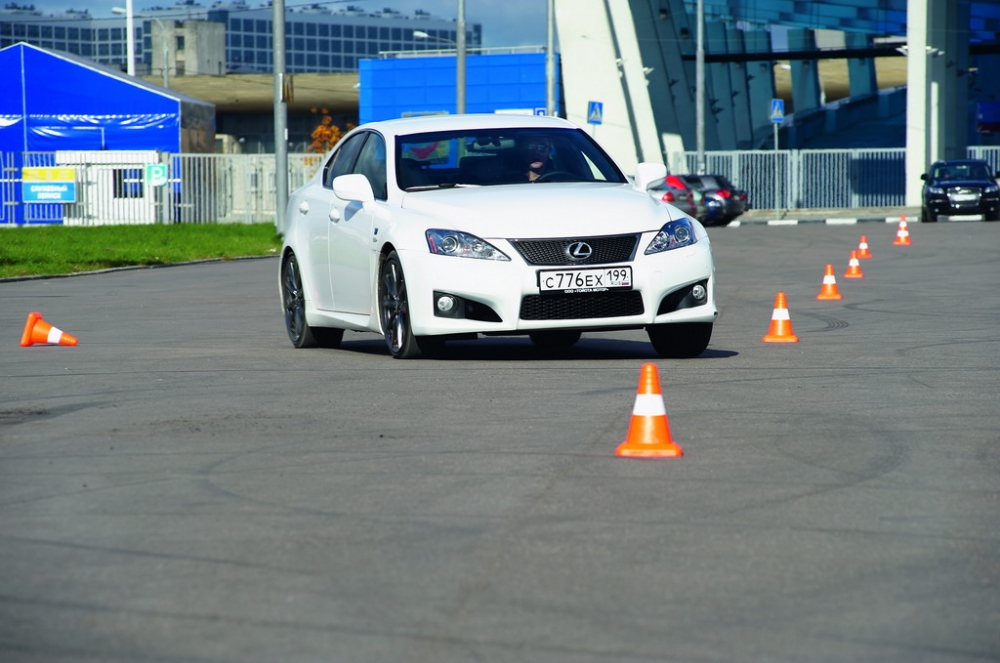
 However, for starters, you can simply make VDIM work in the sport program. This will not only sharpen the car's responses but also somewhat loosen the driver's hands. A couple of times I had a lot of fun catching the sedan in a fairly deep drift (the electronics stabilize the car only when it senses that it's about to spin out). The little Lexus drives no worse than its legendary German competitors! But it does it in its own way. The IS-F is a proper car. Its brakes are powerful, grippy, and not prone to overheating. The designers took care of this – an adult can easily fit a fist into the air ducts that lead to the front discs and calipers. And what feedback! Deceleration can be filigree dosed with just one effort. The automatic behaves impeccably. In leisurely modes, you drive like in an LS 460. And when the racing madness begins, the gearbox sharply drops gears, while the electronics do crisp throttle blips! The steering wheel isn't as transparent as in the RS4 or M3, but this connection is enough. Moreover, the car's reactions to the work of the comfortable steering wheel with a thin rim are quick and linear. The unsprung masses never bothered me – our long-distance runner was shod in lightweight, ultra-strong sneakers right at the factory. However, for starters, you can simply make VDIM work in the sport program. This will not only sharpen the car's responses but also somewhat loosen the driver's hands. A couple of times I had a lot of fun catching the sedan in a fairly deep drift (the electronics stabilize the car only when it senses that it's about to spin out). The little Lexus drives no worse than its legendary German competitors! But it does it in its own way. The IS-F is a proper car. Its brakes are powerful, grippy, and not prone to overheating. The designers took care of this – an adult can easily fit a fist into the air ducts that lead to the front discs and calipers. And what feedback! Deceleration can be filigree dosed with just one effort. The automatic behaves impeccably. In leisurely modes, you drive like in an LS 460. And when the racing madness begins, the gearbox sharply drops gears, while the electronics do crisp throttle blips! The steering wheel isn't as transparent as in the RS4 or M3, but this connection is enough. Moreover, the car's reactions to the work of the comfortable steering wheel with a thin rim are quick and linear. The unsprung masses never bothered me – our long-distance runner was shod in lightweight, ultra-strong sneakers right at the factory. |
 That's why the IS-F is an excellent student in all disciplines, intelligent or furious, but always a very driver-oriented car. Drift, drag, and track – it's in its element everywhere. Unlocking its full potential is a difficult but very exciting task. The Japanese, with their characteristic calculation and meticulousness, created an equal competitor to European rivals on the first try. That deserves respect. And the little Lexus deserves it too. The IS-F could have turned out to be a crumpled pancake, but it was lucky to become a pioneer. It's the first non-European car in the league of compact super sedans of the D-class. That's why the IS-F is an excellent student in all disciplines, intelligent or furious, but always a very driver-oriented car. Drift, drag, and track – it's in its element everywhere. Unlocking its full potential is a difficult but very exciting task. The Japanese, with their characteristic calculation and meticulousness, created an equal competitor to European rivals on the first try. That deserves respect. And the little Lexus deserves it too. The IS-F could have turned out to be a crumpled pancake, but it was lucky to become a pioneer. It's the first non-European car in the league of compact super sedans of the D-class. |
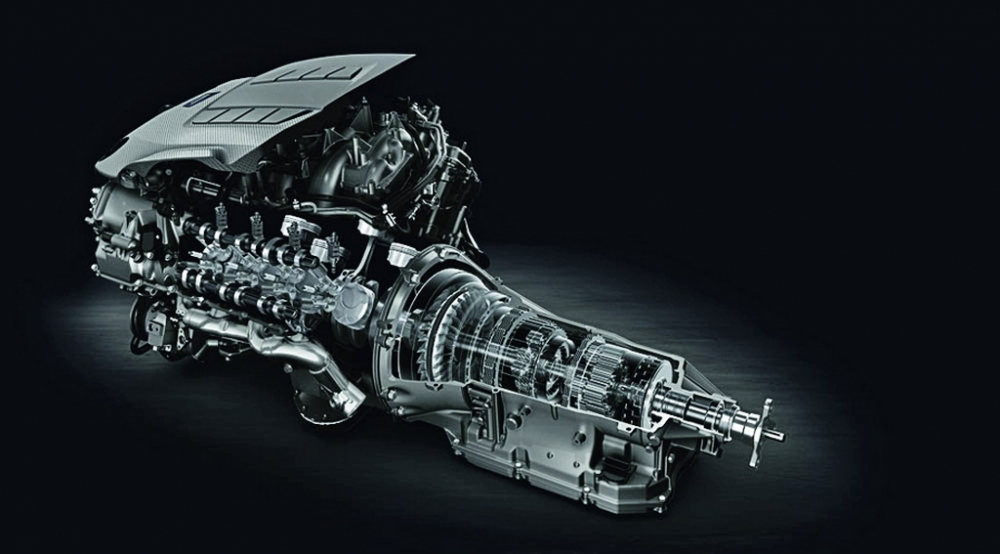 FOR YOUR INFORMATION FOR YOUR INFORMATIONEngine and gearbox |
Perfect start
Lexus IS always was considered a worthy car, but strictly for civilian use. It could only dream of anti-Greenpeace modifications (like those of its German rivals in the premium D-segment). Although it had the makings for that – good chassis potential, rear-wheel drive, Toyota technologies.

Test drive photos
Comments
No comments yet. Say the first word.