
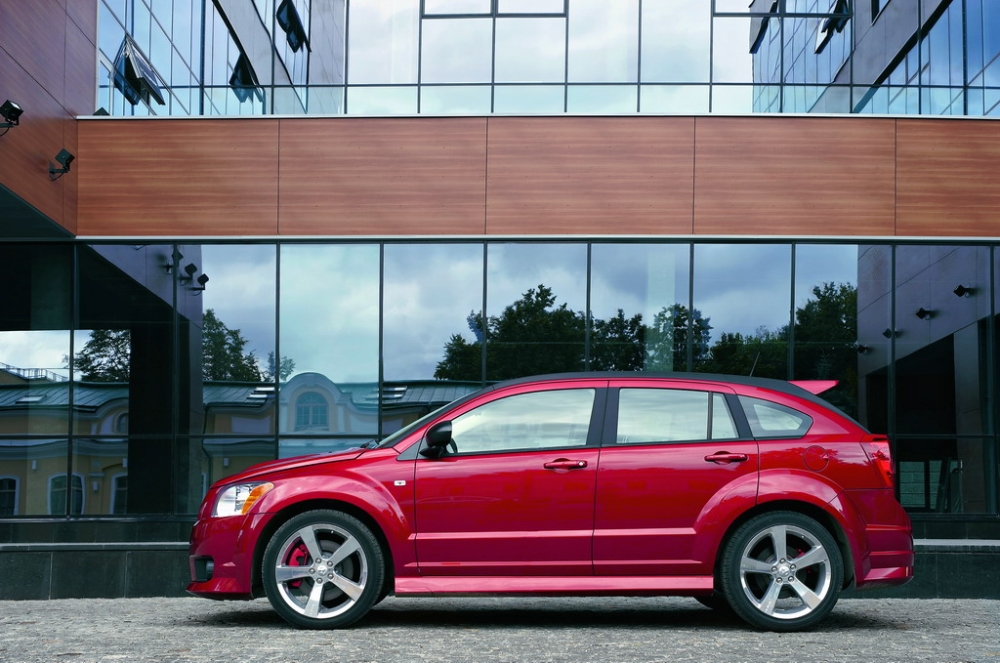
 The car, which by its appearance and dimensions corresponds to the class of compact crossovers, is presented with a calm and imperturbable look as a golf-class hatchback. Caliber SRT4 is a double anomaly. The overgrown one believed in its golf affiliation and, in accordance with the unwritten charter, acquired a top modification that tried on a turbine, body kit, and large wheels. Another variation on the theme of "hot" hatches turned out to be so... very American. Alas, I was unlucky, and I didn't drive the civilian version of this car. I had to get acquainted with the family through its most unbridled representative. In this, one can easily see a plus – there is a real chance to evaluate the car's maximum capabilities. The car, which by its appearance and dimensions corresponds to the class of compact crossovers, is presented with a calm and imperturbable look as a golf-class hatchback. Caliber SRT4 is a double anomaly. The overgrown one believed in its golf affiliation and, in accordance with the unwritten charter, acquired a top modification that tried on a turbine, body kit, and large wheels. Another variation on the theme of "hot" hatches turned out to be so... very American. Alas, I was unlucky, and I didn't drive the civilian version of this car. I had to get acquainted with the family through its most unbridled representative. In this, one can easily see a plus – there is a real chance to evaluate the car's maximum capabilities. |
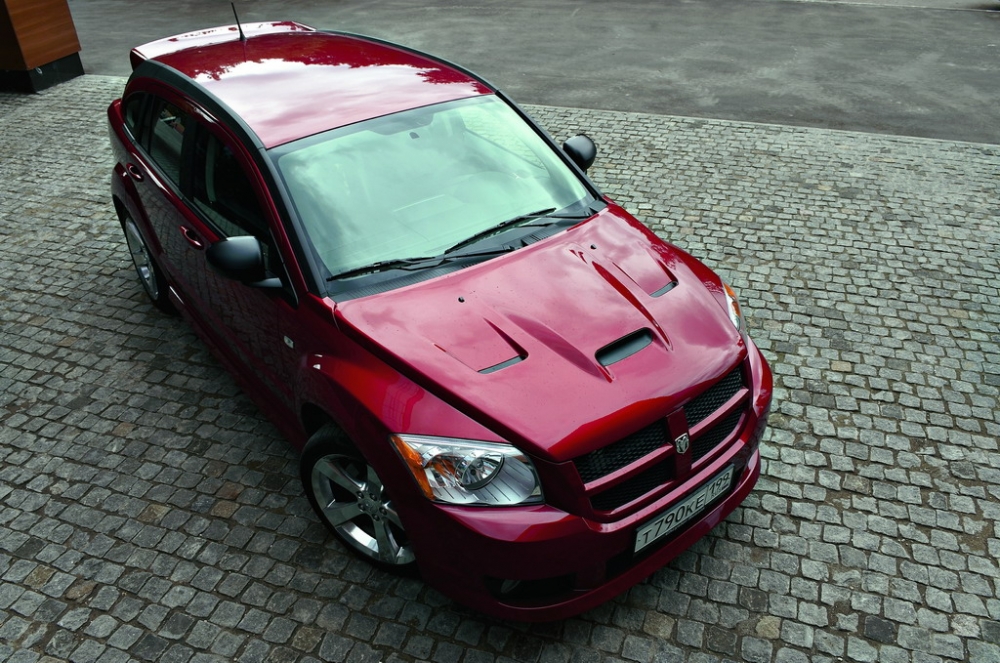
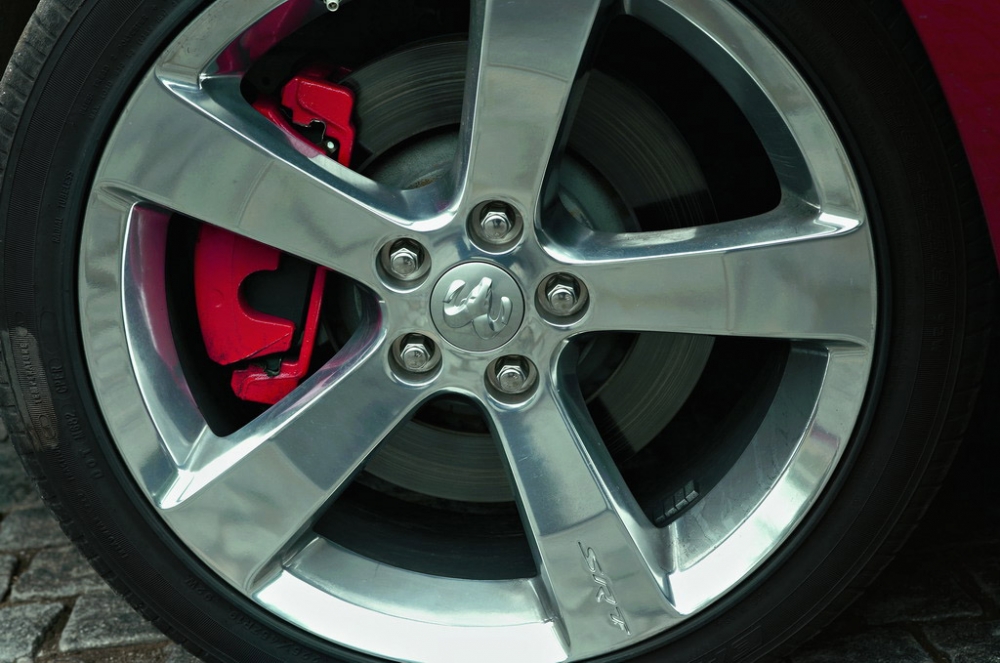
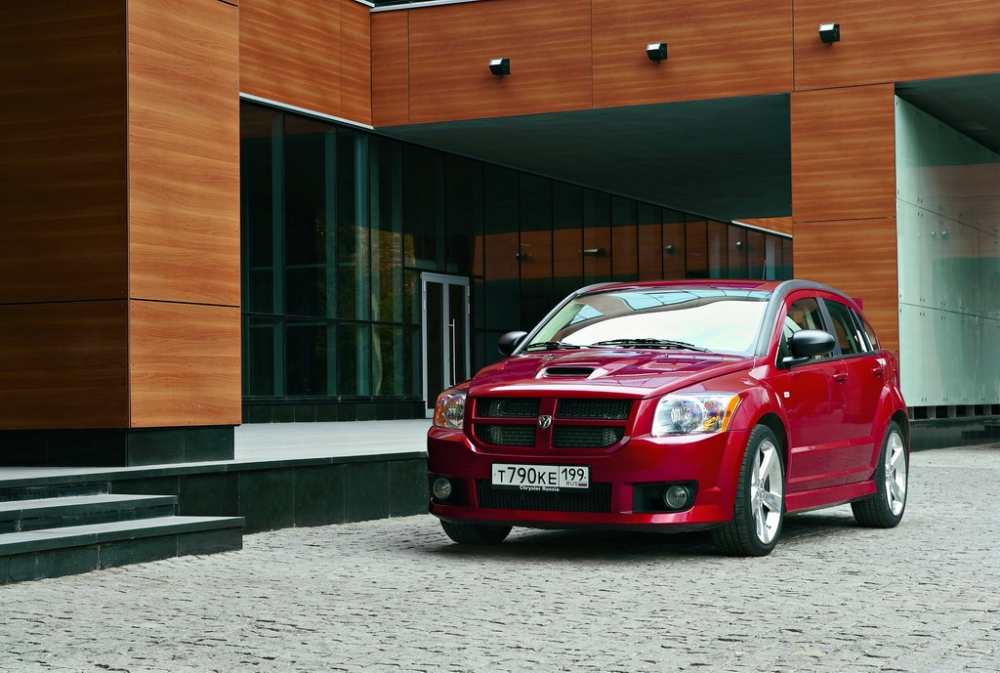 The feelings from contemplating the hatchback are only positive. American rough aesthetics – it's proportional build, clean and pleasing lines. From this, one can easily create a hot-rod. Or a dragster with a terrifying air intake on the hood. But Caliber was refined according to other recipes – street racing technologies! SRT (Street and Racing Technology) targets an audience that has made its choice in favor of neon underbody lighting, aggressive body kits, huge exhaust pipes, and massive wheels with wide tires. Here, for example, is the hood of the Caliber SRT4. What does it resemble? To me – it's like that of the Mitsubishi Lancer Evo XII. In the wheel arches – chrome 19-inch wheels with tires sized 225/45 (on a golf-class hatchback in the "base"!). The feelings from contemplating the hatchback are only positive. American rough aesthetics – it's proportional build, clean and pleasing lines. From this, one can easily create a hot-rod. Or a dragster with a terrifying air intake on the hood. But Caliber was refined according to other recipes – street racing technologies! SRT (Street and Racing Technology) targets an audience that has made its choice in favor of neon underbody lighting, aggressive body kits, huge exhaust pipes, and massive wheels with wide tires. Here, for example, is the hood of the Caliber SRT4. What does it resemble? To me – it's like that of the Mitsubishi Lancer Evo XII. In the wheel arches – chrome 19-inch wheels with tires sized 225/45 (on a golf-class hatchback in the "base"!). |
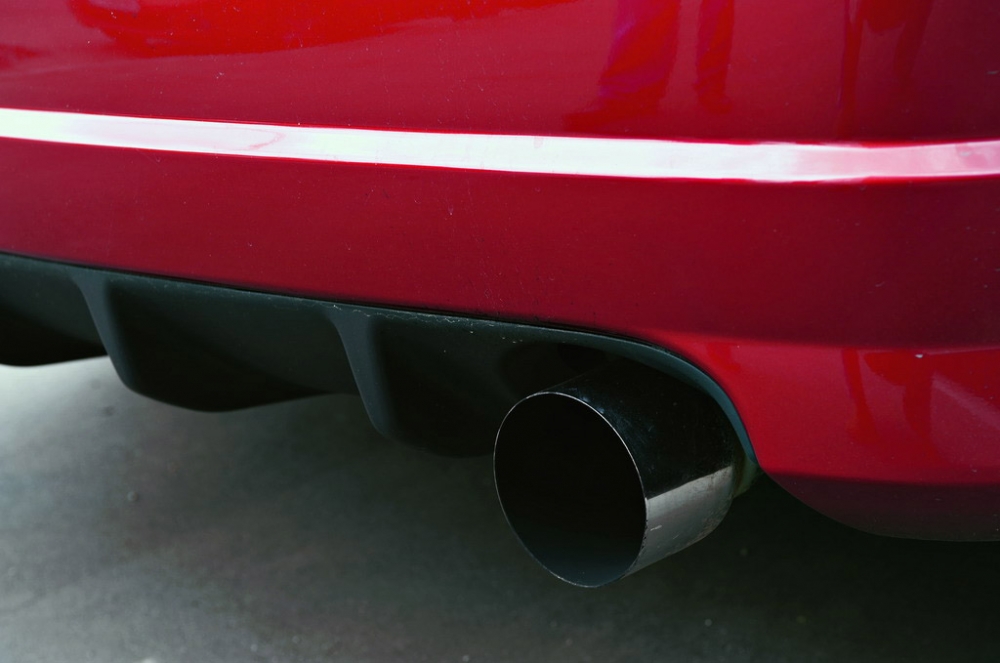
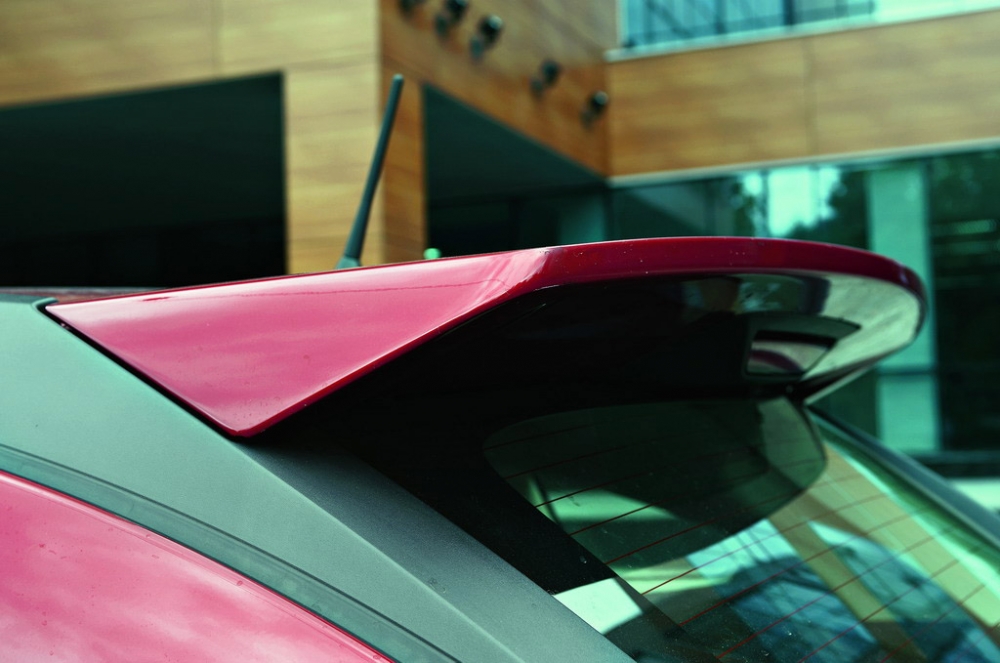
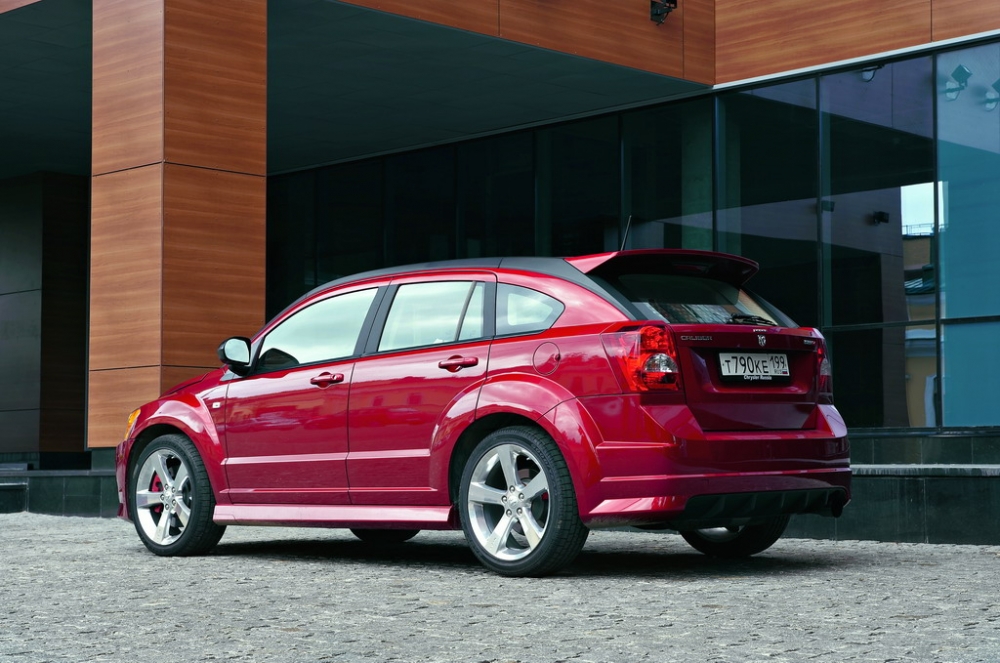 We go around to the back – a huge spoiler shelf on the fifth door and a pipe from under the bumper with a diameter of 90 mm. A menacing front bumper, body kit "all around." And also – the whistle of the turbine with sighs of the blow-off valve. This is the soundtrack of a street-racing theater. To it, you can optionally add the squeal of tires. The result is a head-turner. A big original and a street brawler. Almost all modern Dodge models look good on the outside; they have that inherent bullish assertiveness. But they all invariably disappoint when you get inside. It was hard to expect miracles from the Caliber, even if it's in a special version. The interior, reminiscent in size and seating of a reduced crossover, greeted with "signature" gray oak plastic. We go around to the back – a huge spoiler shelf on the fifth door and a pipe from under the bumper with a diameter of 90 mm. A menacing front bumper, body kit "all around." And also – the whistle of the turbine with sighs of the blow-off valve. This is the soundtrack of a street-racing theater. To it, you can optionally add the squeal of tires. The result is a head-turner. A big original and a street brawler. Almost all modern Dodge models look good on the outside; they have that inherent bullish assertiveness. But they all invariably disappoint when you get inside. It was hard to expect miracles from the Caliber, even if it's in a special version. The interior, reminiscent in size and seating of a reduced crossover, greeted with "signature" gray oak plastic. |
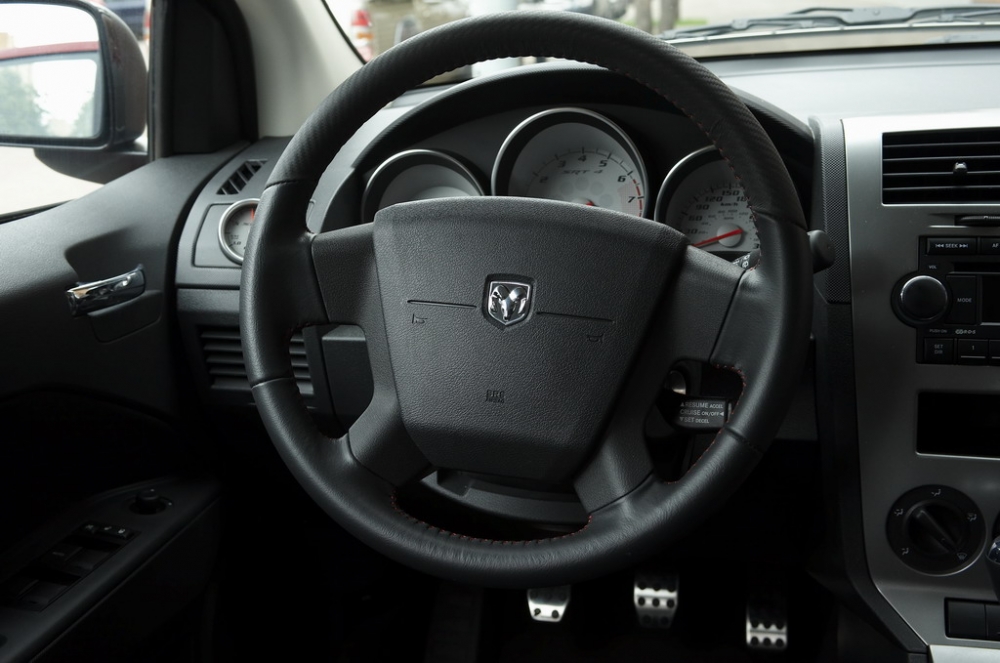
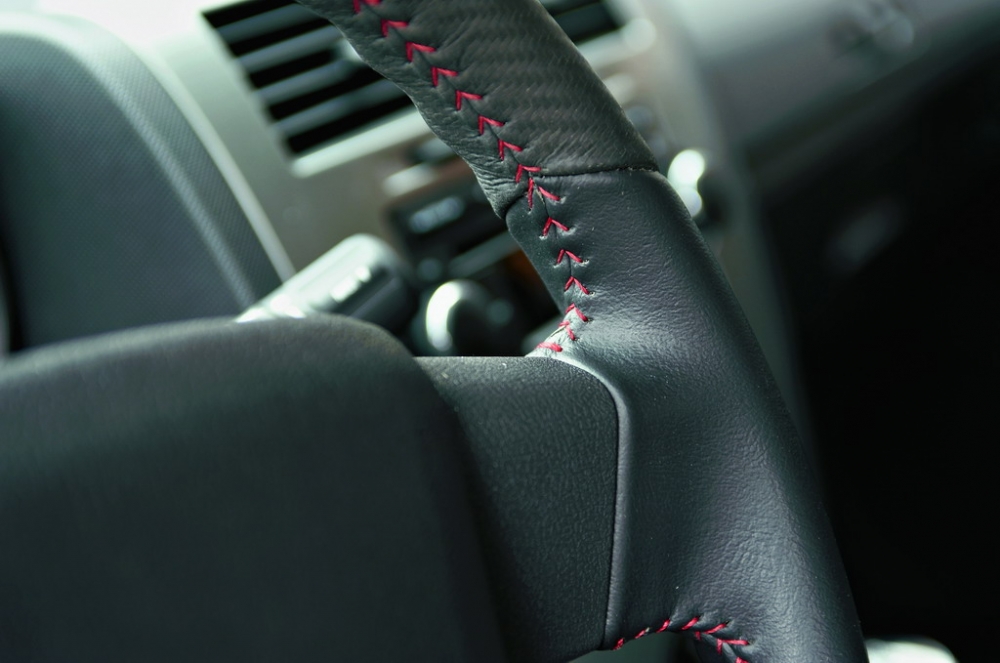
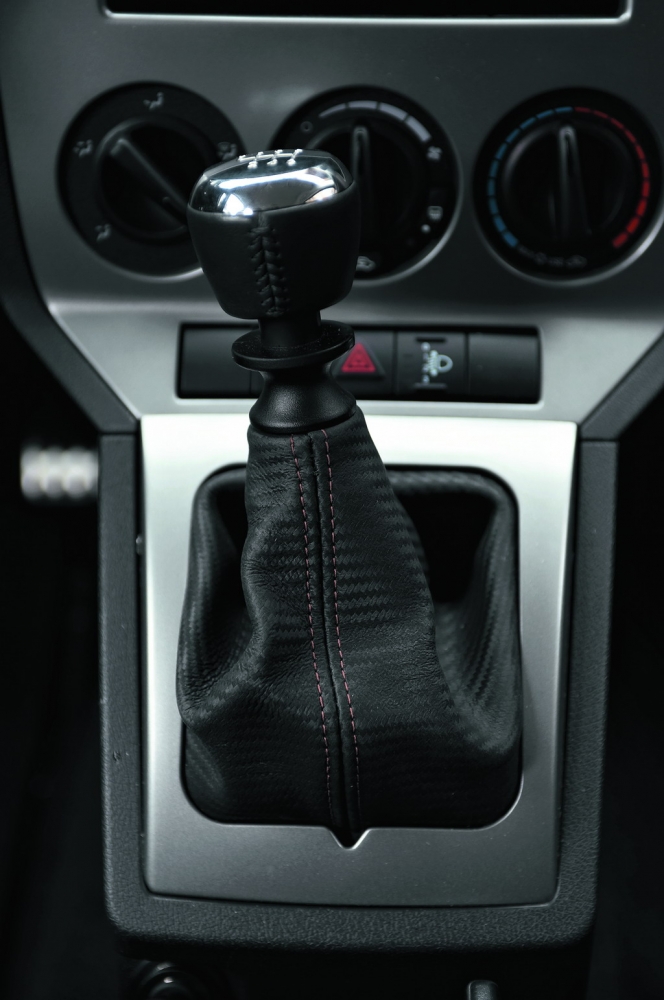
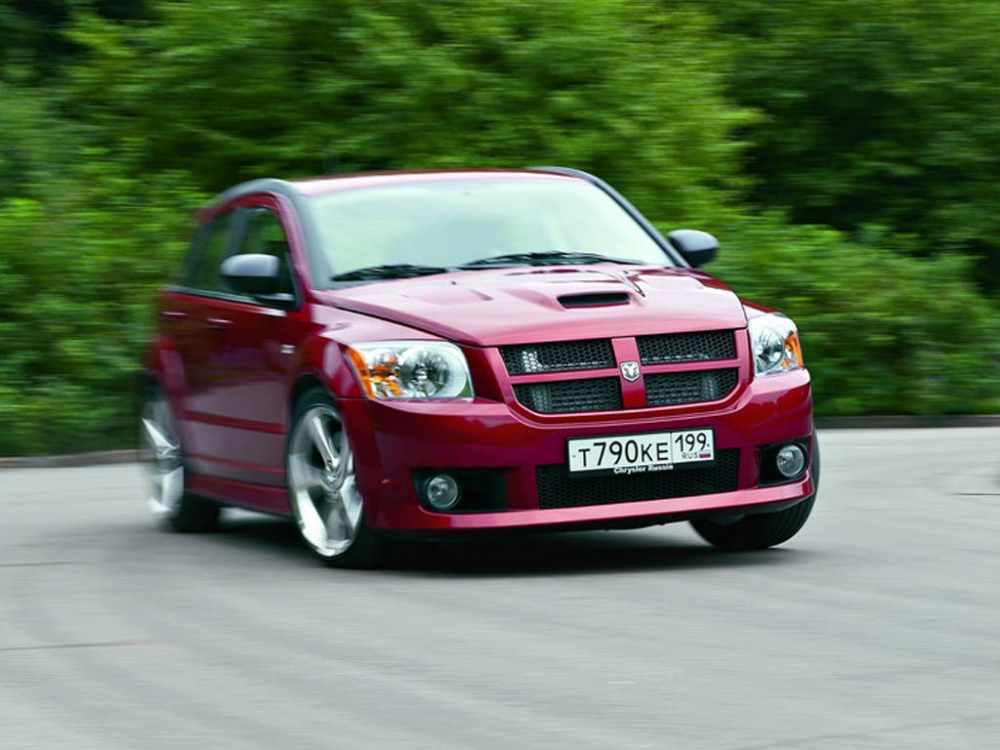 The dreariness of the furnishings was slightly compensated by new leather seats with inexpressive lateral support, a steering wheel, and a gearshift lever with a shiny metal knob. It became, of course, more cheerful. But when looking at the front panel, testifying to the lack of imagination of the person who drew it, at the black central console with flimsy plastic "twisters" of the "stove" (there's no "climate" even as an option), you want to howl. Fortunately, this is still an SRT4, and such a Caliber can offer more interesting activities than howling. The dreariness of the furnishings was slightly compensated by new leather seats with inexpressive lateral support, a steering wheel, and a gearshift lever with a shiny metal knob. It became, of course, more cheerful. But when looking at the front panel, testifying to the lack of imagination of the person who drew it, at the black central console with flimsy plastic "twisters" of the "stove" (there's no "climate" even as an option), you want to howl. Fortunately, this is still an SRT4, and such a Caliber can offer more interesting activities than howling. |
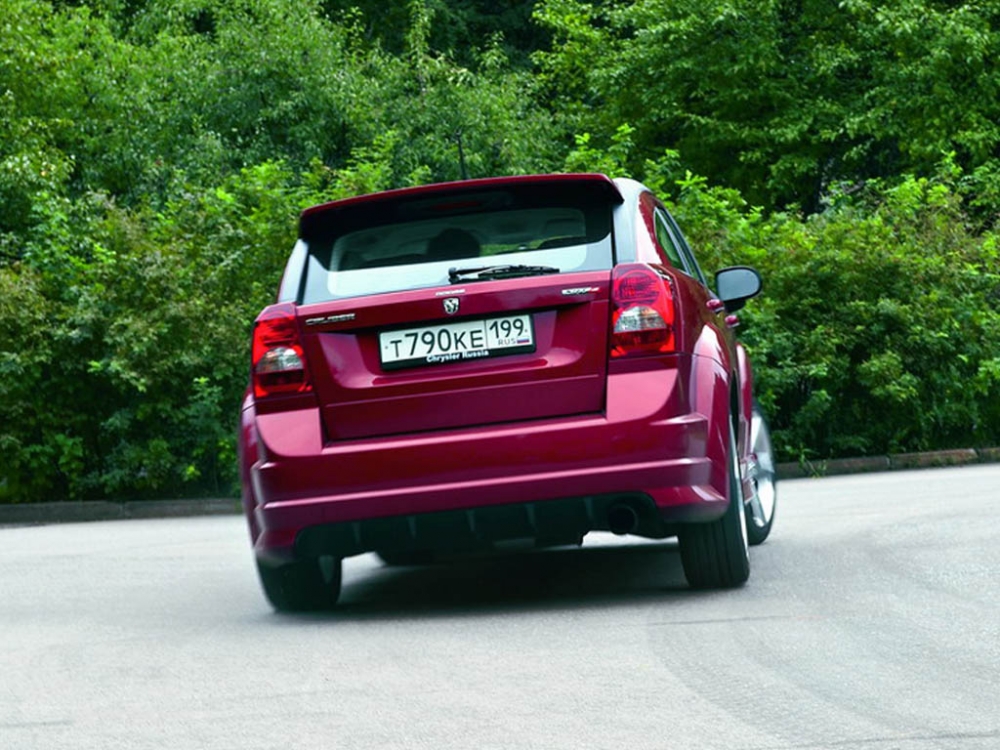 The aluminum 2.4-liter "world" engine was turned inside out by the guys from SRT, replaced most of the parts with new ones, bolted on a turbine, attached a large intercooler, and stuffed it all back into the engine bay. Even in the naturally aspirated version, the engine proved to be brisk and lively, and after an additional large injection of "horsepower," it acquired a truly fighting character. It willingly revs up, noticeably invigorating in the upper range, becoming fierce closer to the limiter. Revving it is a pleasure! The aluminum 2.4-liter "world" engine was turned inside out by the guys from SRT, replaced most of the parts with new ones, bolted on a turbine, attached a large intercooler, and stuffed it all back into the engine bay. Even in the naturally aspirated version, the engine proved to be brisk and lively, and after an additional large injection of "horsepower," it acquired a truly fighting character. It willingly revs up, noticeably invigorating in the upper range, becoming fierce closer to the limiter. Revving it is a pleasure! |
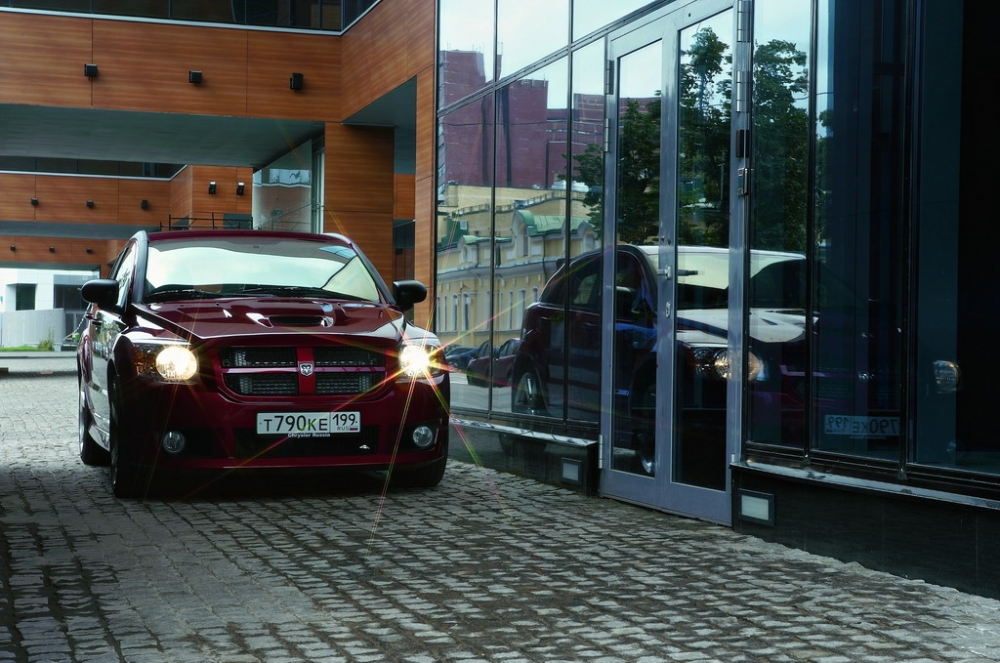 The guys from SRT also tuned the exhaust as it should be. In warm-up mode, it bassily and promisingly rumbles, sings well in extreme modes too. In general, the "brick" gradually begins to win you over. Before the test, I tried to imagine what this mysterious Caliber would be like. After all, 295 "horses" is a serious thing. Having experience with other models refined by the SRT sports division (300C SRT8, Grand Cherokee SRT8, Dodge Nitro R/T), I suspected it would turn out to be another projectile for wild straight-line shooting with characteristic American handling. Now I had to verify the correctness of my assumption. The guys from SRT also tuned the exhaust as it should be. In warm-up mode, it bassily and promisingly rumbles, sings well in extreme modes too. In general, the "brick" gradually begins to win you over. Before the test, I tried to imagine what this mysterious Caliber would be like. After all, 295 "horses" is a serious thing. Having experience with other models refined by the SRT sports division (300C SRT8, Grand Cherokee SRT8, Dodge Nitro R/T), I suspected it would turn out to be another projectile for wild straight-line shooting with characteristic American handling. Now I had to verify the correctness of my assumption. |
 SRT approached the homework thoroughly. They specifically shook up the mechanics and brought it into line with the engine's capabilities. The angry Caliber was run in on the racing tracks of Firebird Raceway (Phoenix), Texas Motorsports Ranch (Fort Worth, Texas), and Nelson Ledges (Garrettsville, Ohio). The car's concept was a compromise between everyday city use and decent track performance. Test Caliber SRT4s covered 2,000,000 miles before being put on the assembly line. The results of this work are waiting for me to finally floor the accelerator. SRT approached the homework thoroughly. They specifically shook up the mechanics and brought it into line with the engine's capabilities. The angry Caliber was run in on the racing tracks of Firebird Raceway (Phoenix), Texas Motorsports Ranch (Fort Worth, Texas), and Nelson Ledges (Garrettsville, Ohio). The car's concept was a compromise between everyday city use and decent track performance. Test Caliber SRT4s covered 2,000,000 miles before being put on the assembly line. The results of this work are waiting for me to finally floor the accelerator. |
 To the whistle of the turbine, the "brick" briskly takes off. First gear spins out in an instant, and the precise shift mechanism allows you to immediately engage second to avoid falling into the turbo lag. The acceleration is very energetic! And this despite the car having long gears. In second, it goes almost up to 120 km/h! With a shorter gearbox, it would be even more fun. But even with this one, the nearly three-hundred-horsepower car surprises everyone. At speed, the sporty add-ons in the appearance might go unnoticed, but the sight of a wildly accelerating Caliber makes you open your mouth. To the whistle of the turbine, the "brick" briskly takes off. First gear spins out in an instant, and the precise shift mechanism allows you to immediately engage second to avoid falling into the turbo lag. The acceleration is very energetic! And this despite the car having long gears. In second, it goes almost up to 120 km/h! With a shorter gearbox, it would be even more fun. But even with this one, the nearly three-hundred-horsepower car surprises everyone. At speed, the sporty add-ons in the appearance might go unnoticed, but the sight of a wildly accelerating Caliber makes you open your mouth. |
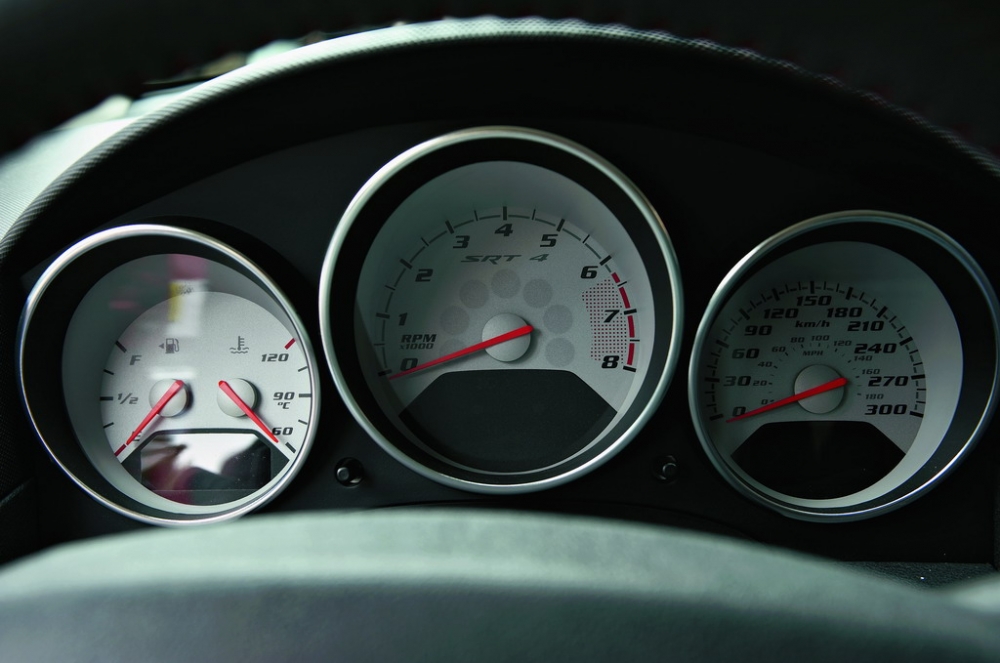 The car confidently pulls in all gears, quickly overcoming the two-hundred-kilometer mark. The nature of the acceleration fits the appearance well – it's just as rough and assertive. If you turn off the traction control system, which simulates the operation of a self-locking differential, you start to feel with your fingers how the huge wheels rage when the engine's power and torque hit them – the car gets dragged from side to side, forcing you to grip the steering wheel tightly and constantly correct. The car confidently pulls in all gears, quickly overcoming the two-hundred-kilometer mark. The nature of the acceleration fits the appearance well – it's just as rough and assertive. If you turn off the traction control system, which simulates the operation of a self-locking differential, you start to feel with your fingers how the huge wheels rage when the engine's power and torque hit them – the car gets dragged from side to side, forcing you to grip the steering wheel tightly and constantly correct. |
 I turned on the traction control, and the "parasites" on the steering wheel became fewer, and in corners the car doesn't spin the unloaded wheel. The stability system doesn't fully turn off here, but it allows for some small slides. For city racing, that's quite enough. Well, for those who want to send the Caliber into a drift, it can be recommended to pull out the corresponding fuse. I turned on the traction control, and the "parasites" on the steering wheel became fewer, and in corners the car doesn't spin the unloaded wheel. The stability system doesn't fully turn off here, but it allows for some small slides. For city racing, that's quite enough. Well, for those who want to send the Caliber into a drift, it can be recommended to pull out the corresponding fuse. |
 The huge hatchback turned out to be a well-assembled car! The suspension is elastic, but with damping of unsprung masses, things aren't so smooth – when driving on broken asphalt, they start to strain the suspension, it can't cope – and vibrations go to the body. Of the entire SRT lineup, the Caliber is the most understandable and easy-to-drive car. This is explained simply – a light 4-cylinder engine, front-wheel drive, and not the largest dimensions. But if you put the Caliber in line with European and Japanese competitors, it becomes obvious that its behavior lacks polish and refinement. It's big and a bit clumsy. But does anyone expect refined manners from this cocky guy? And it's not needed here – even in its presented form, the automotive megaburger is tasty and digestible. The huge hatchback turned out to be a well-assembled car! The suspension is elastic, but with damping of unsprung masses, things aren't so smooth – when driving on broken asphalt, they start to strain the suspension, it can't cope – and vibrations go to the body. Of the entire SRT lineup, the Caliber is the most understandable and easy-to-drive car. This is explained simply – a light 4-cylinder engine, front-wheel drive, and not the largest dimensions. But if you put the Caliber in line with European and Japanese competitors, it becomes obvious that its behavior lacks polish and refinement. It's big and a bit clumsy. But does anyone expect refined manners from this cocky guy? And it's not needed here – even in its presented form, the automotive megaburger is tasty and digestible. |
 It's rough, and you have to drive it accordingly. It will endure and forgive. In a limit corner, the brawler slides with its nose outward, and on throttle lift-off, it doesn't show even a hint of oversteer. Forget about slides. Here you need to savor something else! Body rolls are small, and the information on the steering wheel is sufficient to clearly take the corner along the trajectory, and then on the exit, add fuel to the cylinders. Sequences of corners are not this car's habitat also because the seats lack lateral support (especially in the leg area). But I duly appreciated the fierce performance that the Caliber put on on the track! It's rough, and you have to drive it accordingly. It will endure and forgive. In a limit corner, the brawler slides with its nose outward, and on throttle lift-off, it doesn't show even a hint of oversteer. Forget about slides. Here you need to savor something else! Body rolls are small, and the information on the steering wheel is sufficient to clearly take the corner along the trajectory, and then on the exit, add fuel to the cylinders. Sequences of corners are not this car's habitat also because the seats lack lateral support (especially in the leg area). But I duly appreciated the fierce performance that the Caliber put on on the track! |
 Honestly, I even feel a bit sorry for that guy in the new Opel Vectra OPC. It must be very annoying when, driving a beautiful blue 280-horsepower car with a turbo-V6, you suddenly start being methodically beaten by some Caliber! Yes, yes, the SRT4 dispels the myth that this Dodge model can't go fast. On a smooth highway, directional stability is excellent, the suspension confidently holds the tall body during lane changes, and the steering wheel filled with feedback allows you to set the trajectory quite accurately. The car is stable even at very high speeds, and regular braking doesn't kill the braking system's capabilities. And only when there's a rut under the wheels does the Caliber again make you concentrate. Well, on the smooth highways of American racing tracks, behind the wheel of a Caliber SRT4, you can probably have fun. Honestly, I even feel a bit sorry for that guy in the new Opel Vectra OPC. It must be very annoying when, driving a beautiful blue 280-horsepower car with a turbo-V6, you suddenly start being methodically beaten by some Caliber! Yes, yes, the SRT4 dispels the myth that this Dodge model can't go fast. On a smooth highway, directional stability is excellent, the suspension confidently holds the tall body during lane changes, and the steering wheel filled with feedback allows you to set the trajectory quite accurately. The car is stable even at very high speeds, and regular braking doesn't kill the braking system's capabilities. And only when there's a rut under the wheels does the Caliber again make you concentrate. Well, on the smooth highways of American racing tracks, behind the wheel of a Caliber SRT4, you can probably have fun. Well, in the city, it's a no-brainer. Especially considering how those infamous street races look. It's typical drag racing in civilian conditions with a bottle and youth r'n'b recitatives. For drag racing, acceleration is important, and here, by the numbers, only such "villains" as Ford Focus RS, Mazda3 MPS, or Opel Astra OPC perform better than our today's patient. I wanted to also say BMW 130i, but I felt ridiculous with such a comparison. Although formally it's appropriate here. Same class, but such different approaches. The approach is exactly where the strong side of Caliber SRT lies. It's an original for originals. I can assume that few will buy such a car, but that doesn't mean it can't be loved. You can love it for two things – the charisma of a "brick" and the madness of the engine. An American hot hatch. Why not a challenge to Old World traditions? |
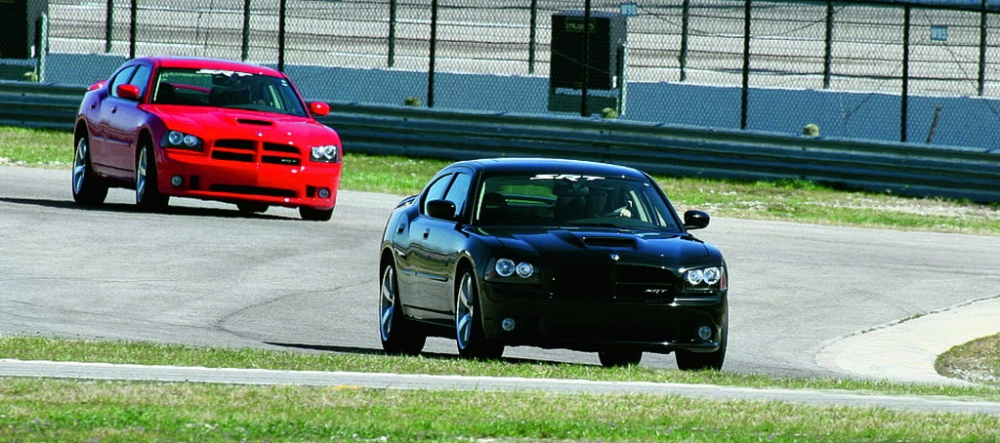 Street and Racing Technology Street and Racing TechnologyChrysler's sports division was created in 2002. Over the past six years, the division has done well, preparing a number of extraordinary cars, the distinctive feature of which should primarily be recognized as acceleration dynamics. The most striking examples of SRT's work are Dodge Viper SRT-10, Chrysler Crossfire SRT6, Chrysler 300C SRT8, Jeep Grand Cherokee SRT8, Dodge Charger SRT8. SRT not only prepares "charged" versions of production cars but also produces various tuning accessories for them, as well as teaches mere mortals to drive their multi-liter monsters |
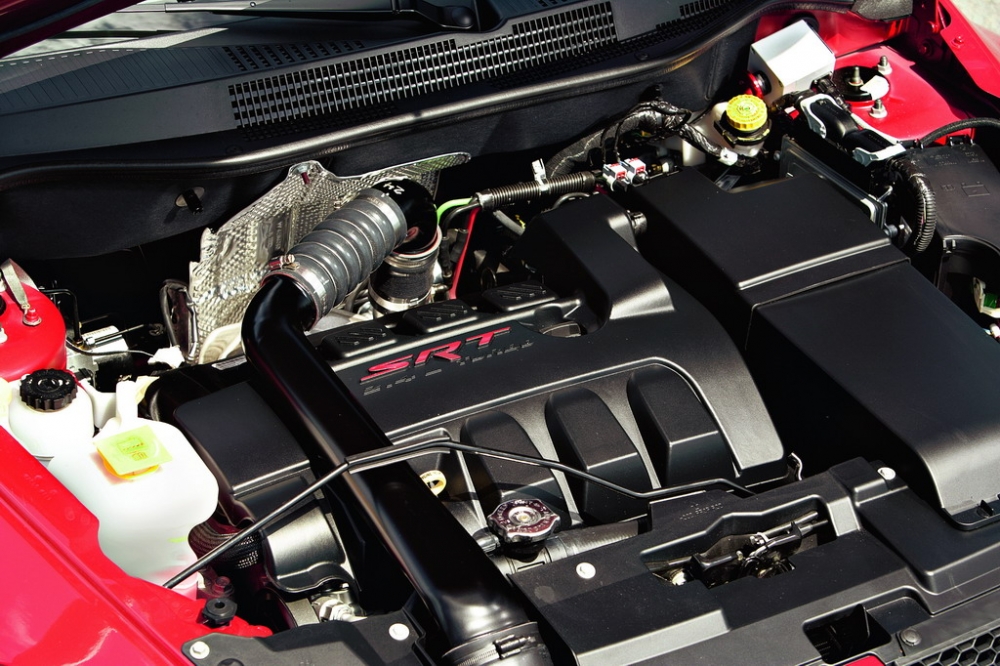 Engine EngineHaving met the turbo, the 2-liter aluminum World Engine has changed significantly. Forged connecting rods, a new oil pump, valves that withstand higher temperatures, and high-performance injectors appeared. The compression ratio, VVT valve timing settings were changed, and a number of other related improvements were made. Factory tuning! |
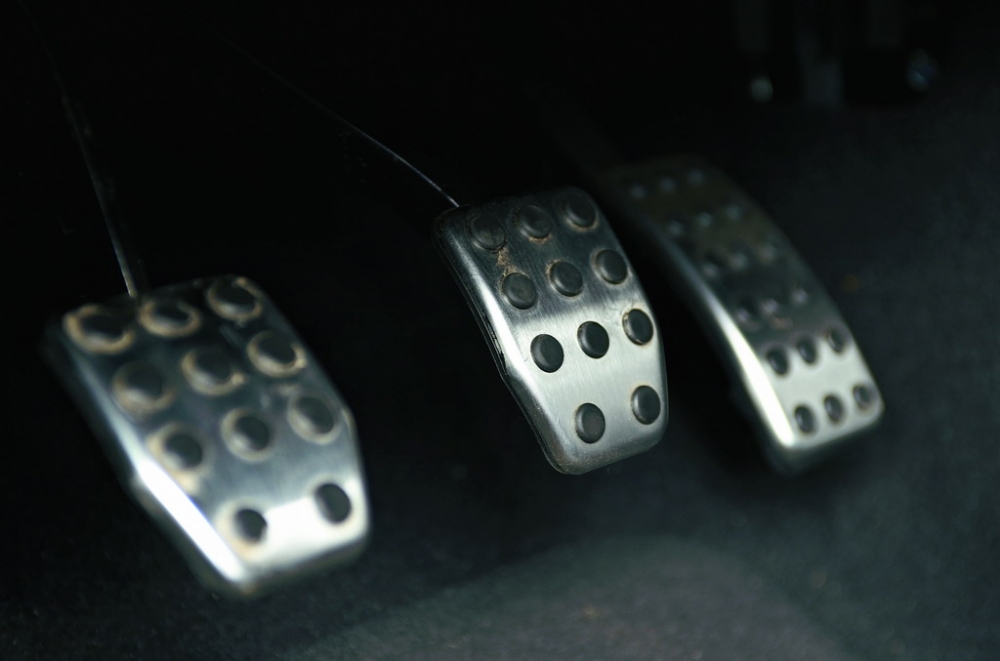
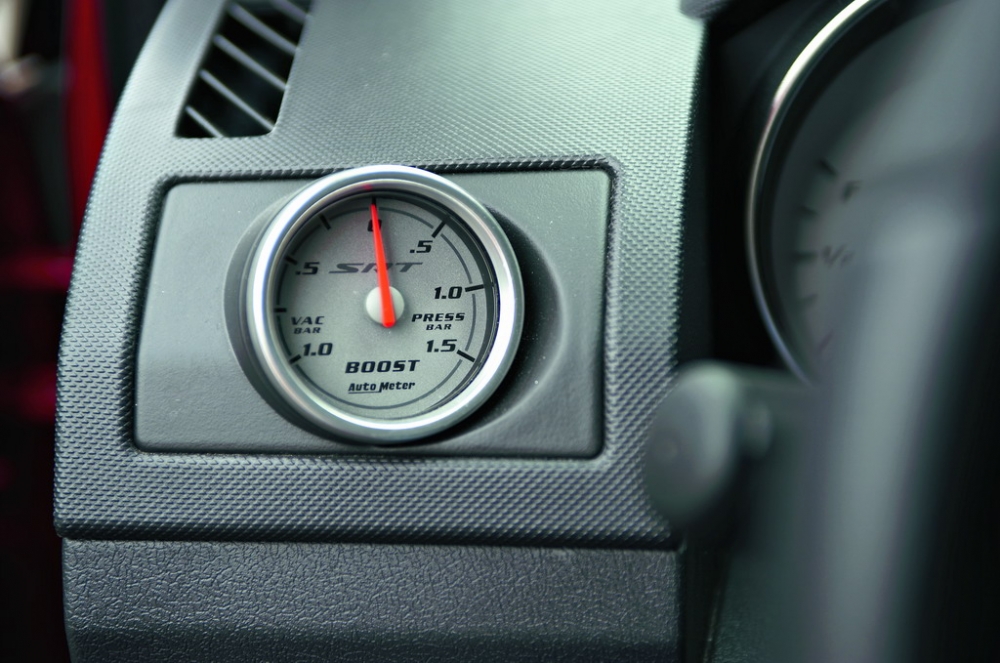
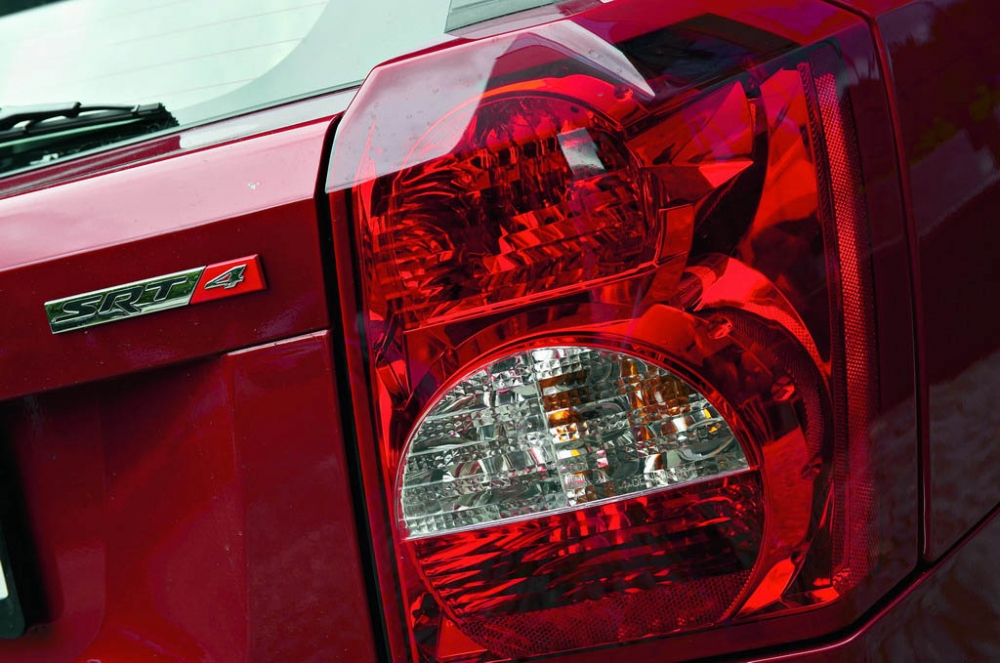
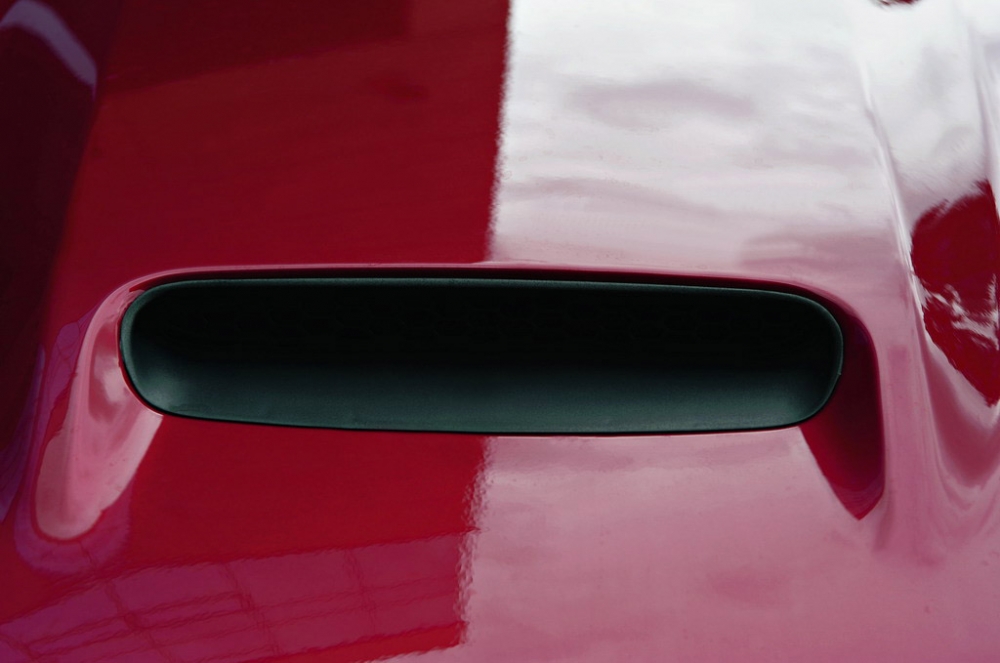 SRT package SRT package Caliber SRT4 differs quite seriously from the base version. It has its own body kit, aluminum alloy wheels, a large rear wing, wheels, steering wheel, gear shift lever, pedals, boost pressure gauge, seats, and a number of other details both inside and outside. |
 |
 |
 |
 |
 |
SRT fourth caliber
Dodge Caliber – an anomaly in the automotive market. Only in the States could such a spit in the face of European car classification be born. Most likely, the blame for this should be placed on the American love for gigantomania, which is hardwired into the subconscious of any representative of the 'united backwoods'.
Test drive photos
Comments
No comments yet. Say the first word.