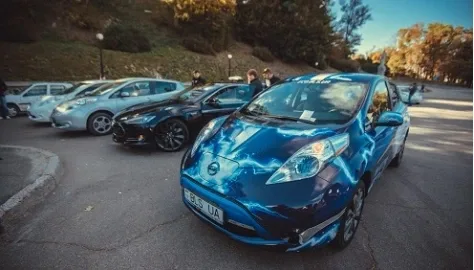
He predicted failure for the airplane, radio, sound recording device (which he himself invented), and even alternating current power grids. Some of our contemporaries show similar skepticism towards electric cars. Of course, the debate for and against will continue for a long time, but recently supporters of such cars are getting more and more arguments in their favor. Proof of this is the electric car meetup recently held in Kyiv.
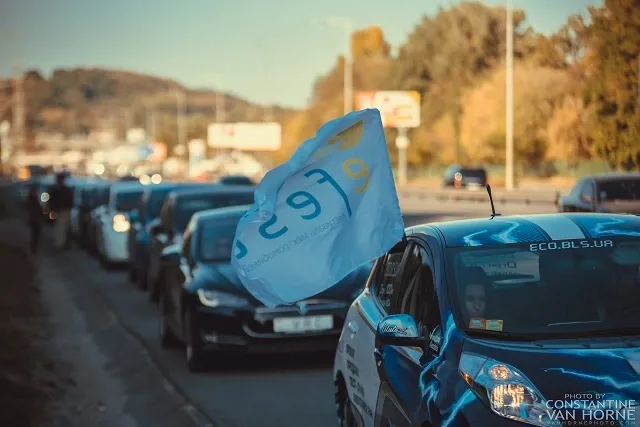
Common interests easily remove barriers between people. Therefore, the electric car owners' meetup had a cozy, warm atmosphere. Leisurely conversations, smiles, the obligatory group photo, a ceremonial procession of a column of electric cars through the city – all this was as expected, but the meetup participants were not alien to a bit of adventurousness. At one of Kyiv's parking lots, they arranged their cars into a huge letter 'e', and this impromptu flash mob was filmed by a quadcopter from a bird's-eye view.
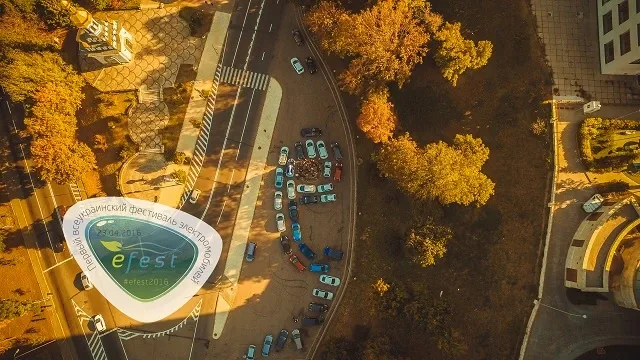
This is not the first time such an event has taken place in the Ukrainian capital. The previous meetup was held as recently as April this year. And here's what's interesting: then it involved 26 electric cars, but this time their number grew to 38. That is, in just six months, the number of participants increased by almost half, which means electric cars in our country are gaining popularity quite quickly. By the way, the previous meetup was entered into the Book of Records of Ukraine as the most massive. This time more electric cars gathered, so a new record was set.
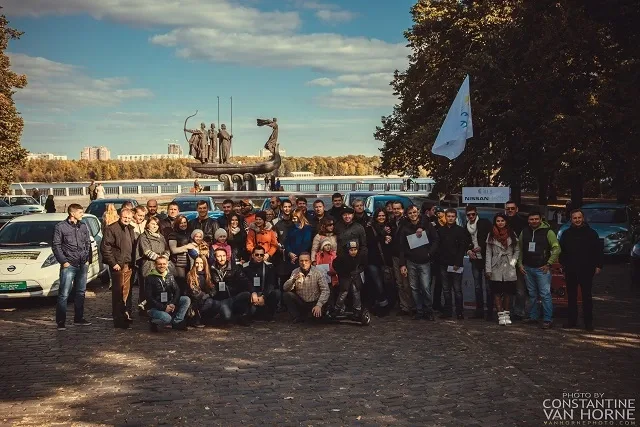
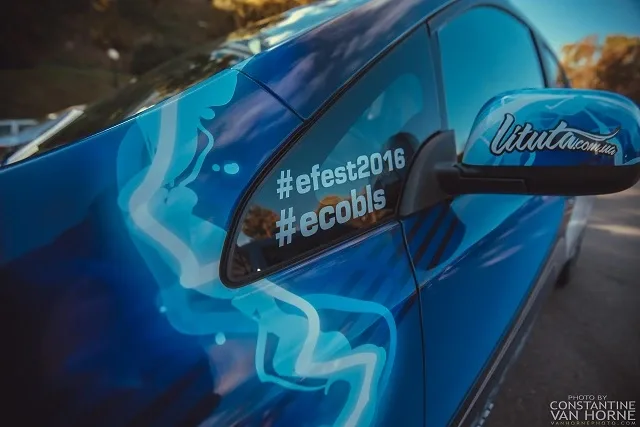
The meetup was organized by the electric car rental and sales company 'ecoBLS', the electric car importer 'Avtoenterprise', and the company 'Master Class'. Now they plan to organize a larger event – the first all-Ukrainian electric car festival e-fest, which will be held in Kyiv in April next year. It will be interesting to see how many participants it will attract.
Mythology on batteries
Of course, there will be skeptics who say that festivals and meetups are good, but electric cars have no future in Ukraine. And they will even name a number of reasons why this type of transport will not catch on. Like, they take a long time to charge, and the batteries don't last, and the infrastructure in the country isn't right, and in general, what will happen to them in the cold Ukrainian winter. All these questions have been raised more than once before residents of Western countries and the world's largest manufacturers. As world practice shows, all these problems are quite solvable and partly even far-fetched.
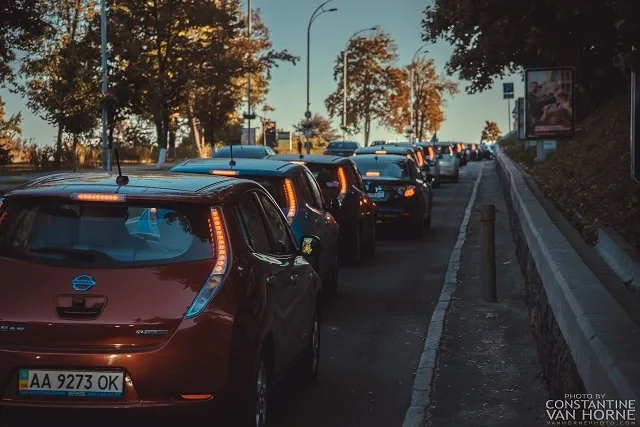
Regarding the notorious 8-hour charging. That amount of time is needed for a 100% restoration of the batteries, and even then not always. For example, for the Mitsubishi i-MiEV, which can already be seen on Ukrainian roads, 6 hours is stated. If there isn't enough time for a full charge, there's nothing wrong with that. The batteries in electric cars work on the same principle as in smartphones. That is, in the first couple of hours, most of the capacity is restored, and the remaining charge requires more significant time expenditure.
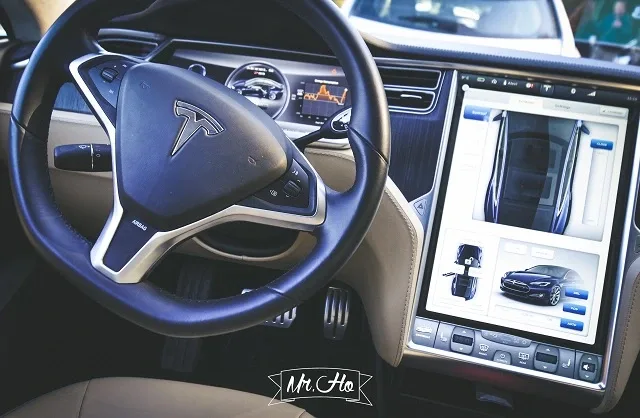
The problem of a short driving range compared to traditional cars with internal combustion engines does exist. Automakers know about it and are working on a solution. For example, over the five years that the Nissan Leaf has been on the market, the Japanese have twice upgraded the batteries. As a result, the model's driving range grew from 160 to 250 km. The aforementioned i-MiEV can travel 150 km. That's more modest, but for a city dweller living in the rhythm of home-work-shop-home, that's quite enough. And we're not talking about the Tesla Model S, which can run over 400 km.
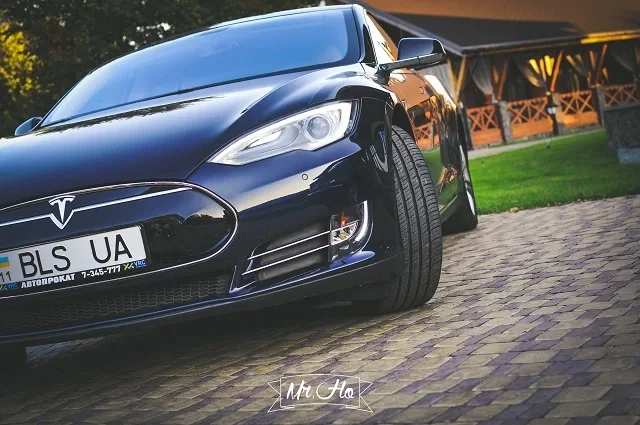
As for infrastructure, it is indeed poorly developed in our country. Charging stations number in the dozens, and fast charging stations like Tesla Supercharger, where an electric car can be charged in less than an hour, are not available at all. However, electric cars can easily be powered using a regular 220-volt outlet, which is in every home and office. So, while relaxing at home or doing business at work, you can plug the car into the network and not worry: the batteries won't be empty when you need to get behind the wheel again.
Finally, the climate. At sub-zero temperatures, batteries drain faster, and issues of charging and range become more acute. However, for example, residents of Norway, where the climate is quite harsh, are not prevented from actively buying electric cars. This year, their share of total sales in the country's market exceeded 20%. Currently, more than 60 thousand electric cars are driving on Norway's roads, and their number continues to grow.
Of course, there will always be skeptics who say that electric cars can spread in Europe because there they pay much more attention to environmental issues. But in our country, that won't work. Well, not so long ago, society clearly demonstrated what it strives for. A long journey begins with a small step, and a little more environmental awareness for each of us could be that step.